 Back
BackIntroduction to Microbiology: Microbes, Classification, and Historical Foundations
Study Guide - Smart Notes
 Tailored notes based on your materials, expanded with key definitions, examples, and context.
Introduction to Microbiology
Microbes in Our Lives
Microbiology is the study of microbes—organisms and infectious agents too small to be seen with the naked eye. Microbes are found everywhere, from soil and water to the human body, and play essential roles in health, industry, and the environment.
Microorganisms: Living, microscopic organisms such as bacteria, fungi, protozoa, and microscopic algae.
Microbes: Includes both living microorganisms and non-living infectious agents (viruses, prions).
Ubiquity: Microbes exist in nearly all environments, limited only by the availability of water.
Pathogenicity: Most microbes are harmless or beneficial; only a small fraction cause disease (pathogens).
Beneficence: Microbes decompose organic waste, produce chemicals (e.g., ethanol, acetone), ferment foods, and are used in manufacturing and medicine (e.g., insulin).
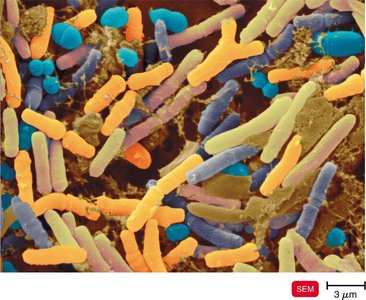
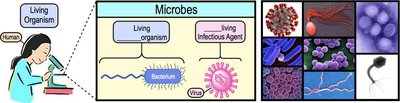
Key Definitions
Cell: The smallest, most basic unit of life.
Organism: Any individual form of life, unicellular or multicellular.
Microbiome: The community of microbes that live stably in and on the human body, aiding in health, digestion, vitamin synthesis, and immune system training.
Normal microbiota: Microbes acquired on or in a healthy human, which may colonize the body indefinitely or transiently (transient microbiota).
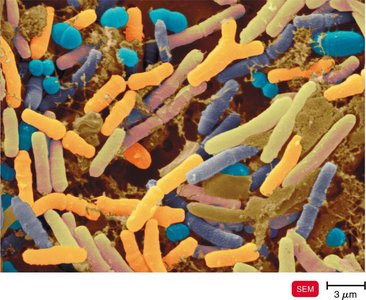
Naming and Classifying Microorganisms
Taxonomy and Scientific Nomenclature
Taxonomy is the science of classifying, identifying, and naming organisms. The system of scientific nomenclature, established by Linnaeus, uses two names: the genus and the specific epithet (species).
Genus: Capitalized and italicized/underlined (e.g., Bacillus).
Specific epithet: Lowercase and italicized/underlined (e.g., cereus).
Scientific names may be descriptive, honor a scientist, or indicate habitat (e.g., Staphylococcus aureus describes clustered, spherical, gold-colored cells).
After first use, names may be abbreviated (e.g., S. aureus).
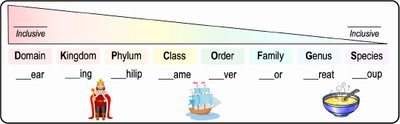
Levels of Classification
Domain
Kingdom
Phylum
Class
Order
Family
Genus
Species
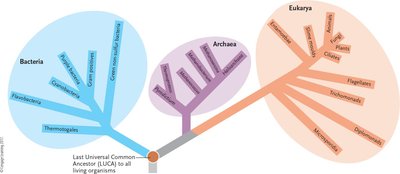
The Three Domains of Life
Classification is based on similarities in rRNA sequences, dividing life into three domains:
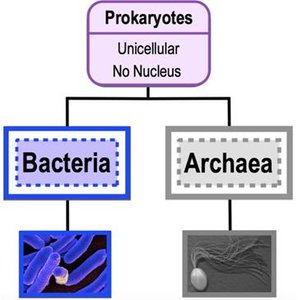
Bacteria: Prokaryotic, peptidoglycan cell walls, diverse metabolism.
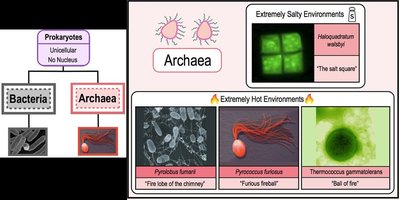
Archaea: Prokaryotic, lack peptidoglycan, often live in extreme environments.
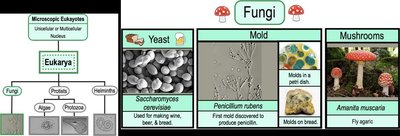
Eukarya: Eukaryotic, includes animals, plants, fungi, and protists.
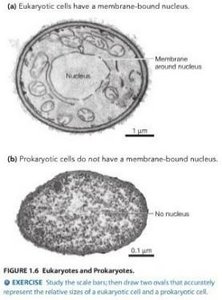
Prokaryotes vs. Eukaryotes
Prokaryotic cells: Lack a nucleus (Bacteria and Archaea).
Eukaryotic cells: Contain a nucleus (Animals, plants, fungi, protists).
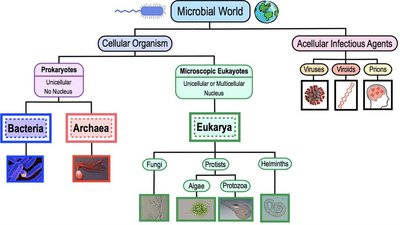
Major Groups of Microorganisms
Group | Cell Type | Cell Wall | Energy Source | Examples |
|---|---|---|---|---|
Bacteria | Prokaryote | Peptidoglycan | Organic/inorganic chemicals, photosynthesis | Escherichia coli, Bacillus anthracis |
Archaea | Prokaryote | No peptidoglycan | Varied | Extreme halophiles, methanogens |
Fungi | Eukaryote | Chitin | Organic chemicals | Yeasts, molds, mushrooms |
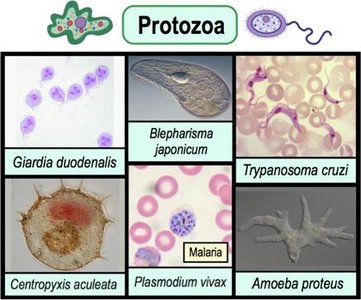
Protozoa | Eukaryote | None | Absorb/ingest organics | Amoeba, Paramecium |
Algae | Eukaryote | Cellulose | Photosynthesis | Green algae, diatoms |
Viruses | Acellular | Protein coat (sometimes lipid envelope) | Host cell machinery | Influenza virus, HIV |
Prions | Acellular | None | None | Prion diseases |
Helminths | Eukaryote | None | Varied | Flatworms, roundworms |
Sub-disciplines of Microbiology
Bacteriology: Study of bacteria
Mycology: Study of fungi
Protozoology: Study of protozoa
Phycology: Study of algae
Virology: Study of viruses
Parasitology: Study of parasites (helminths and protozoa)
Immunology: Study of the immune system
A Brief History of Microbiology
Early Observations and Cell Theory
Robert Hooke (1665): First to observe cells; formulated Cell Theory (all living things are composed of cells).
Anton van Leeuwenhoek (1674): First to observe and describe microbes ("animalcules") using a microscope.
Spontaneous Generation vs. Biogenesis
Spontaneous generation: Hypothesis that life arises from nonliving matter.
Biogenesis: Hypothesis that life arises from preexisting life.
Francesco Redi (1668): Disproved spontaneous generation for larger organisms (maggots and meat).
John Needham (1745): Supported spontaneous generation (microbial growth in broth).
Lazzaro Spallanzani (1765): Disproved Needham's results by boiling and sealing broth (no growth).
Louis Pasteur (1861): Definitively disproved spontaneous generation with swan-neck flask experiments, showing microbes come from the air, not spontaneous generation.
The Golden Age of Microbiology (1857–1914)
Pasteur: Demonstrated fermentation, pasteurization, and the connection between microbes and disease.
Ignaz Semmelweis: Advocated handwashing to prevent puerperal fever.
Joseph Lister: Introduced antiseptic surgery using disinfectants.
Robert Koch: Developed Koch's postulates to link specific microbes to specific diseases (e.g., anthrax).
Edward Jenner: Developed the first vaccine (smallpox) using cowpox virus.
Paul Ehrlich: Developed the first synthetic chemotherapeutic agent (salvarsan for syphilis).
Alexander Fleming: Discovered the first antibiotic (penicillin).
Microbes and Human Welfare
Scope and Applications of Microbiology
Microbiology impacts medicine, agriculture, food science, ecology, genetics, biochemistry, and immunology.
Applications include medical, food, industrial, agricultural microbiology, immunology, and genetic engineering.
Microbial Ecology and Bioremediation
Microbial ecology: Study of the relationship between microorganisms and their environment.
Bacteria recycle vital elements (carbon, nitrogen, sulfur, phosphorus) for use by plants and animals.
Bioremediation: Use of microbes to degrade or detoxify pollutants (e.g., oil spills, mercury).
Biofilms
Microbes attach to solid surfaces and grow into masses called biofilms.
Biofilms can form on rocks, pipes, teeth, and medical implants.
Biofilms are often resistant to antibiotics and can cause persistent infections.
Emerging Infectious Diseases (EIDs)
Definition and Examples
Emerging infectious diseases are new diseases or diseases increasing in incidence. They arise when pathogens invade hosts and overcome resistance.
Zika virus disease: Spread by Aedes mosquitoes; can cause birth defects.
Avian influenza A (H5N1): Primarily in birds; limited human transmission.
MRSA: Methicillin-resistant Staphylococcus aureus; resistant to multiple antibiotics.
Ebola and Marburg viruses: Cause hemorrhagic fevers; high mortality rates.
MERS and COVID-19: Caused by coronaviruses; COVID-19 became a global pandemic in 2020.
