 Back
BackIntroduction to Microbiology: Systematics, Diversity, and Cell Structure
Study Guide - Smart Notes
 Tailored notes based on your materials, expanded with key definitions, examples, and context.
The Microbial World
Introduction to Microbiology
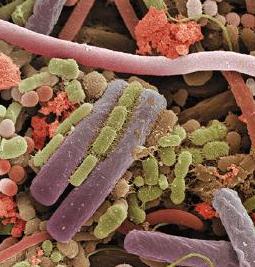
Microbiology is the study of microorganisms, including bacteria, archaea, viruses, and some eukaryotes. These organisms are fundamental to Earth's ecosystems, human health, and biotechnology. Microbes are found in nearly every environment and play critical roles in nutrient cycling, disease, and industrial processes.
Microorganisms are organisms too small to be seen with the naked eye.
They include bacteria, archaea, viruses, fungi, protozoa, and some algae.
Microbes can be both beneficial (e.g., in digestion, biotechnology) and harmful (e.g., pathogens).
Importance of Microbes
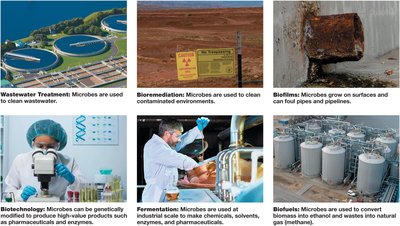
Microbes impact human health, industry, and the environment. They are involved in infectious diseases, food production, environmental remediation, and biotechnology.
Some microbes cause diseases, while others are essential for processes like fermentation and nutrient cycling.
Microbes are used in wastewater treatment, bioremediation, and the production of antibiotics, enzymes, and biofuels.
History of Microbiology
Discovery of Microorganisms
The field of microbiology began with the invention of the microscope and the first observations of microbes.
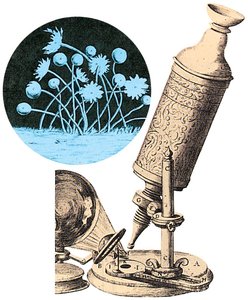
Robert Hooke (1635–1703): First to describe microbes, observed mold fruiting structures.
Antoni van Leeuwenhoek (1632–1723): First to describe bacteria using a simple microscope.
Defeat of Spontaneous Generation
Louis Pasteur disproved the theory of spontaneous generation, showing that microorganisms arise from other microorganisms. He also developed aseptic techniques and early vaccines.
Demonstrated that fermentation is a biological process.
Developed methods for sterilization and pasteurization.
Koch's Postulates and Infectious Disease
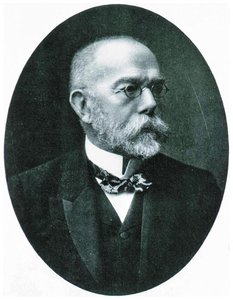
Robert Koch established the link between microbes and infectious diseases and developed techniques for pure culture.
Koch's postulates are criteria to prove that a specific microbe causes a specific disease.
Diversity of Microorganisms
Morphological, Metabolic, Genomic, and Evolutionary Diversity
Microbial diversity can be described in terms of morphology, metabolism, genomics, and evolutionary relationships.
Morphological diversity: Cell shape, structure, and arrangement.
Metabolic diversity: Energy and carbon sources, environmental tolerances.
Genomic diversity: Genetic content and organization.
Evolutionary diversity: Phylogenetic relationships based on molecular data.
Metabolic Diversity
Microbes are classified by how they obtain energy and carbon:
Energy sources: Chemicals (chemotrophs) or light (phototrophs).
Chemotrophs can be chemoorganotrophs (organic chemicals) or chemolithotrophs (inorganic chemicals).
Carbon sources: Autotrophs (CO2) or heterotrophs (organic compounds).

Genomic and Phylogenetic Diversity
Genomics involves the study of the entire genetic material of organisms. Phylogenetic relationships are determined using molecular data, especially 16S rRNA gene sequences.
Average Nucleotide Identity (ANI) is used to compare genome similarity between species.
16S rRNA gene sequencing is a standard method for identifying and classifying bacteria.
Microbial Cell Structure and Function
Bacterial Cell Envelope
The cell envelope consists of the cytoplasmic membrane, cell wall, and sometimes an outer membrane or S-layer.
Cytoplasmic membrane: Phospholipid bilayer with embedded proteins; semi-permeable barrier.
Cell wall: Provides shape and rigidity; contains peptidoglycan in bacteria.
Gram-positive bacteria: Thick peptidoglycan layer, teichoic acids.
Gram-negative bacteria: Thin peptidoglycan, outer membrane with lipopolysaccharide (LPS).
Transport Across Membranes
Microbes use various transport systems to move nutrients and waste across membranes:
Simple transport: Driven by proton motive force.
Group translocation: Chemical modification of the transported substance.
ABC transporters: Use ATP to transport substances.
Specialized Structures
Flagella: Used for motility; rotate to propel the cell.
Pili and fimbriae: Attachment and genetic exchange.
Endospores: Highly resistant, dormant structures formed by some Gram-positive bacteria.
Capsules: Protective layers outside the cell wall, involved in biofilm formation and immune evasion.
Microbial Growth and Its Control
Bacterial Growth Curve
Bacterial populations grow in a characteristic pattern when cultured in a closed system:
Lag phase: Adaptation, little or no cell division.
Exponential (log) phase: Rapid cell division, population doubles at a constant rate.
Stationary phase: Nutrient depletion or waste accumulation slows growth; cell division equals cell death.
Death phase: Cells die faster than they divide.
The exponential growth equation is:
Where is the number of cells at time , is the initial number of cells, and is the number of generations.
Microbial Ecosystems and Diversity
Microbial Habitats and Communities
Microbes inhabit diverse environments, including soil, water, and host-associated habitats. They form complex communities with high species richness and diversity.
Guilds: Groups of metabolically related populations.
Biofilms: Surface-attached microbial communities embedded in a self-produced matrix.
Soil and Marine Microbial Diversity
Soil and marine environments are among the most microbially diverse habitats on Earth. Most soil bacteria are uncultured and identified by molecular methods such as 16S rRNA gene sequencing.
Major soil phyla: Pseudomonadota (Proteobacteria), Acidobacteriota, Bacteroidota.
Marine bacteria: Pelagibacter (oligotroph), Cyanobacteriota (primary producers).
Adaptation to Extreme Environments (Extremophiles)
Types of Extremophiles
Extremophiles are organisms that thrive in conditions considered extreme for most life forms, such as high/low temperature, pH, salinity, or pressure.
Thermophiles: Grow at high temperatures.
Psychrophiles: Grow at low temperatures.
Halophiles: Thrive in high salt concentrations.
Acidophiles: Prefer acidic environments.
Alkaliphiles: Prefer alkaline environments.
Barophiles/Piezophiles: Grow under high pressure.
Adaptations to Extreme Conditions
Thermophiles have heat-stable proteins, membranes, and DNA repair mechanisms.
Halophiles use compatible solutes or salt-in strategies to balance osmotic pressure.
Acidophiles and alkaliphiles maintain internal pH homeostasis.
Tables
Energy Source | Type | Example |
|---|---|---|
Chemicals (organic) | Chemoorganotroph | Escherichia coli |
Chemicals (inorganic) | Chemolithotroph | Thiobacillus thiooxidans |
Light | Phototroph | Rhodobacter capsulatus |
Cell Envelope Type | Main Features | Example |
|---|---|---|
Gram-positive | Thick peptidoglycan, teichoic acids | Bacillus subtilis |
Gram-negative | Thin peptidoglycan, outer membrane with LPS | Escherichia coli |
Additional info: Some explanations and examples have been expanded for clarity and completeness based on standard microbiology textbooks and course content.
