 Back
BackIntroduction to Microbiology: The Microbial World and You
Study Guide - Smart Notes
 Tailored notes based on your materials, expanded with key definitions, examples, and context.
The Microbial World and You
Introduction to Microbiology
Microbiology is the study of microorganisms, which are organisms too small to be seen with the unaided eye. This field encompasses bacteria, fungi, protozoa, algae, viruses, and some multicellular parasites. Microorganisms play essential roles in ecosystems, human health, and industry.
Microorganisms: Tiny living organisms, including bacteria, fungi, protozoa, algae, and viruses.
Pathogenic microbes: A minority of microbes cause disease in humans.
Beneficial roles: Decomposition, oxygen generation, food production, and biotechnology.
Why Study Microbiology?
Microbiology is fundamental for understanding disease prevention, food safety, and the development of medical and industrial products. Knowledge of microbes helps prevent epidemics and food spoilage, and supports advances in biotechnology.
Decomposition: Microbes break down organic waste.
Photosynthesis: Microbes generate oxygen.
Industrial applications: Production of chemicals, fermented foods, and pharmaceuticals.
Disease prevention: Understanding transmission and control of pathogens.
The Microbiome
Human Microbiome
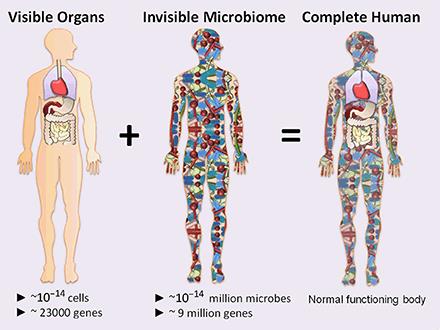
The human body hosts trillions of microbial cells, collectively known as the microbiome. These microbes are crucial for health, aiding in digestion, protecting against pathogens, and training the immune system.
Normal microbiota: Microbes that reside in and on the human body, acquired at birth and throughout life.
Transient microbiota: Microbes that temporarily colonize the body.
Colonization: Occurs only at sites with suitable nutrients and environment.
Microbiome Initiatives
Major research projects, such as the Human Microbiome Project and the National Microbiome Initiative, aim to characterize the diversity and function of microbes in humans and other ecosystems.
Human Microbiome Project (2007–2016): Mapped typical microbiota in various body regions.
National Microbiome Initiative (2016–present): Studies microbial roles in diverse environments.
Normal Microbiota and Resistance
Functions of Normal Microbiota
Normal microbiota prevent the growth of pathogens and produce essential growth factors, such as vitamins B and K. The body's resistance to disease is supported by physical barriers and antimicrobial chemicals.
Resistance: The body's ability to ward off disease, aided by skin, stomach acid, and antimicrobial chemicals.
Biofilms
Formation and Impact of Biofilms
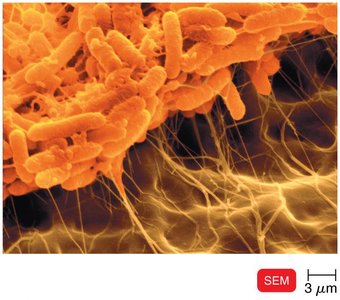
Biofilms are communities of microbes attached to surfaces, such as rocks, teeth, and medical implants. They are often resistant to antibiotics and can cause persistent infections.
Biofilm formation: Microbes adhere to surfaces and grow into masses.
Antibiotic resistance: Biofilms are difficult to eradicate due to their protective matrix.
Naming and Classifying Microorganisms
Scientific Nomenclature
Microorganisms are named using a binomial system established by Carolus Linnaeus. Each organism has a genus and species name, which are italicized or underlined.
Genus: Capitalized, e.g., Escherichia.
Specific epithet: Lowercase, e.g., coli.
Examples: Escherichia coli (named for Theodor Escherich and its habitat), Staphylococcus aureus (describes clustered, spherical, gold-colored cells).
Types of Microorganisms
Major Groups of Microbes
Microorganisms are classified into several major groups based on cellular structure and function.
Bacteria: Prokaryotic, peptidoglycan cell walls, divide by binary fission, may be motile via flagella.
Archaea: Prokaryotic, lack peptidoglycan, often extremophiles, not known to cause human disease.
Fungi: Eukaryotic, chitin cell walls, absorb organic chemicals, includes yeasts (unicellular) and molds/mushrooms (multicellular).
Protozoa: Eukaryotic, unicellular, motile via pseudopods, cilia, or flagella, some are photosynthetic.
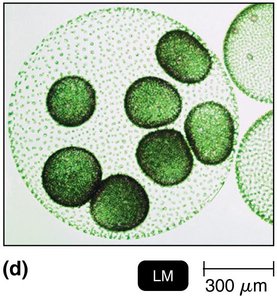
Algae: Eukaryotic, cellulose cell walls, photosynthetic, found in aquatic environments.
Viruses: Acellular, DNA or RNA core, protein coat, replicate only in living host cells.
Multicellular Animal Parasites: Eukaryotic, includes helminths (parasitic worms), some stages are microscopic.
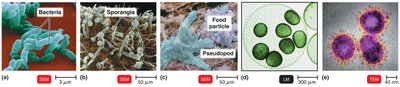
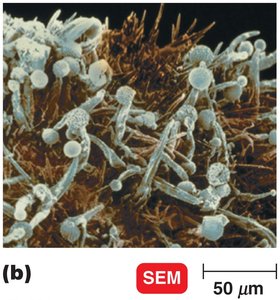
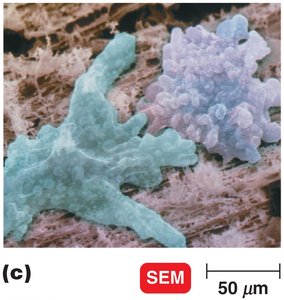
Microscopic Images of Microorganisms
Microorganisms can be visualized using various types of microscopy, revealing their diverse structures.
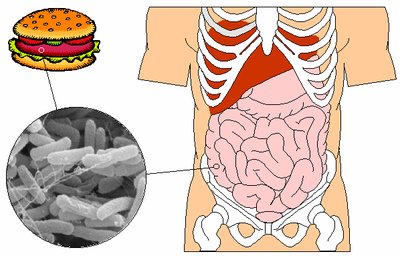
Bacteria: Rod-shaped, often seen in clusters or chains.
Fungi: Sporangia and hyphae visible in molds.
Protozoa: Motile forms with pseudopods or cilia.
Algae: Green, photosynthetic cells.
Viruses: Tiny, often seen only with electron microscopy.
Classification of Microorganisms
Three-Domain System
Carl Woese developed a classification system based on cellular organization, dividing life into three domains: Bacteria, Archaea, and Eukarya.
Bacteria: Prokaryotic, peptidoglycan cell walls.
Archaea: Prokaryotic, unique cell wall composition, extremophiles.
Eukarya: Eukaryotic, includes protists, fungi, plants, and animals.
Historical Foundations of Microbiology
Cell Theory and Early Observations
Robert Hooke and Anton van Leeuwenhoek were pioneers in microscopy, leading to the development of cell theory and the discovery of "animalcules" (microbes).
Cell theory: All living things are composed of cells.
Microscopy: Enabled observation of microorganisms.
Spontaneous Generation vs. Biogenesis
Experiments by Redi, Needham, Spallanzani, and Pasteur disproved spontaneous generation, supporting the theory of biogenesis (life arises from preexisting life).
Spontaneous generation: Hypothesis that life arises from nonliving matter.
Biogenesis: Living cells arise only from preexisting cells.
The Golden Age of Microbiology
Major Discoveries
Between 1857 and 1914, key discoveries linked microbes to fermentation, disease, and immunity. Pasteur developed pasteurization, and Koch established postulates for disease causation.
Fermentation: Microbial conversion of sugar to alcohol.
Pasteurization: High heat treatment to kill harmful bacteria.
Koch's postulates: Steps to prove a specific microbe causes a specific disease.
Immunology, Virology, and Molecular Genetics
Immunology
Immunology studies the immune system and its response to pathogens. Advances include vaccines and the classification of streptococci by cell wall components.
Vaccines: Prevent viral diseases.
Interferons: Proteins that inhibit viral replication.
Virology
Virology focuses on viruses, their structure, and their role in disease. Electron microscopy has enabled detailed study of viral morphology.
Molecular Genetics and Biotechnology
Microbial genetics explores inheritance in microbes, while molecular biology examines how DNA directs protein synthesis. Biotechnology uses microbes for practical applications, including recombinant DNA technology and gene therapy.
Recombinant DNA: DNA from different sources combined to produce useful proteins.
Gene therapy: Replacing defective genes in human cells.
Microbes in the Environment and Industry
Environmental Microbiology
Microbes play vital roles in recycling elements, sewage treatment, bioremediation, and pest control. They convert nutrients into forms usable by plants and animals and degrade pollutants.
Bioremediation: Use of microbes to clean up pollutants.
Insect pest control: Microbes such as Bacillus thuringiensis are used as biological pesticides.
Emerging Infectious Diseases
Emergence and Spread
Emerging infectious diseases (EIDs) are new or increasing in incidence. Examples include Zika virus, MERS, antibiotic-resistant infections, Ebola, and Marburg virus. These diseases often arise due to changes in microbial populations, human behavior, and environmental factors.
Zika virus: Spread by mosquitoes, can cause birth defects.
MERS-CoV: Related to SARS, causes severe respiratory illness.
Antibiotic resistance: Increasing resistance in pathogens such as Staphylococcus aureus and Clostridium difficile.
Ebola and Marburg viruses: Cause hemorrhagic fevers, high mortality rates.
Recent and Projected Threats
Current surveillance highlights threats such as Influenza A(H5N1) in dairy cattle, Mpox (Clade Ib), and severe respiratory virus seasons involving influenza, COVID-19, and RSV.
Summary Table: Major Groups of Microorganisms
Group | Cell Type | Cell Wall | Reproduction | Example |
|---|---|---|---|---|
Bacteria | Prokaryotic | Peptidoglycan | Binary fission | Escherichia coli |
Archaea | Prokaryotic | No peptidoglycan | Binary fission | Methanogens |
Fungi | Eukaryotic | Chitin | Spores, budding | Yeast, mold |
Protozoa | Eukaryotic | None | Sexual/asexual | Amoeba |
Algae | Eukaryotic | Cellulose | Sexual/asexual | Volvox |
Viruses | Acellular | Protein coat | Host-dependent | Influenza virus |
Helminths | Eukaryotic | None | Complex life cycle | Tapeworm |
Key Equations and Concepts
Binary Fission (Bacterial Growth): Where is the final number of cells, is the initial number, and is the number of generations.
Pasteurization: Application of heat at for $15$ seconds (high-temperature, short-time method).
Conclusion
Microbiology is a dynamic field that explores the diversity, function, and impact of microorganisms. Understanding microbes is essential for health, industry, and environmental stewardship.
