 Back
BackIntroduction to Microbiology: The Microbial World, Cell Structure, Evolution, and Impact
Study Guide - Smart Notes
 Tailored notes based on your materials, expanded with key definitions, examples, and context.
Introduction and Major Themes of Microbiology
What Is Microbiology About and Why Is It Important?
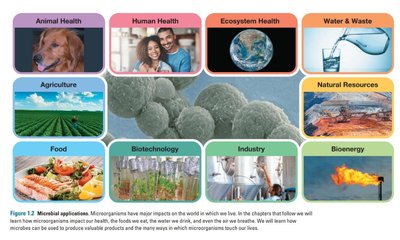
Microbiology is the study of microorganisms, focusing on their basic life processes and their applications in medicine, agriculture, industry, and environmental science. Microbes serve as models for understanding cellular processes and are essential for many biogeochemical cycles and human activities.
Understanding basic life processes: Microbes help elucidate cellular mechanisms in both unicellular and multicellular organisms.
Applications for human benefit: Microbes are crucial in medicine, agriculture, and industry.
Importance: Microorganisms are the oldest form of life, largest mass of living material, and carry out essential biogeochemical processes.
Structure and Activities of Microbial Cells
Basic Cell Structure
Microbial cells are living compartments that interact with their environment. All cells share certain structural features:
Cytoplasmic (cell) membrane: Separates the cell interior from the external environment.
Cytoplasm: Aqueous mixture containing macromolecules, ions, and ribosomes.
Ribosomes: Sites of protein synthesis.
Cell wall: Provides structural strength (present in most microbes).
Prokaryotic vs. Eukaryotic Cells
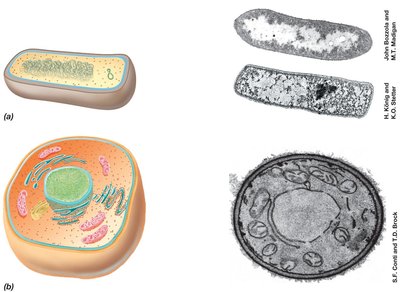
Microbial cells are classified as prokaryotes (Bacteria and Archaea) or eukaryotes (plants, animals, algae, protozoa, fungi):
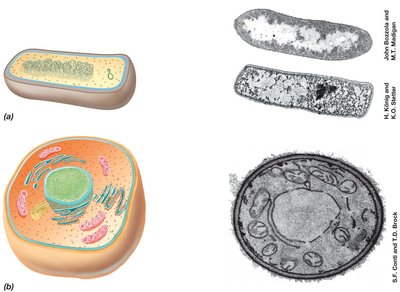
Prokaryotes: No membrane-bound organelles or nucleus; DNA is typically a single circular chromosome in the nucleoid region.
Eukaryotes: Contain organelles; DNA is enclosed in a membrane-bound nucleus and organized in linear chromosomes.
Genes, Genomes, Nucleus, and Nucleoid
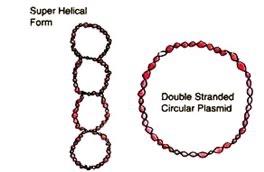
The genome is a cell's full complement of genes. Eukaryotic genomes are larger and more complex than prokaryotic genomes. Prokaryotes may also contain plasmids, which are extrachromosomal DNA elements that confer special properties such as antibiotic resistance.
Characteristics of Living Cells
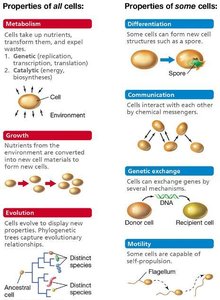
All living cells share fundamental properties, while some possess specialized functions:
Metabolism: Chemical transformation of nutrients.
Reproduction: Generation of new cells.
Differentiation: Formation of new structures (e.g., spores).
Communication: Chemical signaling between cells.
Movement: Self-propulsion (e.g., flagella).
Evolution: Genetic changes passed to offspring.
Metabolism and Genetics
Cells carry out chemical reactions using enzymes, store and process genetic information, and reproduce through DNA replication, transcription, and translation.
Transcription: DNA produces RNA.
Translation: RNA makes protein.
Evolution and Diversity of Microbial Cells
The First Cells and LUCA
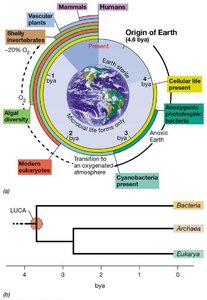
Earth is approximately 4.6 billion years old, and the first cells appeared between 3.8 and 4.3 billion years ago. The last universal common ancestor (LUCA) is the ancestral cell from which all cells descended. Early life was exclusively microbial and anaerobic until the evolution of oxygen-producing phototrophs.
Microbial Mats and Phototrophic Microorganisms
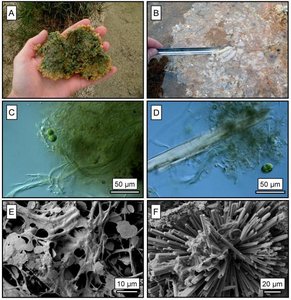
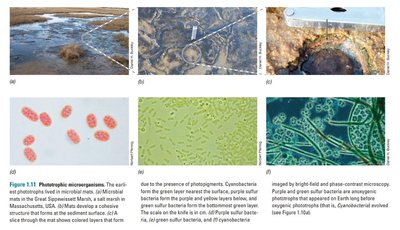
Microbial mats are layered communities of microorganisms, often dominated by phototrophic bacteria such as cyanobacteria.
Evolution and Phylogeny
Evolution is the process of change over time, resulting in new species. Phylogeny describes evolutionary relationships, often determined by comparing ribosomal RNA (rRNA) sequences. The three domains of life are Bacteria, Archaea, and Eukarya.
Microorganisms and Their Environments
Microbial Communities and Habitats
Microorganisms exist in populations and communities, interacting with their environment. The habitat is the environment where a population lives, and the ecosystem includes all living organisms plus physical and chemical constituents.
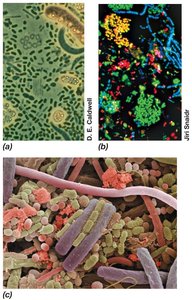
Diversity and Abundance
Microbial diversity is the result of nearly 4 billion years of evolution. Microbes differ in size, shape, motility, physiology, and pathogenicity. Their abundance and activities are controlled by resources and environmental conditions.
Extremophiles
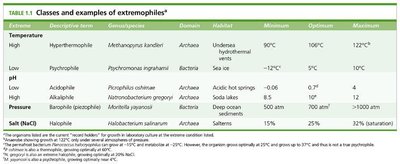
Extremophiles are microbes that thrive in extreme environments, such as high or low temperatures, acidity, salinity, or pressure.
Extreme | Genus/species | Domain | Habitat | Minimum | Optimum | Maximum |
|---|---|---|---|---|---|---|
High Temp | Methanopyrus kandleri | Archaea | Hydrothermal vents | 90°C | 106°C | 122°C |
Low Temp | Psychromonas ingrahamii | Bacteria | Sea ice | -12°C | 4°C | 10°C |
Acidic pH | Picrophilus oshimae | Archaea | Acidic hot springs | -0.06 | 0.7 | 4 |
High Pressure | Halobacterium salinarum | Archaea | Salines | 15% | 25% | 32% (saturation) |
Distribution of Microorganisms
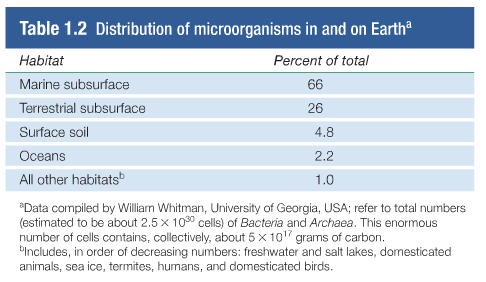
Microbes are found in nearly every environment. The majority reside in marine and terrestrial subsurfaces.
Habitat | Percent of total |
|---|---|
Marine subsurface | 66 |
Terrestrial subsurface | 26 |
Surface soil | 4.8 |
Oceans | 2.2 |
All other habitats | 1.0 |
The Impact of Microorganisms on Humans
Microorganisms as Disease Agents
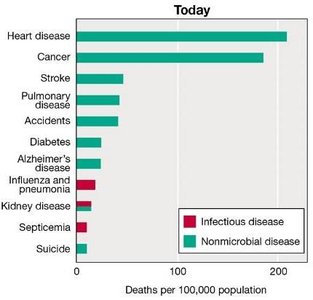
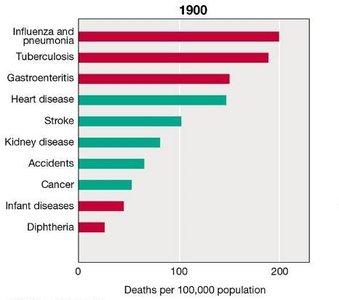
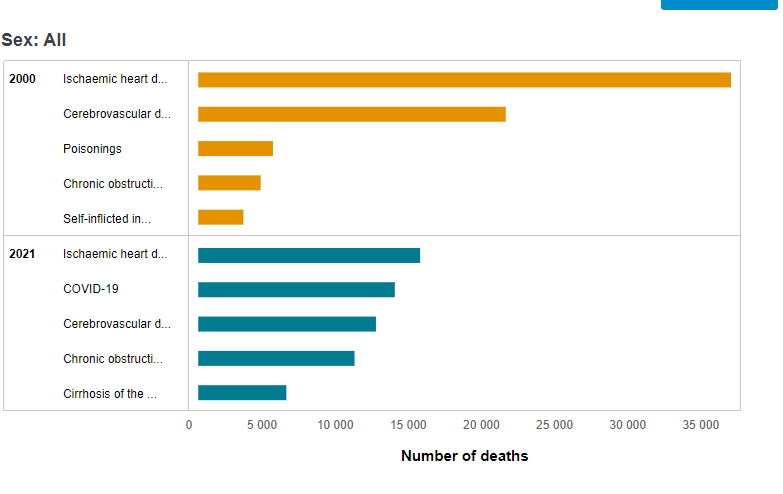
Microbes can be both beneficial and harmful. Pathogens cause infectious diseases, but many microbes are beneficial, contributing to health, agriculture, and industry.
Microorganisms and Agriculture
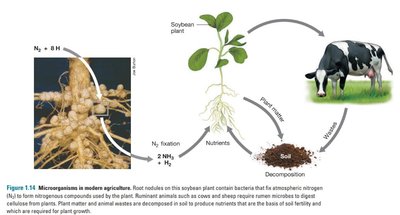
Microbes play vital roles in agriculture, including nitrogen fixation, cellulose degradation, and nutrient regeneration. They can also cause diseases in plants and animals.
Microorganisms and the Human Gastrointestinal Tract
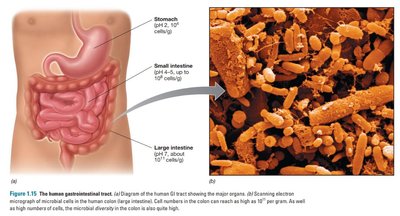
The human GI tract harbors high numbers of microbes, especially in the colon and oral cavity. These microbes synthesize vitamins, compete with pathogens, and contribute to overall health.
Microorganisms and Food
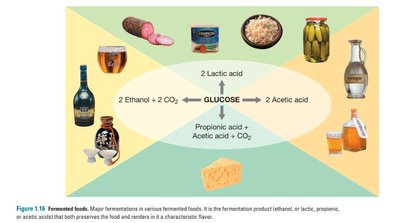
Microbes can cause food spoilage but are also essential for food production through fermentation, yielding products such as cheese, yogurt, sauerkraut, and bread.
Microorganisms and Industry
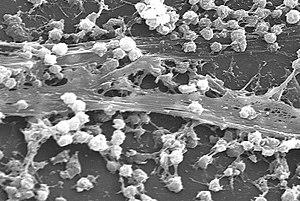
Microbes are used in industrial processes, including biofilm formation, production of antibiotics and enzymes, and biotechnology applications.
Microbiology in Historical Context
The Discovery of Microorganisms
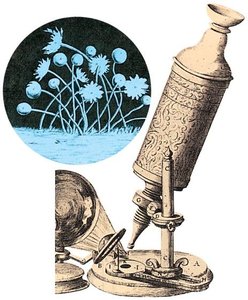
Microbiology began with the invention of the microscope. Robert Hooke first described microbes, and Antoni van Leeuwenhoek first described bacteria. Ferdinand Cohn founded bacterial classification and discovered endospores.
Pasteur and Spontaneous Generation
Louis Pasteur disproved spontaneous generation, discovered fermentation as a biological process, and developed vaccines for anthrax, cholera, and rabies. He introduced aseptic techniques and the concept of vaccination.
Koch, Infectious Disease, and Pure Cultures
Robert Koch demonstrated the link between microbes and infectious diseases, identified causative agents, and developed techniques for obtaining pure cultures. Koch's postulates are guidelines for linking specific organisms to specific diseases.
The Rise of Microbial Diversity
Microbial Diversity and Enrichment Culture
Martinus Beijerinck developed enrichment culture techniques, allowing isolation of microbes from natural samples. Sergei Winogradsky introduced the concept of chemolithotrophy, linking bacteria to biogeochemical transformations.
Modern Microbiology and Genomics
Applied and Basic Subdisciplines
Microbiology has evolved into applied fields (medical, immunology, agricultural, industrial, aquatic, biotechnology) and basic sciences (systematics, physiology, ecology, biochemistry, genetics, virology).
Molecular Microbiology and Omics
Genomics: Study of all genetic material in cells.
Transcriptomics: Study of RNA patterns.
Proteomics: Study of all proteins produced by cells.
Metabolomics: Study of metabolic expression in cells.
Microscopy and Staining Techniques
Light Microscopy
Several types of light microscopy are used to visualize microbes:
Bright-field: Dark sample on bright background; simple setup.
Phase-contrast: Enhances contrast in unstained, live cells.
Dark-field: Light specimen on dark background; good for motility.
Fluorescence: Visualizes specimens that emit light after illumination.
Staining Techniques
Staining improves contrast in light microscopy. Basic dyes bind to negatively charged cell components. Differential stains, such as the Gram stain, distinguish between gram-positive (purple) and gram-negative (pink) bacteria based on cell wall structure.
Electron Microscopy
Electron microscopes use electrons instead of light, providing much greater resolution. Transmission electron microscopy (TEM) visualizes internal structures, while scanning electron microscopy (SEM) visualizes surfaces.
Summary
Microbiology is a foundational biological science, exploring the structure, function, evolution, and impact of microorganisms. It integrates cell biology, genetics, ecology, and applied sciences, and utilizes advanced microscopy and molecular techniques to study microbial life.
