 Back
BackIntroduction to Microbiology: The Microbial World and You
Study Guide - Smart Notes
 Tailored notes based on your materials, expanded with key definitions, examples, and context.
Chapter 1: The Microbial World and You
Introduction to Microbiology
Microbiology is the study of microorganisms, which are organisms too small to be seen with the unaided eye. This field encompasses a wide variety of life forms, including bacteria, archaea, fungi, protozoa, algae, viruses, and prions. Microorganisms play essential roles in the environment, industry, and human health.
Microbes in Our Lives
Microorganisms are ubiquitous and include bacteria, fungi, protozoa, microscopic algae, viruses, and prions.
They are the basis of the food chain in aquatic environments and decompose organic waste.
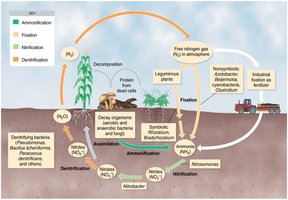
Microbes incorporate atmospheric nitrogen into organic compounds and generate oxygen through photosynthesis.
Some microbes are pathogenic, causing diseases, while others are beneficial, such as those involved in food production and environmental processes.
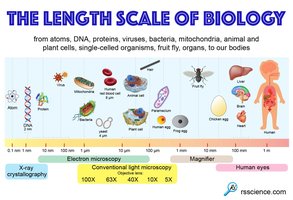
Roles of Microbes
Production of chemical products (e.g., ethanol, acetone, vitamins).
Fermentation of foods (e.g., vinegar, cheese, yogurt, alcoholic beverages, bread).
Manufacturing products (e.g., cellulose) and disease treatments (e.g., insulin).
The Microbiome
The microbiome (or microbiota) refers to the community of microbes that live stably on and in the human body. These microbes help maintain health, prevent the growth of pathogens, and may help train the immune system to distinguish between threats and non-threats.
Normal microbiota: Begin to be acquired before birth and may colonize the body indefinitely.
Transient microbiota: Colonize the body for a short period.
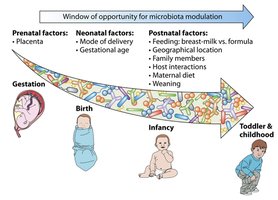
Gut Microbiome and Human Health
The gut microbiome is increasingly recognized for its role in health and disease. Research links the gut microbiome to conditions such as Parkinson’s disease and autism spectrum disorder, though the mechanisms are still being studied.
Types of Microorganisms
Bacteria
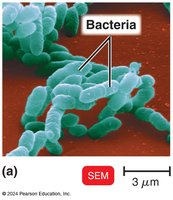
Bacteria are unicellular prokaryotes with peptidoglycan cell walls. They reproduce by binary fission and can derive nutrition from organic or inorganic chemicals or photosynthesis. Many bacteria are motile via flagella.
Prokaryotes: Organisms without a nucleus.
Peptidoglycan: A polymer that forms the cell wall of most bacteria.
Archaea
Archaea are prokaryotes that lack peptidoglycan in their cell walls and may lack cell walls entirely. They often inhabit extreme environments, such as salt lakes and hot springs. Major groups include methanogens, extreme halophiles, and extreme thermophiles. Archaea are not known to cause disease in humans.
Fungi
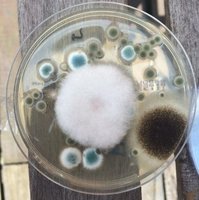
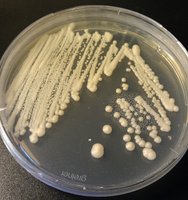
Fungi are eukaryotes with chitin cell walls. They absorb organic chemicals for energy. Yeasts are unicellular, while molds and mushrooms are multicellular. Fungi can metabolize complex carbohydrates.
Yeasts: Unicellular fungi.
Molds: Multicellular fungi.
Protozoa
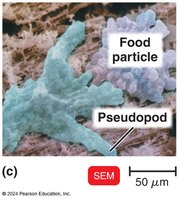
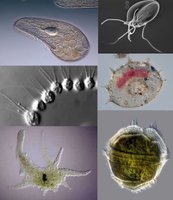
Protozoa are unicellular eukaryotes that absorb or ingest organic chemicals. They may be motile via pseudopods, cilia, or flagella. Protozoa can be free-living or parasitic, and some are photosynthetic. They reproduce sexually or asexually.
Algae
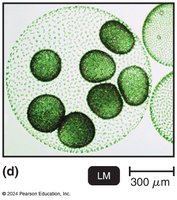
Algae are eukaryotes with cellulose cell walls. They are found in freshwater, saltwater, and soil. Algae use photosynthesis for energy, producing oxygen and carbohydrates. Both sexual and asexual reproduction are possible.
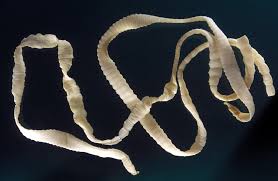
Helminths
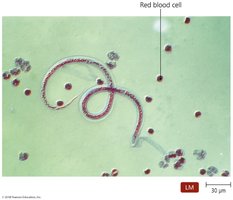
Helminths are multicellular eukaryotic animals, including parasitic worms. While not strictly microorganisms, their microscopic life stages are studied in microbiology.
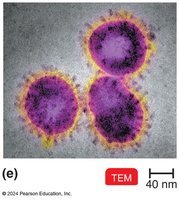
Viruses
Viruses are acellular entities consisting of a DNA or RNA core surrounded by a protein coat. They can only replicate within a living host cell.
Taxonomy and Classification
Taxonomy
Taxonomy is the science of classifying organisms to show the degree of similarity among them. Organisms are grouped into categories called taxa.
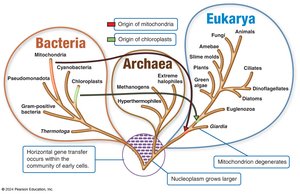
The Three Domains
The three-domain system, developed by Carl Woese in 1978, classifies all life into Bacteria, Archaea, and Eukarya (which includes protists, fungi, plants, and animals).
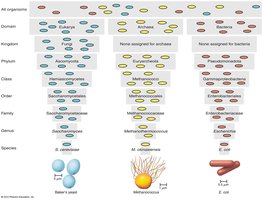
The Taxonomic Hierarchy
The taxonomic hierarchy is a series of subdivisions developed by Linnaeus, including domain, kingdom, phylum, class, order, family, genus, and species.
Scientific Nomenclature
Carolus Linnaeus established the system of binomial nomenclature in 1735. Each organism is given a two-part name: genus and species (e.g., Escherichia coli, Staphylococcus aureus). Names are italicized or underlined.
Microbial Diversity and Habitats
Microbial Diversity
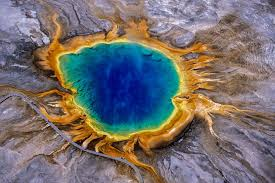
Microbial populations are highly diverse and occupy a wide range of environmental niches. They compete with other organisms and can adapt to extreme conditions (pH, temperature, salinity). Most extremophiles are members of the Archaea.
Microbial Ecology
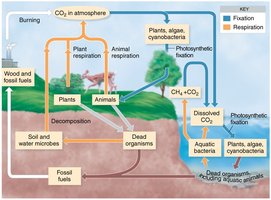
Microbial ecology studies the interactions of microorganisms with their environment, including their roles in biogeochemical cycles such as the carbon and nitrogen cycles.
Bioremediation and Composting
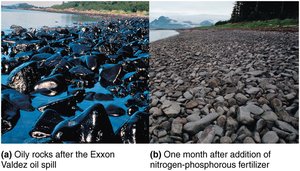
Bioremediation is the use of microbes to detoxify or degrade pollutants, often enhanced by adding nitrogen and phosphorus fertilizers. Composting involves arranging organic waste to promote microbial degradation by thermophiles, converting plant remains into humus.
History of Microbiology
The First Observations
1665: Robert Hooke reported that living things are composed of cells (cell theory).
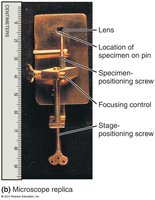
1673–1723: Anton van Leeuwenhoek observed and documented microbes, calling them "animalcules."
The Debate over Spontaneous Generation
Spontaneous generation: Hypothesis that life arises from nonliving matter.
Biogenesis: Hypothesis that living cells arise only from preexisting living cells.
Key experiments:
1668: Francesco Redi's experiments with decaying meat.
1765: Lazzaro Spallanzani's boiled nutrient solutions in sealed flasks.
1861: Louis Pasteur demonstrated that microorganisms are present in the air, supporting biogenesis.
The First Golden Age of Microbiology (1857–1914)
Louis Pasteur: Demonstrated fermentation and developed pasteurization (application of high heat for a short time to kill harmful bacteria in beverages).
Ignaz Semmelweis: Advocated handwashing to prevent puerperal fever.
Robert Koch: Discovered that a bacterium causes anthrax and developed Koch’s postulates to link specific microbes to specific diseases.
Edward Jenner: Developed the first vaccine (cowpox for smallpox).
The Germ Theory of Disease
The germ theory states that microorganisms can cause disease. This was supported by the work of Semmelweis, Koch, and others.
The Second Golden Age of Microbiology
Focus on treating diseases caused by microbes.
Chemotherapy: Treatment of disease with chemicals, including synthetic drugs and antibiotics.
Paul Ehrlich: Developed the first synthetic drug (salvarsan) for syphilis.
Alexander Fleming: Discovered the first antibiotic, penicillin, produced by the fungus Penicillium.
Fields of Microbiology
Bacteriology: Study of bacteria.
Mycology: Study of fungi.
Parasitology: Study of protozoa and parasitic worms.
Virology: Study of viruses.
Immunology: Study of immunity.
Microbial genetics: Study of how microbes inherit traits.
Molecular biology: Study of how DNA directs protein synthesis.
Key Concepts and Study Guide
Understand the experiments and scientists involved in the debate over spontaneous generation.
Know the taxonomic hierarchy and binomial nomenclature.
Identify the advocate for handwashing (Semmelweis) and the use of antiseptics in medical facilities.
Describe Koch’s postulates for linking microbes to diseases.
Define microbial ecology, immunology, bacteriology, virology, parasitology, and microbial genetics.
Distinguish between eukaryotes and prokaryotes.
Compare bioremediation and composting.
Define extremophiles and types of human microbiota.
Explain what an opportunistic pathogen is.
List the different types of microorganisms and their main characteristics.
Identify contributors to the Golden Age of Microbiology and their discoveries.
