 Back
BackIntroduction to Microbiology: The Microbial World and You
Study Guide - Smart Notes
 Tailored notes based on your materials, expanded with key definitions, examples, and context.
Introduction to Microbiology
What is Microbiology?
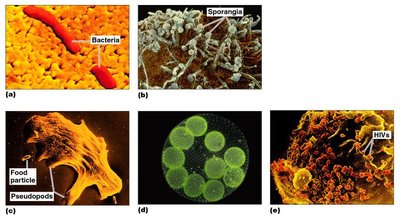
Microbiology is the study of organisms and life forms too small to be seen with the naked eye, known as microorganisms or microbes. These include bacteria, archaea, fungi, protists, and viruses. Microbiology is essential for understanding disease, environmental processes, and biotechnology.
Microorganisms can cause diseases, some of which are life-threatening.
They play positive roles in drug and vaccine production, food production, environmental cleanup, and research.
Microbes influence weather, human health, and even personality traits.
Characteristics of Living Things
Defining Life
Living things, or organisms, are entities capable of performing life functions independently. Life is defined by the ability to:
Sense and respond to the environment
Reproduce
Take in nutrients and expel waste
Carry out chemical reactions (metabolism)
Obtain and use energy
All organisms are made up of cells, the smallest unit capable of performing life functions.
Cell Structure and Types
Basic Cell Structure
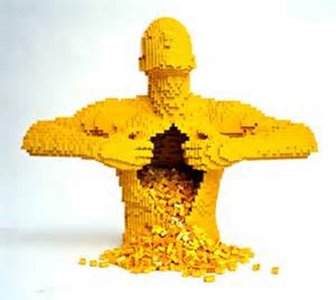
Cells are like tiny water balloons containing the components necessary for life. Key structures include:
Plasma membrane: The boundary of the cell, controlling entry and exit of substances.
DNA: The genetic blueprint of the cell.
Ribosomes: Structures for protein synthesis.
Cell wall (in some cells): Provides shape and protection.
Prokaryotic vs. Eukaryotic Cells
Cells are classified into two main types based on their internal structure:
Eukaryotic cells: Have membrane-bound organelles, including a nucleus that contains DNA. Examples: animals, plants, fungi, protists.
Prokaryotic cells: Lack membrane-bound organelles and a nucleus. DNA is in the cytoplasm. Examples: bacteria, archaea.
Organisms are made up of either prokaryotic or eukaryotic cells, never both.
Diversity of Microorganisms
Major Groups of Microorganisms
Bacteria: Prokaryotic, unicellular, peptidoglycan cell walls, reproduce by binary fission, diverse in shape and metabolism.
Archaea: Prokaryotic, lack peptidoglycan, live in extreme environments, not known to cause disease.
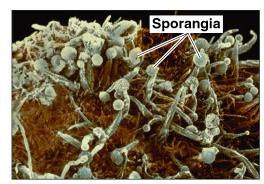
Fungi: Eukaryotic, chitin cell walls, decomposers, can be unicellular (yeast) or multicellular (molds, mushrooms).
Protists: Eukaryotic, diverse group including protozoa (unicellular, animal-like) and algae (photosynthetic).
Viruses: Acellular, consist of a protein coat and genetic material (DNA or RNA), obligate parasites, replicate only inside host cells.
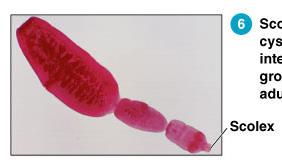
Helminths: Parasitic worms, eukaryotic, some are microscopic.
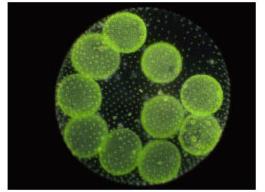
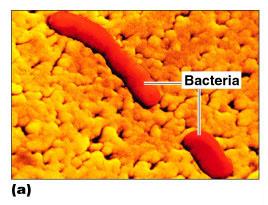
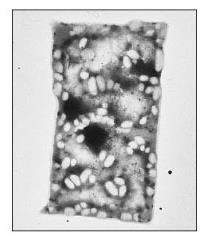
Classification: The Three Domains
Organisms are classified into three domains based on cell type:
Bacteria: Prokaryotic
Archaea: Prokaryotic
Eukarya: Eukaryotic (includes animals, plants, fungi, protists)
History of Microbiology
The Unknown and the Discovery of Microbes
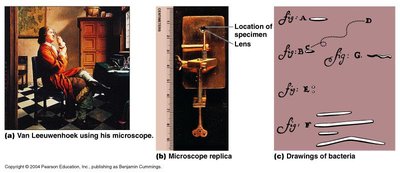
Before the invention of the microscope, microorganisms were unknown and their effects were attributed to magic or the supernatural. The development of the microscope in the late 1500s allowed scientists like Robert Hooke and Antoni van Leeuwenhoek to observe cells and microbes for the first time.
Cell Theory
All organisms are composed of one or more cells.
Cells arise from pre-existing cells (biogenesis).
Key contributors: Robert Hooke, Schleiden, Schwann, Rudolf Virchow.
Refuting Spontaneous Generation
Spontaneous generation was the belief that life could arise from nonliving matter. Experiments by Francesco Redi and Louis Pasteur disproved this theory, showing that life comes from pre-existing life.
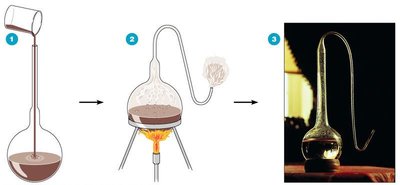
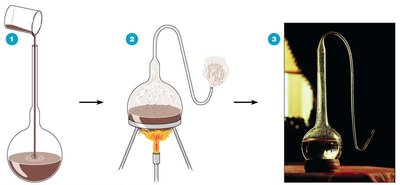
Pasteur's experiments with boiled broth in swan-neck flasks demonstrated that microorganisms in the air, not a "vital force," caused contamination.
Germ Theory of Disease
The Germ Theory states that specific microbes cause specific diseases. Not all microbes are harmful; many are part of the normal flora (microbiome) and protect against pathogens.
Pathogen: An organism that causes disease.
Infection: Establishment of a pathogen in the body.
Pathogenesis: The process by which disease develops.
Drugs Against Microorganisms
Discovery of Penicillin
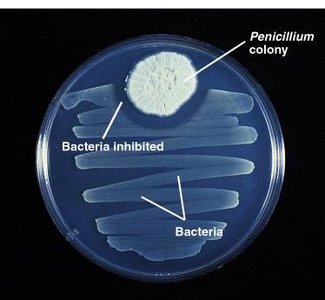
Alexander Fleming discovered penicillin in the 1920s, leading to the development of antibiotics that selectively target microbes without harming the patient. This revolutionized the treatment of infectious diseases, though resistance has become a concern in recent years.
Learning Goals in Microbiology
Understand the structure and organization of cells
Learn the characteristics of bacteria and viruses
Study microbial metabolism and genetics
Explore how microbes cause disease and how the body defends itself
Examine drugs and laboratory techniques used to study microbes
Microbial Diseases
Survey of Diseases
Microbiology covers diseases caused by bacteria and viruses, including their mechanisms, symptoms, and affected body systems (nervous, respiratory, digestive, urinary, reproductive, skin, etc.).
Well-known diseases: plague, flu, tuberculosis, typhoid, cholera, ulcers, chickenpox, malaria, hepatitis
Emerging diseases: AIDS, SARS, Ebola, West Nile, Avian Flu
Microbes can also be used in biological warfare and bioterrorism.
Laboratory and Lecture Integration
Lab and lecture sessions complement each other, providing both theoretical knowledge and practical experience. Preparation and participation in both are essential for a comprehensive understanding of microbiology.
