 Back
Introduction to Microbiology: The Microbial World and You
Study Guide - Smart Notes
 Tailored notes based on your materials, expanded with key definitions, examples, and context.
Introduction to Microbiology
Definition and Scope
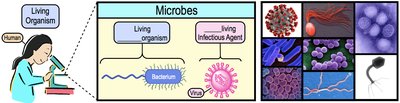
Microbiology is the scientific study of microbes, which includes both living organisms and infectious agents too small to be seen by the naked eye. The prefix "micro-" means small, and biology is the study of life. The cell is the smallest, most fundamental unit of life, and microorganisms can be unicellular or multicellular. Microbes encompass microorganisms and non-living infectious agents.
Microorganism: A living organism too small to see unaided.
Microbe: Includes microorganisms and acellular infectious agents (e.g., viruses).
Cell: The basic unit of life.
Historical Discovery of Microorganisms
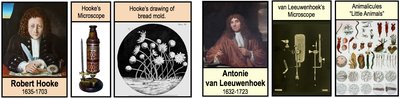
The existence of microorganisms was first discovered between 1665 and 1674. Robert Hooke, an English microscopist, visualized and depicted a bread mold, while Antonie van Leeuwenhoek, a Dutch merchant, observed protozoa and bacteria, calling them "animalicules." Their microscopes were not powerful enough to observe viruses.
Robert Hooke: First to visualize a microorganism (bread mold).
Antonie van Leeuwenhoek: Observed protozoa and bacteria.
Taxonomy and Classification
Taxonomy: The Science of Classification
Taxonomy is the branch of science that classifies, identifies, and names organisms. It uses hierarchical categories to organize all life, from the most inclusive (domain) to the least inclusive (species).
Domain: Broadest category.
Species: Most specific category.

The Three Domains of Life
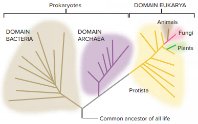
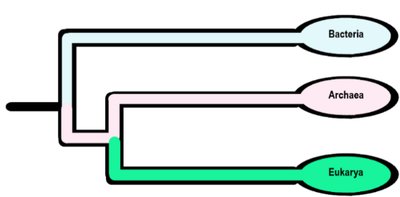
Life is classified into three domains: Bacteria, Archaea, and Eukarya. Bacteria and Archaea are prokaryotic (lack a nucleus), while Eukarya consists of eukaryotic cells (contain a nucleus).
Bacteria: Prokaryotic, unicellular.
Archaea: Prokaryotic, unicellular, often extremophiles.
Eukarya: Eukaryotic, unicellular or multicellular.
Kingdoms of the Eukarya Domain
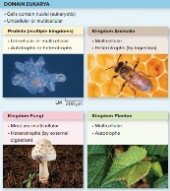
Domain Eukarya is subdivided into several kingdoms: Plantae, Animalia, Fungi, and Protista. Each kingdom has unique characteristics regarding cell structure, energy acquisition, and reproduction.
Plantae: Multicellular, autotrophic.
Animalia: Multicellular, heterotrophic.
Fungi: Mostly multicellular, heterotrophic by external digestion.
Protista: Unicellular or multicellular, autotrophic or heterotrophic.
Taxonomic Hierarchy and Classification Table
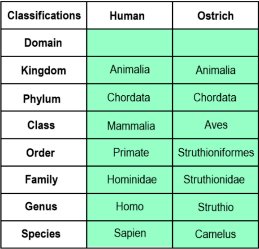
Organisms are classified using a hierarchical system: Domain, Kingdom, Phylum, Class, Order, Family, Genus, Species. This system allows for precise identification and comparison between organisms.
Classifications | Human | Ostrich |
|---|---|---|
Domain | Animalia | Animalia |
Kingdom | Animalia | Animalia |
Phylum | Chordata | Chordata |
Class | Mammalia | Aves |
Order | Primate | Struthioniformes |
Family | Hominidae | Struthionidae |
Genus | Homo | Struthio |
Species | Sapien | Camelus |
Energy Acquisition in Living Organisms
Classes Based on Energy Acquisition
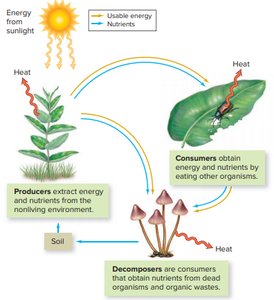
Organisms are categorized based on how they acquire energy:
Autotrophs (Producers): Make their own food, usually via photosynthesis.
Heterotrophs (Consumers): Obtain energy by eating other organisms.
Decomposers: Acquire energy from wastes and dead organisms.
Scientific Naming of Organisms
Binomial Nomenclature
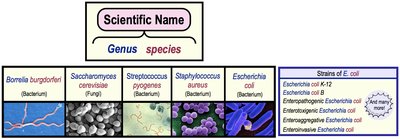
Carl Linnaeus developed a two-part naming system for organisms. The first part is the genus (capitalized), and the second is the species (not capitalized). Both are italicized or underlined. Strains are genetic variants within a species.
Example: Escherichia coli (E. coli)
Strains: E. coli K-12, E. coli B
Members of the Microbial World
Cellular and Acellular Microbes
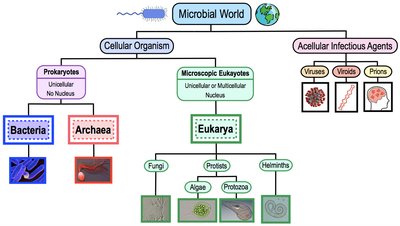
Microbes include both cellular organisms (prokaryotes and eukaryotes) and acellular infectious agents (viruses, viroids, prions). Bacteria and archaea are prokaryotic, while fungi, algae, protozoa, and helminths are eukaryotic.
Prokaryotes: Bacteria and Archaea (unicellular, no nucleus).
Eukaryotes: Fungi, algae, protozoa, helminths (unicellular or multicellular, nucleus).
Acellular Infectious Agents: Viruses, viroids, prions (not made of cells).
Introduction to Bacteria
Characteristics of Bacteria
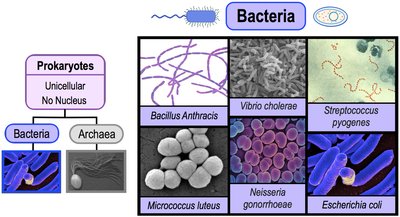
Bacteria are unicellular, prokaryotic organisms that lack a nucleus. They vary in shape and size, divide by binary fission, and most have cell walls made of peptidoglycan. Bacteria are major inhabitants of the human body and are highly diverse.
Binary Fission: Method of bacterial reproduction.
Human Microbiome: Bacteria living in and on humans.
Introduction to Archaea
Characteristics of Archaea
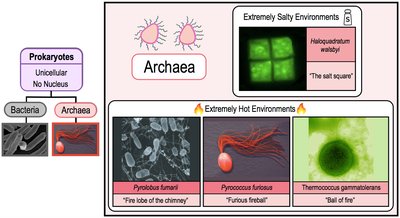
Archaea are unicellular, prokaryotic organisms with unique ribosomal RNA sequences and cell walls lacking peptidoglycan. Many are extremophiles, thriving in environments such as hot springs and salty lakes.
Extremophiles: Organisms that live in extreme conditions.
Unique Cell Wall: Lacks peptidoglycan.
Introduction to Eukarya
Characteristics of Eukaryotes
Eukaryotes have cells with a membrane-bound nucleus and can be unicellular or multicellular. The domain includes plants, animals, fungi, and protists. Microbiologists study microscopic eukaryotes such as fungi, algae, protozoa, and helminths.
Fungi: Diverse group, harvest energy from organic materials, cell walls made of chitin.
Algae: Photosynthetic, cell walls made of cellulose, unicellular or multicellular.
Protozoa: Unicellular, motile, ingest organic materials, lack cell walls.
Helminths: Parasitic worms, eggs and larvae are microscopic.
Acellular Infectious Agents: Viruses, Viroids & Prions
Viruses
Viruses are obligate intracellular parasites made of DNA or RNA packed in a protein coat. They infect all forms of life and can kill or remain dormant in host cells.
Obligate Intracellular Parasite: Requires a host cell to replicate.
Viroids
Viroids are obligate intracellular parasites made of a single, short strand of RNA. They infect plants and cause plant diseases.
Prions
Prions are infectious agents made of misfolded proteins. They cause normal proteins to misfold, leading to degenerative diseases such as "mad cow disease."
Importance of Microorganisms
Commercial, Environmental, and Research Benefits
Microorganisms are essential for life, providing commercial products (food, antibiotics), environmental services (nitrogen fixation, bioremediation), and serving as research tools due to their fundamental metabolic and genetic features.
Commercial: Used in food production, antibiotics, biofuels.
Environmental: Nitrogen fixation, cellulose degradation, bioremediation.
Research: Model organisms for studying biological processes.
Microorganisms in Health & Disease
The human body hosts trillions of microorganisms (normal microbiota), which play important roles in health by competing with pathogens. Some microorganisms are pathogenic and cause disease.
The Scientific Method in Microbiology
Steps and Concepts
The scientific method is a systematic procedure for answering questions, testing ideas, and advancing scientific knowledge. It involves observation, hypothesis, prediction, experimentation, and theory development.
Observation: Noticing phenomena.
Hypothesis: Testable explanation.
Prediction: Expected outcome.
Theory: Supported hypothesis explaining many observations.
Experimental Design
Experiments test hypotheses using variables (independent and dependent) and controls (positive and negative) to prevent false positives/negatives.
Independent Variable: Manipulated factor.
Dependent Variable: Measured outcome.
Controls: Groups used for comparison.
Summary Table: Domains and Kingdoms
Domain | Cell Type | Kingdoms |
|---|---|---|
Bacteria | Prokaryotic | None (unicellular) |
Archaea | Prokaryotic | None (unicellular) |
Eukarya | Eukaryotic | Plantae, Animalia, Fungi, Protista |
