 Back
BackIntroduction to Microbiology: The Microbial World and You
Study Guide - Smart Notes
 Tailored notes based on your materials, expanded with key definitions, examples, and context.
The Microbial World and You
What are Microbes?
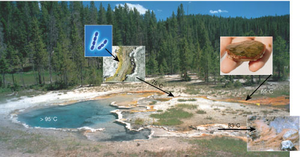
Microbes, or microorganisms, are forms of life too small to be visible without the aid of a microscope. They are ubiquitous, meaning they are found everywhere and have adapted to a wide range of environments, including extreme conditions such as high temperatures, acidic environments, and areas with limited nutrients.
Definition: Microbes include bacteria, archaea, fungi, protozoa, algae, and viruses.
Ubiquity: Microbes can survive in environments where other organisms cannot, such as hot springs, Antarctic ice, and temperate meadows.
Adaptation: Microbes adapt to variations in temperature, oxygen availability, salinity, and acidity.
Example: Microbes found in Yellowstone's Octopus Spring (88°C) and Antarctic ice.

Microbes and Humans
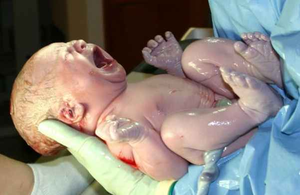
Microbes coexist with humans, forming the microbiota that live in and on our bodies. These microbes begin colonizing us during birth and are found on the skin, digestive system, and urogenital system. They play essential roles in digestion and immune system stimulation.
Microbiota: The collection of microbes living in and on a larger organism.
Functions: Aid in digestion, stimulate immune responses, and protect against pathogens.
Example: Bacteria on the human tongue.
Cellular Structure of Microbes
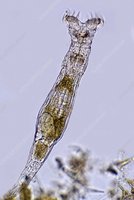
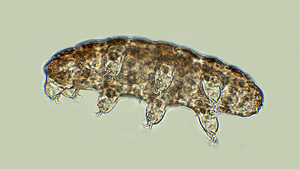
Microbes can be unicellular or multicellular. The cell is the basic unit of life, and some multicellular organisms are still microscopic. There are two fundamental cell types: prokaryotes and eukaryotes.
Prokaryotes: All prokaryotes are unicellular (e.g., bacteria, archaea).
Eukaryotes: Include both unicellular and multicellular organisms (e.g., fungi, protozoa, algae).
Example: Tardigrade and rotifer, both multicellular but microscopic.
Classification of Microbes
Microbes are classified into different groups based on their cellular structure and genetic relationships. The largest groups are called domains: Bacteria, Archaea, and Eukarya.
Bacteria: Prokaryotic, single-celled organisms.
Archaea: Prokaryotic, single-celled, often found in extreme environments.
Eukarya: Includes fungi, protozoa, algae, and multicellular organisms.
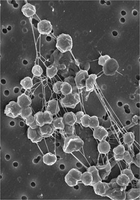
Viruses: Not cells; consist of nucleic acid, protein shell, and sometimes a lipid envelope. They lack independent metabolism and replicate only in host cells.
Microbial Cell Walls
Microbes differ in their cell wall composition, which is a key feature for classification and identification.
Bacteria: Cell wall made of peptidoglycan.
Archaea: Cell wall made of glycoprotein, not peptidoglycan.
Fungi: Cell wall made of chitin.
Algae: Cell wall made of cellulose.
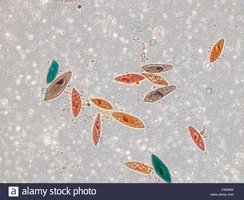
Protozoa: Usually lack a cell wall.
Microbial Motility
Many microbes are capable of motility, which is the ability to move. However, not all species possess this trait.
Motility: Movement is achieved through structures such as flagella, cilia, or pseudopodia.
Non-motile: Some microbes lack structures for movement.
Microbial Nutrition and Metabolism
Microbes obtain energy and nutrients in various ways, including consuming organic molecules, inorganic minerals, and performing photosynthesis.
Heterotrophs: Consume organic molecules (all fungi and protozoa, many bacteria and archaea).
Autotrophs: Perform photosynthesis (all algae, some bacteria and archaea).
Example: Chlorella, an algal species, performs photosynthesis.
Scientific Naming of Microbes
Microbes are identified using scientific names based on the binomial system developed by Carolus Linnaeus. The name consists of two parts: genus and species, both italicized, with the genus capitalized.
Example: Escherichia coli (abbreviated E. coli), Staphylococcus aureus (abbreviated S. aureus).
Correct format: Streptococcus pyogenes
Historical Foundations of Microbiology
Microbes and Human History
Humans have used microbes for food and beverages for thousands of years. Disease epidemics caused by microbes have shaped societies, and the understanding of their role in disease is a relatively modern concept.
Examples: Smallpox, bubonic plague, HIV, COVID-19.
Ancient uses: Bread, alcoholic drinks, fermented foods.
Early Theories and Discoveries
The link between microbes and disease was not recognized until the modern era. Early theories included supernatural forces, divine punishment, and unbalanced humors. The concept of spontaneous generation, the idea that living organisms arise from non-living matter, was widely debated.
Francesco Redi (1668): Experimented to disprove spontaneous generation.
John Needham: Supported spontaneous generation.
Lazzaro Spallanzani: Disproved spontaneous generation by showing microbes entered from air.
Louis Pasteur (1861): Definitively disproved spontaneous generation with swan-neck flask experiments, leading to the concept of biogenesis (living cells come from preexisting living cells).
Key Figures in Microbiology
Anton van Leeuwenhoek: First to observe living microorganisms using simple microscopes.
Ignaz Semmelweis: Introduced handwashing in hospitals to prevent infection.
Joseph Lister: Introduced surgical antiseptics (carbolic acid).
Robert Koch: Demonstrated the link between specific microbes and diseases (anthrax), developed pure culture techniques, and formulated Koch's postulates.
Koch's Postulates
Koch's postulates are a set of criteria used to demonstrate that a specific microbe causes a particular disease:
Organism is found in cases of the disease.
Organism can be isolated and grown in pure culture.
Inoculation of an experimental animal produces similar disease.
Organism can be recovered from the infected animal.
Germ Theory of Disease
The germ theory of disease states that diseases are caused by microbes. This concept was radical at the time and is now fundamental to modern microbiology.
Evidence: Microbes observed directly, bacteria grown in culture, specific link between organism and disease.
Summary
Microbes are everywhere and include a variety of types and species.
All bacteria and archaea are single-celled prokaryotes; all fungi and protozoa are eukaryotes.
Microbes differ in cell structure, metabolism, and genetics.
The concept of spontaneous generation was replaced by biogenesis and the germ theory of disease.
Koch's postulates link specific microbes to particular diseases.
Modern microbiology is based on the work of many individuals and continues to advance our understanding of beneficial and harmful microbes.
