 Back
BackIntroduction to Microbiology: The Microbial World and You
Study Guide - Smart Notes
 Tailored notes based on your materials, expanded with key definitions, examples, and context.
The Microbial World and You
Definition of Disease and Pathogens
Disease is defined as tissue damage caused by biological entities known as pathogens. Pathogens are organisms or agents that cause disease in their hosts. The broad categories of human pathogens include:
Bacteria
Fungi
Protists
Viruses
Animals (e.g., intestinal parasites, arthropods such as mites and biting insects)
Microbes and Human Disease
Normal Microbiota
Normal microbiota are microbes that are normally present in and on the human body. They play a crucial role in maintaining health by:
Preventing the growth of pathogens
Producing growth factors such as vitamins B and K
Resistance is the ability of the body to ward off disease. Resistance factors include the skin, stomach acid, and antimicrobial chemicals produced by the immune system.
Biofilms
Biofilms are complex masses of microbes that attach to solid surfaces. They can be found on rocks, pipes, teeth, and medical implants. Biofilms can be beneficial or harmful:
Beneficial biofilms: Protect mucous membranes, provide food in aquatic ecosystems
Harmful biofilms: Clog water pipes, cause infections on medical implants, and are often resistant to antibiotics
Examples of Microbial Communities
Oral and Gut Flora
The human body hosts diverse microbial communities, such as the oral flora and gut flora, which are essential for health and digestion.
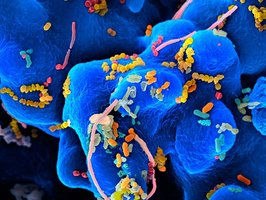
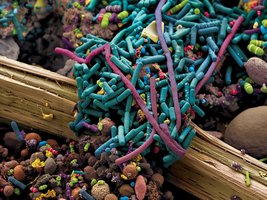
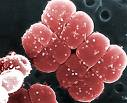
Staphylococcus aureus
Staphylococcus aureus is a common constituent of human skin flora (epiflora). While often harmless, it can become pathogenic under certain conditions.
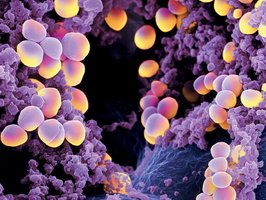
Types of Microorganisms
Major Groups
Bacteria: Prokaryotes with peptidoglycan cell walls, reproduce by binary fission, and may be motile via flagella.
Archaea: Prokaryotes lacking peptidoglycan, often extremophiles, not known to cause human disease.
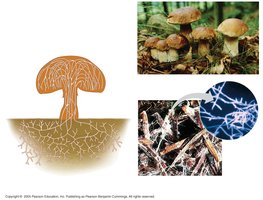
Fungi: Eukaryotes with chitin cell walls, include unicellular yeasts and multicellular molds/mushrooms.
Protozoa: Eukaryotic, unicellular, may be motile via pseudopods, cilia, or flagella.
Algae: Eukaryotes, photosynthetic, cellulose cell walls, produce oxygen and carbohydrates.
Viruses: Acellular, DNA or RNA core, protein coat, replicate only in living hosts.
Multicellular Animal Parasites: Eukaryotic, include helminths (flatworms, roundworms).
Classification of Microorganisms
The Three Domains
Developed by Carl Woese in 1978, the three domains of life are:
Bacteria
Archaea
Eukarya (includes Protists, Fungi, Plants, Animals)
Cell Theory and Microscopy
Cell Theory
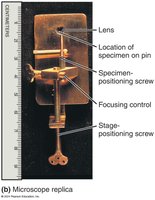
Cell theory states that all living things are composed of cells. This concept was established by Robert Hooke and furthered by Anton van Leeuwenhoek, who first observed microbes using simple microscopes.
Microscopy and the Electromagnetic Spectrum
Microscopy uses the physical properties of the electromagnetic spectrum. Light microscopy uses visible light, while electron microscopy uses shorter wavelengths for higher resolution.
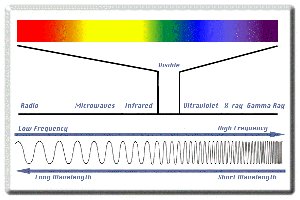
Shorter wavelengths provide better resolution, allowing for the visualization of smaller structures.
Prokaryotic Diversity and Structure
Prokaryotic Cell Shapes
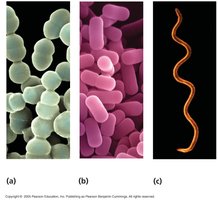
Prokaryotes can be classified by their morphology:
Cocci: Spherical
Bacilli: Rod-shaped
Spirochaetes: Spiral-shaped
Gram Staining and Cell Wall Structure
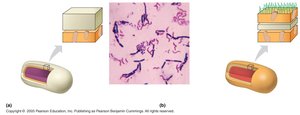
Prokaryotes are further classified by their cell wall structure using the Gram stain:
Gram-positive: Thick peptidoglycan layer, one membrane
Gram-negative: Thin peptidoglycan layer, two membranes (inner and outer), contains lipopolysaccharide
Specialized Structures
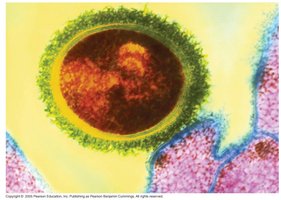
Capsules: Protective layers of protein and polysaccharide
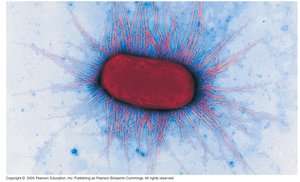
Fimbriae: Attachment structures
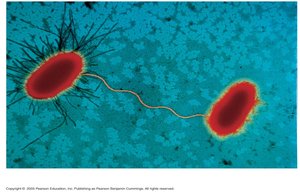
Pili: Used for conjugation (transfer of plasmids)
Prokaryotes You Should Know
Escherichia coli
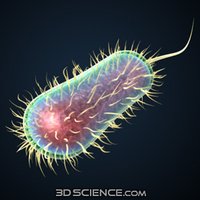
Escherichia coli is a heterotrophic, Gram-negative rod commonly found in the gut flora of animals. It is important for nutrient extraction but can be pathogenic if ingested in large quantities from contaminated food. E. coli is also a model organism in molecular biology and biotechnology.
Cyanobacteria (e.g., Anabaena)
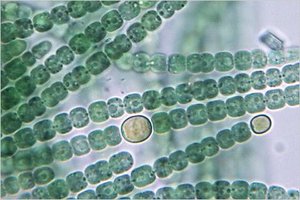
Cyanobacteria are aquatic, photosynthetic bacteria capable of nitrogen fixation. Anabaena forms specialized cells called heterocysts for nitrogen fixation, contributing to the nitrogen cycle.
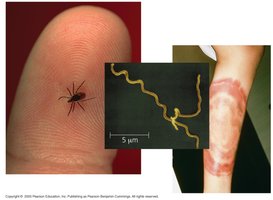
Borrelia burgdorferi
Borrelia burgdorferi is a spirochaete bacterium that causes Lyme disease, transmitted by ticks.
Deinococcus radiodurans
Deinococcus radiodurans is known as the world's toughest bacterium, highly resistant to radiation and other extreme conditions. It is studied for its potential in bioremediation.
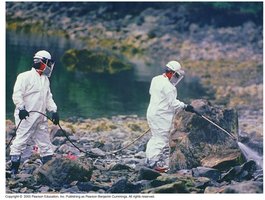
Bioremediation
Bioremediation is the use of prokaryotes to remove toxic substances from the environment, such as cleaning up oil spills.
Eukaryotic Microorganisms
Kingdoms of Eukaryotes
Protists: Mostly single-celled, aquatic, diverse nutrition and motility
Fungi: Multicellular (except yeasts), decomposers, important for recycling nutrients
Plants: Multicellular, photosynthetic
Animals: Multicellular, heterotrophic
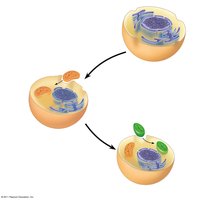
Endosymbiotic Theory
The eukaryotic cell type is believed to have arisen through ancient endosymbiosis, where a host cell engulfed other cells that became organelles such as mitochondria and plastids.
Fungi
Structure and Function
Fungi are efficient decomposers and play essential roles in ecosystems. They can be pathogens, symbionts, or food sources. Fungi have structures such as hyphae and mycelium, and reproduce via spores.
Summary Table: Major Groups of Microorganisms
Group | Cell Type | Cell Wall | Reproduction | Nutrition | Examples |
|---|---|---|---|---|---|
Bacteria | Prokaryotic | Peptidoglycan | Binary fission | Organic/inorganic/photosynthetic | E. coli, Staphylococcus |
Archaea | Prokaryotic | No peptidoglycan | Binary fission | Varied | Methanogens |
Fungi | Eukaryotic | Chitin | Spores | Heterotrophic | Yeasts, molds |
Protozoa | Eukaryotic | None | Sexual/asexual | Heterotrophic/mixotrophic | Paramecium |
Algae | Eukaryotic | Cellulose | Sexual/asexual | Photosynthetic | Green algae |
Viruses | Acellular | Protein coat | Host-dependent | Host-dependent | Bacteriophage, Influenza |
Helminths | Eukaryotic | None | Sexual | Heterotrophic | Roundworms, flatworms |
Historical Foundations of Microbiology
Key Figures and Discoveries
Robert Hooke: First described cells (1665)
Anton van Leeuwenhoek: First observed microbes (1673–1723)
Louis Pasteur: Disproved spontaneous generation, developed pasteurization, and contributed to the germ theory of disease
Robert Koch: Established Koch's postulates, linking specific microbes to specific diseases
Alexander Fleming: Discovered penicillin, the first antibiotic
Conclusion
Microbiology is the study of microscopic organisms, including bacteria, archaea, fungi, protozoa, algae, viruses, and multicellular parasites. These organisms play essential roles in health, disease, and the environment, and their study is foundational to understanding life and disease processes.
