 Back
Introduction to Microbiology: The Microbial World and You
Study Guide - Smart Notes
 Tailored notes based on your materials, expanded with key definitions, examples, and context.
The Microbial World and You
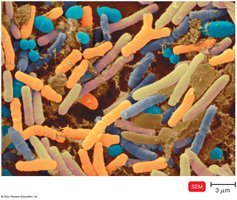
Normal Intestinal Bacteria
The human intestine is home to a vast array of bacteria, collectively known as the intestinal microbiota. These microbes play essential roles in digestion, immunity, and overall health. The diversity and abundance of these bacteria are crucial for maintaining a balanced gut environment.
Roles of Microbes
Microbes affect our lives in both beneficial and destructive ways. Understanding their roles is fundamental to microbiology.
Beneficial Roles: Microbes aid in digestion, produce vitamins, protect against pathogens, and are used in biotechnology.
Destructive Roles: Some microbes cause diseases, spoil food, and damage materials.
The Microbiome
The microbiome refers to the collection of all the microorganisms living in association with the human body. An adult human harbors approximately 30 trillion body cells and another 40 trillion bacterial cells. The microbiome is specific to different body parts and is acquired through birth, environment, and diet.
Functions: The microbiome aids in digestion, synthesizes vitamins, modulates the immune system, and protects against pathogens.
Acquisition: Microbiome is acquired at birth and evolves with exposure to the environment and diet.
Microbiome Research
Recent research initiatives have focused on understanding the human microbiome and its impact on health and disease.
The Human Microbiome Project (2007–2016): Aimed to determine the makeup of typical microbiota in various body areas and understand their relationship to diseases.
The National Microbiome Initiative (NMI, begun in 2016): Explores the role of microbes in different ecosystems, including environmental and human health contexts.
Naming and Classifying Microorganisms
Scientific Nomenclature
Carolus Linnaeus established the system of scientific nomenclature in 1735. Each organism is given a two-part name: the genus and the specific epithet. These names are Latinized and either italicized or underlined.
Example: Escherichia coli (named after Theodor Escherich), Staphylococcus aureus
After first use, names may be abbreviated: E. coli, S. aureus
E. coli is found in the large intestine, while S. aureus is commonly found on the skin.
Types of Microorganisms
Overview of Microbial Diversity
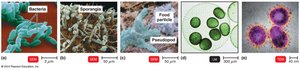
Microorganisms are classified into several major groups, each with distinct characteristics. These include bacteria, archaea, fungi, protozoa, algae, viruses, and multicellular animal parasites.
Bacteria
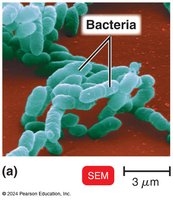
Bacteria are unicellular prokaryotes characterized by the absence of a nucleus. Their cell walls contain peptidoglycan, and they reproduce by binary fission. Bacteria can derive nutrition from organic or inorganic sources or photosynthesis, and many are motile via flagella.
Prokaryotes: Cells lack a true nucleus.
Cell Wall: Contains peptidoglycan.
Reproduction: Binary fission.
Nutrition: Organic/inorganic chemicals or photosynthesis.
Motility: Flagella.
Archaea
Archaea are prokaryotes that lack peptidoglycan in their cell walls and may lack cell walls entirely. They often inhabit extreme environments and include methanogens, extreme halophiles, and extreme thermophiles. Archaea are not known to cause disease in humans.
Extreme Environments: High salinity, temperature, or methane production.
Cell Wall: Lacks peptidoglycan.
Fungi
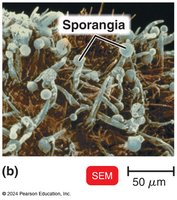
Fungi are eukaryotes with a distinct nucleus and chitin cell walls. They absorb organic chemicals for energy. Yeasts are unicellular, while molds and mushrooms are multicellular. Molds consist of masses of mycelia, composed of filaments called hyphae.
Cell Type: Eukaryotic.
Cell Wall: Chitin.
Nutrition: Absorption of organic chemicals.
Structure: Yeasts (unicellular), molds/mushrooms (multicellular).
Protozoa
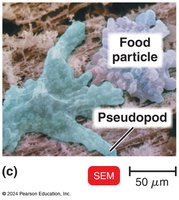
Protozoa are eukaryotic organisms that absorb or ingest organic chemicals. They may be motile via pseudopods, cilia, or flagella. Protozoa can be free-living or parasitic, and some are photosynthetic. Reproduction can be sexual or asexual.
Motility: Pseudopods, cilia, flagella.
Nutrition: Absorption or ingestion.
Reproduction: Sexual or asexual.
Algae
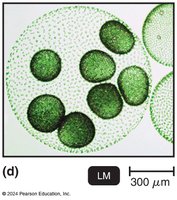
Algae are eukaryotes with cellulose cell walls. They are found in freshwater, saltwater, and soil. Algae use photosynthesis for energy, producing oxygen and carbohydrates. Both sexual and asexual reproduction are possible.
Cell Wall: Cellulose.
Habitat: Freshwater, saltwater, soil.
Energy: Photosynthesis.
Viruses
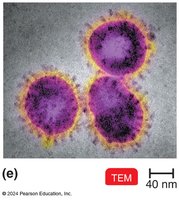
Viruses are acellular entities consisting of a DNA or RNA core surrounded by a protein coat, which may be enclosed in a lipid envelope. Viruses replicate only within living host cells and are inert outside hosts.
Structure: DNA/RNA core, protein coat, lipid envelope (sometimes).
Replication: Only in living host cells.
Multicellular Animal Parasites
These are eukaryotic multicellular animals, not strictly microorganisms, but some stages are microscopic. Parasitic flatworms and roundworms are called helminths.
Helminths: Parasitic worms with microscopic life stages.
Classification of Microorganisms
Three Domains of Life
Carl Woese developed a classification system based on cellular organization in 1978. The three domains are:
Bacteria: Prokaryotic cells.
Archaea: Prokaryotic cells, often extremophiles.
Eukarya: Eukaryotic cells, including protists, fungi, plants, and animals.
A Brief History of Microbiology
Early Observations
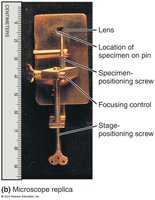
Robert Hooke (1665) observed that living things are composed of "cells," marking the beginning of cell theory. Anton van Leeuwenhoek (1673–1723) used magnifying lenses to observe "animalcules" (bacteria and protozoa).
Cell Theory: All living things are composed of cells.
Microscopy: Early microscopes enabled the discovery of microorganisms.
Spontaneous Generation vs. Biogenesis
Two hypotheses debated the origin of life:
Spontaneous Generation: Life arises from nonliving matter; a "vital force" is necessary.
Biogenesis: Living cells arise only from preexisting living cells.
Francesco Redi (1668) conducted experiments with decaying meat to test these hypotheses, questioning the origin of maggots and the purpose of sealed jars.
Summary Table: Types of Microorganisms
Type | Cell Type | Cell Wall | Reproduction | Nutrition | Motility |
|---|---|---|---|---|---|
Bacteria | Prokaryote | Peptidoglycan | Binary fission | Organic/inorganic/photosynthesis | Flagella |
Archaea | Prokaryote | None or pseudopeptidoglycan | Binary fission | Varied | Varied |
Fungi | Eukaryote | Chitin | Sexual/asexual | Absorption | Non-motile |
Protozoa | Eukaryote | None | Sexual/asexual | Absorption/ingestion | Pseudopods, cilia, flagella |
Algae | Eukaryote | Cellulose | Sexual/asexual | Photosynthesis | Varied |
Viruses | Acellular | None | Host-dependent | Host-dependent | None |
Multicellular Animal Parasites | Eukaryote | None | Sexual/asexual | Varied | Varied |
