Back
Introduction to Microorganisms and Microbiology: Structure, Evolution, and Historical Foundations
Study Guide - Smart Notes
 Tailored notes based on your materials, expanded with key definitions, examples, and context.
Major Themes of Microbiology
What Is Microbiology About and Why Is It Important?
Microbiology is the study of microorganisms, focusing on their structure, function, diversity, and impact on the environment and human society. It is both a basic and applied science, providing insights into fundamental life processes and practical applications in medicine, agriculture, and industry.
Basic Science: Microbes serve as model organisms for understanding cellular processes applicable to all life forms.
Applied Science: Microorganisms are essential in biotechnology, disease control, and environmental management.
Importance: Microbes are the oldest, most abundant, and most diverse forms of life, playing critical roles in biogeochemical cycles and supporting all other life forms.
Structure and Activities of Microbial Cells
Basic Structure of Microbial Cells
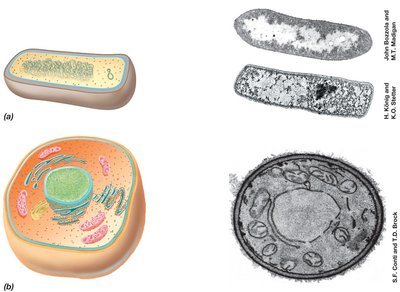
The cell is the fundamental unit of life, exhibiting a dynamic structure that enables various life processes. Microbial cells share several structural features, with variations distinguishing prokaryotes from eukaryotes.
Cytoplasmic (Cell) Membrane: Acts as a selective barrier between the cell interior and the environment.
Cytoplasm: Aqueous solution containing macromolecules, ions, and ribosomes.
Ribosomes: Sites of protein synthesis.
Cell Wall: Provides structural strength (present in most microbes).
Prokaryotes vs. Eukaryotes
Prokaryotes (Bacteria and Archaea): Lack a nucleus and membrane-bound organelles; DNA is typically a single, circular chromosome, sometimes with plasmids.
Eukaryotes (Eukarya): Possess a nucleus and various membrane-bound organelles; usually have multiple, linear chromosomes.
Genome Size Comparison
Escherichia coli: 4.64 million base pairs, ~4,300 genes.
Homo sapiens: ~1,000 times more DNA per cell, ~7 times more genes than E. coli.
Characteristics of Living Cells
All living cells share several key properties, while some exhibit additional specialized functions.
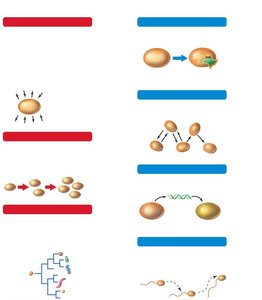
Metabolism: Chemical transformation of nutrients.
Growth/Reproduction: Generation of new cells from pre-existing cells.
Differentiation: Formation of new cell structures (e.g., spores) in some microbes.
Communication: Exchange of chemical signals in some microbes.
Motility: Self-propulsion in some microbes (e.g., via flagella).
Evolution: Genetic changes passed to offspring, leading to adaptation.
Evolution and Diversity of Microbial Cells
Origin and Evolution of Life
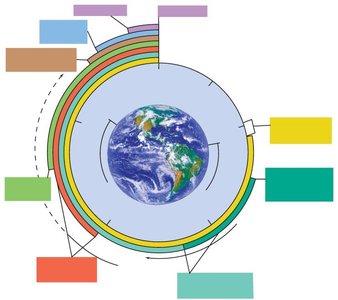
Earth is approximately 4.6 billion years old. The earliest life forms were microbial, with the last universal common ancestor (LUCA) giving rise to all current life. Early Earth was anoxic, and life was exclusively microbial for billions of years.
LUCA: The common ancestor of all cells.
First Cells: Appeared 3.8–3.9 billion years ago; early metabolisms were anaerobic.
Oxygenic Photosynthesis: Evolved with cyanobacteria, leading to atmospheric oxygenation.
Phylogeny and Domains of Life
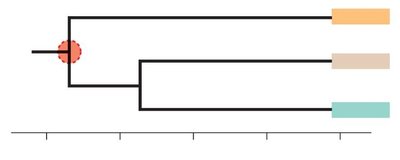
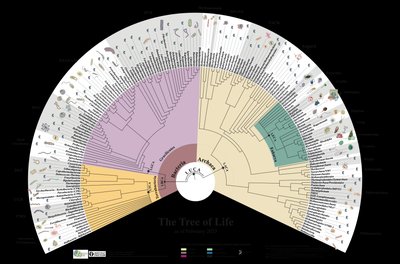
Phylogeny describes evolutionary relationships, often determined by comparing ribosomal RNA (rRNA) gene sequences. This analysis has defined three domains of life: Bacteria, Archaea, and Eukarya.
Bacteria: Prokaryotic, diverse metabolic capabilities.
Archaea: Prokaryotic, often extremophiles, more closely related to Eukarya than Bacteria.
Eukarya: Eukaryotic, includes plants, animals, fungi, and protists.
Development of Multicellularity
Eukaryotic microorganisms were the ancestors of multicellular organisms. Evolution from LUCA led to the divergence of Bacteria and Archaea, with Archaea later giving rise to Eukarya.
The Discovery of Microorganisms
Early Microscopy and Pioneers
The field of microbiology began with the invention of the microscope. Key figures include:
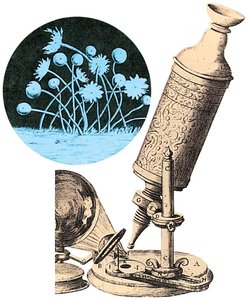
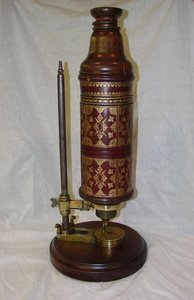
Robert Hooke: First to describe microbes, illustrated mold structures.
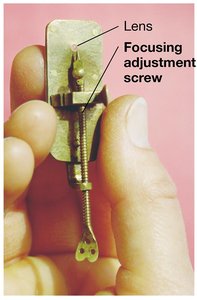
Antoni van Leeuwenhoek: First to describe bacteria as "wee animalcules." Invented a simple microscope.
Ferdinand Cohn: Founded bacterial classification and discovered endospores.
Microbiology in Historical Context
Pasteur and the Disproof of Spontaneous Generation
Louis Pasteur disproved the theory of spontaneous generation, developed aseptic techniques, and invented pasteurization. He also contributed to vaccine development and discovered that fermentation is a biological process.
Pasteurization: Heating liquids to reduce pathogens without sterilization.
Vaccines: Developed for anthrax, fowl cholera, and rabies.
Koch, Infectious Disease, and Pure Cultures
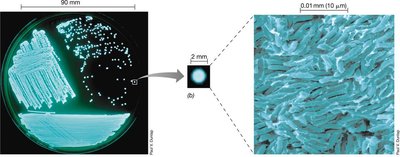
Robert Koch established the link between microbes and disease, formulated Koch's postulates, and developed methods for isolating pure cultures using solid media.
Koch's Postulates: Criteria to establish a causative relationship between a microbe and a disease.
Pure Cultures: Enabled the study of individual microbial species.
Other Key Figures
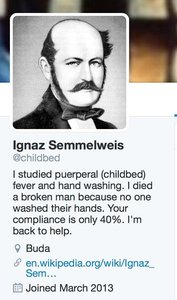
Ignaz Semmelweis: Advocated hand-washing to prevent disease transmission.
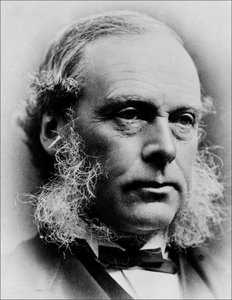
Joseph Lister: Introduced antiseptic techniques in surgery.
Modern Microbiology and Genomics
Subdisciplines of Microbiology
Microbiology has diversified into applied and basic science subdisciplines:
Applied Microbiology: Medical, immunological, agricultural, industrial, aquatic, and biotechnological applications.
Basic Science: Systematics, physiology, ecology, biochemistry, genetics, and virology.
Genomics and Omics Sciences
Modern microbiology employs genomics and related fields to study the complete genetic, transcriptomic, proteomic, and metabolic profiles of microorganisms.
Genomics: Study of all genetic material in cells.
Transcriptomics: Study of RNA expression patterns.
Proteomics: Study of all proteins produced by cells.
Metabolomics: Study of metabolic products and pathways.