 Back
BackIntroduction to the Microbial World: Foundations of Microbiology
Study Guide - Smart Notes
 Tailored notes based on your materials, expanded with key definitions, examples, and context.
The Microbial World
Definition and Scope of Microbiology
Microbiology is the scientific study of microorganisms, which are organisms too small to be seen with the naked eye. This field encompasses both cellular (unicellular and multicellular) and noncellular entities, including bacteria, archaea, fungi, algae, protozoa, and viruses.
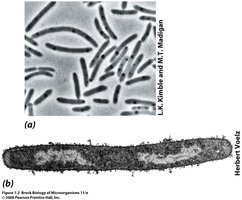
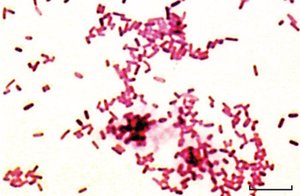
Unicellular organisms: Examples include Bacillus species, which are rod-shaped bacteria.
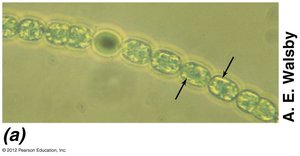
Multicellular microorganisms: Some algae and fungi form multicellular structures.
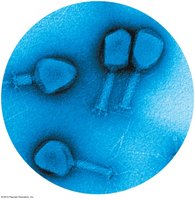
Noncellular entities: Viruses, such as bacteriophage T4, are studied in microbiology due to their impact on living cells.
Major Groups of Microorganisms
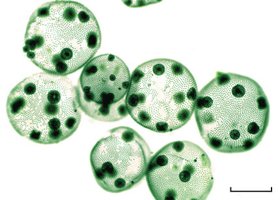
Algae: Photosynthetic eukaryotes found in aquatic environments.
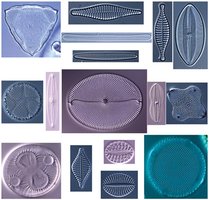
Diatoms: A group of algae with silica cell walls, important in aquatic ecosystems.
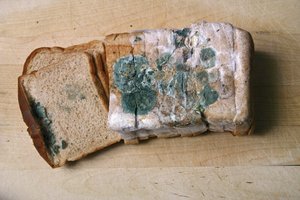
Fungi: Eukaryotic organisms that include yeasts, molds, and mushrooms.
Protozoa: Unicellular eukaryotes, often motile and found in diverse environments.
Viruses: Acellular infectious agents that require host cells for replication.
Bacteria: Prokaryotic, unicellular organisms with diverse metabolic capabilities.
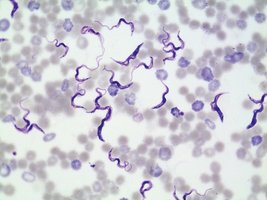
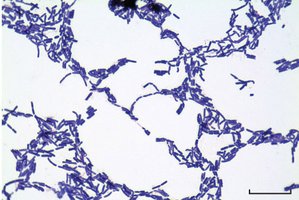
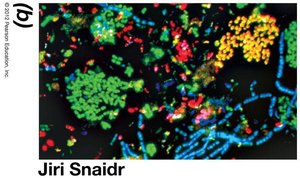
Microbial Communities and Habitats
Microorganisms rarely exist in isolation; they form complex communities in various environments, including the human body, lakes, and sewage sludge. These communities interact with each other and their surroundings, influencing nutrient cycles and ecosystem health.
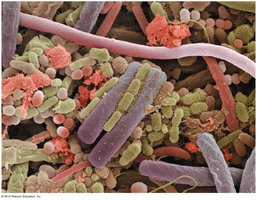
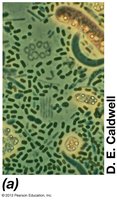
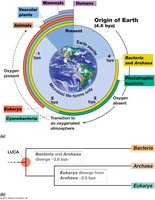
Microbial Evolution and Earth's History
Microbes have dominated Earth's biosphere for approximately 80% of its history. They were the first forms of life and have played crucial roles in shaping the planet's atmosphere and ecosystems.
Impact of Microbes on Humans and the Environment
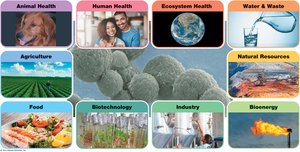
Microorganisms affect human life daily, both positively and negatively. They are essential in health, agriculture, industry, food production, and environmental processes.
Animal and human health: Microbes are part of the normal flora and can also cause diseases.
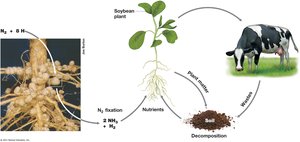
Agriculture: Microbes participate in nutrient cycling and plant growth promotion.
Industry and biotechnology: Microbes are used in the production of pharmaceuticals, enzymes, and biofuels.
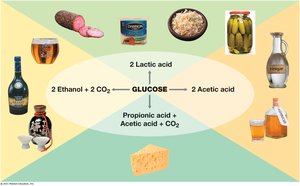
Food: Microbes are involved in fermentation and food spoilage.

Infectious vs Non-infectious Diseases
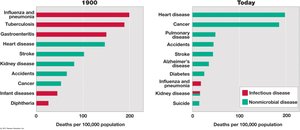
Diseases can be classified as infectious (caused by pathogenic microbes) or non-infectious (resulting from genetic, environmental, or lifestyle factors). The prevalence of infectious diseases has decreased over time due to advances in microbiology and medicine.
Discovery and History of Microbiology
Early Discoveries and Pioneers
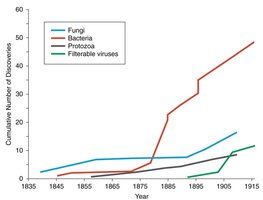
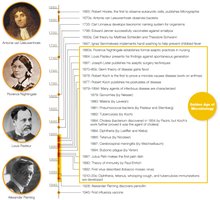
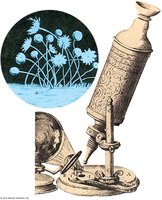
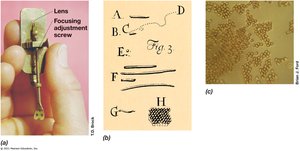
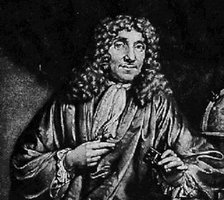
The field of microbiology began with the invention of the microscope and the first observations of microorganisms. Key figures include Robert Hooke, who described microorganisms in 1665, and Antoni van Leeuwenhoek, who first described bacteria in 1676.
Microscopy and Microbial Morphology
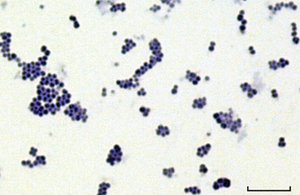
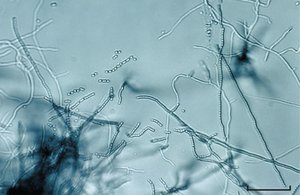
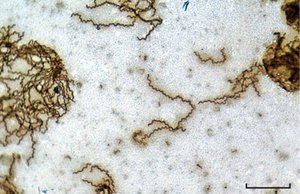
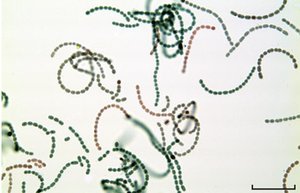
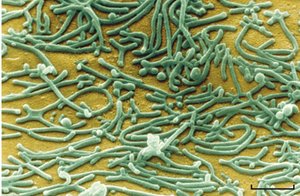
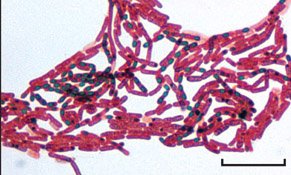
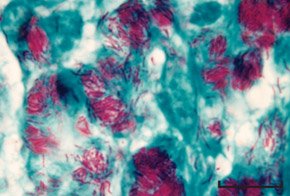
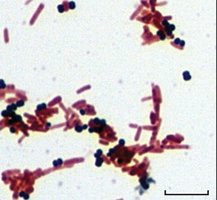
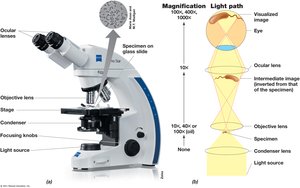
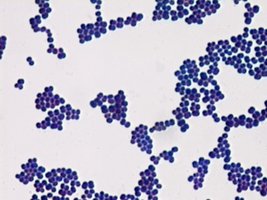
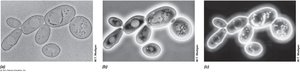
Microscopy is essential for visualizing microbial cell shape, arrangement, and structures. Different types of microscopy (light, phase contrast, darkfield, fluorescent, electron) allow for the observation of various microbial features.
Brightfield microscopy: Simplest form, often requires staining for contrast.
Phase contrast and darkfield microscopy: Enable visualization of live, unstained cells.
Fluorescence microscopy: Uses fluorescent dyes or autofluorescent molecules for visualization.
Electron microscopy: Provides high magnification and resolution for internal and surface structures.
Significance of Microbial Size
Most bacteria and archaea are between 0.2 μm and 700 μm in diameter, while eukaryotic microbes range from 2 μm to 600 μm. Cell size affects physiology, growth rate, and ecological interactions. A high surface area-to-volume ratio facilitates efficient nutrient and waste exchange.
Limits of Cell Size
There is a theoretical lower limit to cell size, as all essential molecules of life must fit within the cell. Ultramicrobacteria challenge our understanding of the minimal requirements for life.
Cellular Organization and Evolution
Basic Components of Microbial Cells
All microbial cells share certain basic components, but there are fundamental differences between prokaryotic and eukaryotic cells.
Prokaryotic cells: Lack a nucleus and membrane-bound organelles; include Bacteria and Archaea.
Eukaryotic cells: Possess a nucleus and membrane-bound organelles; include fungi, algae, and protozoa.
Phylogeny and the Tree of Life
Ribosomal RNA (rRNA) gene sequencing has revolutionized our understanding of evolutionary relationships among organisms. Carl Woese's work led to the recognition of three domains of life: Bacteria, Archaea, and Eukarya.
Ernst Haeckel (1866): Early attempts to classify life forms.
Robert Whittaker (1969): Proposed the five-kingdom classification.
Carl Woese: Used rRNA sequences to define Archaea as a distinct domain.
Foundations of Microbiology: Key Experiments and Figures
Louis Pasteur and the Defeat of Spontaneous Generation
Louis Pasteur's experiments disproved the theory of spontaneous generation, demonstrating that life arises from pre-existing life. He developed sterilization methods, food preservation techniques, and vaccines for several diseases.
Swan-necked flask experiment: Showed that sterilized broth remained free of microbial growth unless exposed to airborne microorganisms.
Contributions to fermentation: Demonstrated that fermentation is a biological process.
Vaccine development: Created vaccines for anthrax, fowl cholera, and rabies.
Robert Koch and the Germ Theory of Disease
Robert Koch established the link between specific microbes and infectious diseases. He developed Koch's postulates, a set of criteria for proving that a particular microorganism causes a specific disease.
Identified causative agents: Discovered the microbes responsible for anthrax, tuberculosis, and cholera.
Pure culture techniques: Developed methods for isolating and growing pure cultures of bacteria.
Koch's postulates: Provided a systematic approach to linking microbes with diseases.
Additional info: This guide covers foundational concepts from Chapter 1 (The Microbial World) and introduces key historical figures, microbial diversity, microscopy, and the impact of microbes on human society and the environment. It provides a basis for further study in microbial cell structure, metabolism, genetics, and ecology.
