 Back
Part 1 for exam 1: Introduction to the Microbial World: Structure, Function, Diversity, and Impact
Study Guide - Smart Notes
 Tailored notes based on your materials, expanded with key definitions, examples, and context.
Introduction to the Microbial World
Overview of Microorganisms
Microorganisms, or microbes, are life forms too small to be seen by the naked eye. They represent the oldest and most abundant forms of life on Earth, inhabiting every environment that supports life, including extreme environments unsuitable for plants and animals. Microorganisms are essential for human life, playing critical roles in ecological processes, health, and industry.
Definition: Microorganisms include bacteria, archaea, fungi, protists, and some algae. Viruses, while not cells, are also studied in microbiology due to their interactions with living cells.
Cellular Organization: Microbes can be single-celled or form complex communities.
Ecological Ubiquity: Microbes are found in soil, water, air, and within other organisms.
Biomass: Microbial cells constitute the largest mass of living material on Earth, far exceeding the biomass of humans and other animals.
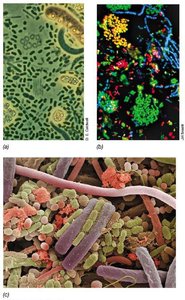
Microbial Diversity and Communities
Microorganisms exhibit remarkable diversity in form and function. They are responsible for producing oxygen, driving biogeochemical cycles (such as carbon, nitrogen, and phosphorus cycling), and decomposing organic matter. Microbial communities can be highly structured, with different species occupying specific ecological niches.
Microbial Communities: Groups of interacting microbes that form complex ecosystems, such as those found in soil, water, or the human gut.
Winogradsky Column: A classic model for studying microbial communities and their metabolic diversity in a stratified environment.
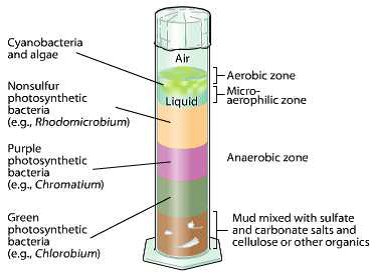

Structure and Activities of Microbial Cells
Prokaryotic vs. Eukaryotic Cells
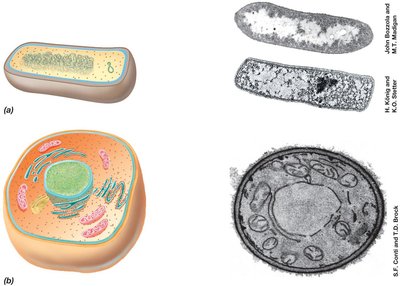
Microbial cells are classified as either prokaryotic or eukaryotic based on their structural characteristics. Prokaryotes include Bacteria and Archaea, while Eukaryotes include fungi, protists, algae, plants, and animals.
Prokaryotes: Lack a membrane-bound nucleus and organelles; genetic material is typically a single circular chromosome located in the nucleoid region. Reproduce asexually.
Eukaryotes: Possess a true nucleus enclosed by a membrane and various organelles. Chromosomes are linear and usually present in multiple copies. Can reproduce sexually or asexually.
Properties of Microbial Cells
All cells share certain fundamental properties, while some properties are unique to specific groups of microorganisms.
Universal Properties:
Metabolism: Cells take up nutrients, transform them, and expel wastes. This includes genetic processes (replication, transcription, translation) and catalytic processes (energy generation, biosynthesis).
Growth: Cells convert nutrients into new cell material, leading to cell division.
Evolution: Cells evolve over time, leading to the diversity of life observed today.
Properties of Some Cells:
Differentiation: Formation of new cell structures, such as spores.
Communication: Interaction with other cells via chemical signals.
Genetic Exchange: Transfer of genes between cells by various mechanisms.
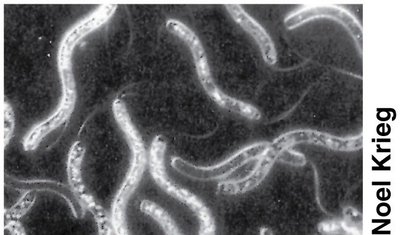
Motility: Ability to move, often via flagella.
Evolutionary Relationships and the Tree of Life
The Three Domains of Life
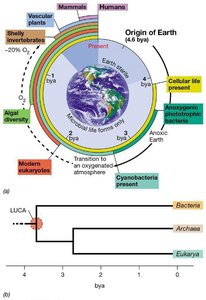
Microbial cells are found in all three domains of life: Bacteria, Archaea, and Eukarya. The evolutionary relationships among these domains are depicted in the phylogenetic tree of life, which is based on molecular data such as ribosomal RNA sequences.
Bacteria: Prokaryotic, diverse in metabolism and ecology.
Archaea: Prokaryotic, often found in extreme environments, distinct from bacteria in membrane chemistry and genetics.
Eukarya: Includes all eukaryotic organisms.

Shared Features of All Life
Despite their diversity, all living organisms share fundamental molecular and biochemical features, reflecting their common evolutionary origin.
Genetic Material: DNA composed of nucleotides, double-stranded structure, universal genetic code (codons).
Gene Expression: Transcription (DNA to RNA) and translation (RNA to protein) mechanisms are conserved.
Cellular Structures: Lipid bilayer membranes, ribosomes, and metabolic pathways (catabolic and anabolic).
Energy Conservation: ATP as the universal energy currency, electron carriers (e.g., NADH), and mechanisms such as oxidative phosphorylation and substrate-level phosphorylation.
Microbial Evolution and the History of Life
Timeline of Life on Earth
Earth is approximately 4.6 billion years old. The first cells appeared between 3.8 and 4.3 billion years ago, and life was exclusively microbial for most of Earth's history. The atmosphere was anoxic until about 2.6 billion years ago, after which oxygenic photosynthesis by cyanobacteria led to the accumulation of oxygen and the evolution of more complex life forms.
LUCA: Last Universal Common Ancestor, the root of the tree of life.
Major Events: Origin of cellular life, evolution of photosynthesis, oxygenation of the atmosphere, emergence of eukaryotes, and the rise of plants and animals.
The Impact of Microorganisms on Human Society
Beneficial and Harmful Roles
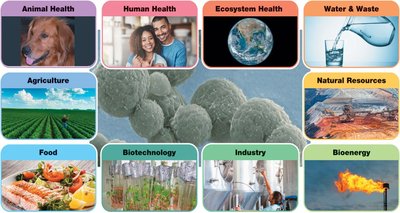
The vast majority of microorganisms are beneficial, playing essential roles in nutrient cycling, agriculture, food production, and biotechnology. Only a small fraction cause diseases in humans, animals, or plants.
Positive Impacts:
Nitrogen fixation, regeneration of nutrients, waste removal, cellulose degradation in ruminants, and the human gut microbiome.
Production of fermented foods (e.g., yogurt, cheese, sauerkraut) and biofuels (e.g., methane, ethanol).
Bioremediation of pollutants and wastewater treatment.
Negative Impacts:
Diseases in plants, animals, and humans (e.g., infectious diseases such as plague, Ebola, and COVID-19).
Food spoilage and contamination of water supplies.
Microorganisms in Agriculture and Food
Microbes are crucial for soil fertility, plant health, and the production of fermented foods. They also play a role in both the positive and negative aspects of agriculture and food safety.
Positive: Nitrogen-fixing bacteria, cellulose-degrading microbes, and beneficial gut microbiota.
Negative: Plant and animal diseases, food spoilage.
Microorganisms, Energy, and the Environment
Microbes are involved in the production of biofuels, bioremediation of environmental pollutants, and the cycling of greenhouse gases. They are essential for the natural remediation of contaminated environments, although some processes are slower under anoxic conditions.
Summary Table: Properties of Prokaryotic and Eukaryotic Cells
Feature | Prokaryotes (Bacteria & Archaea) | Eukaryotes |
|---|---|---|
Nucleus | No (nucleoid region) | Yes (membrane-bound) |
Chromosomes | Single, circular, haploid | Multiple, linear, diploid or more |
Organelles | Absent | Present (e.g., mitochondria, ER) |
Cell Size | Generally smaller | Generally larger |
Reproduction | Asexual (binary fission) | Sexual and asexual |
Conclusion
Microbiology is the study of a vast and diverse group of organisms that are fundamental to life on Earth. Understanding their structure, function, diversity, and impact is essential for advances in health, agriculture, industry, and environmental science.
