Back
Introduction to the Microbial World: Structure, Diversity, and Importance
Study Guide - Smart Notes
 Tailored notes based on your materials, expanded with key definitions, examples, and context.
Chapter 1: The Microbial World
Introduction to Microbial Communities
Microorganisms exist in complex communities, interacting with each other and their environments. These communities can be found in diverse habitats, including soil, water, and within host organisms. Microbial communities are essential for ecosystem functioning, nutrient cycling, and maintaining health in plants, animals, and humans.
Microbial Diversity and Community Structure
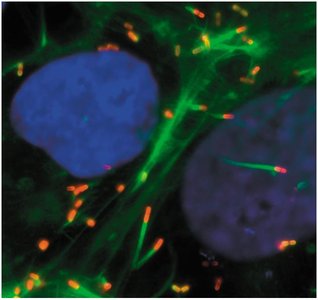
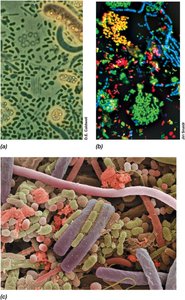
Microbial communities are composed of various species, each with unique roles and interactions. The diversity within these communities allows for resilience and adaptability to environmental changes. Microbes can be visualized using advanced microscopy techniques, revealing their abundance and spatial organization.
Applications of Microbiology
Microbiology has broad applications across multiple sectors, including health, agriculture, industry, and environmental management. Microorganisms are used in biotechnology, food production, waste treatment, and the development of bioenergy. Their roles in natural resource management and ecosystem health are also critical.
Animal and Human Health: Microbes are involved in disease, immunity, and maintaining healthy microbiomes.
Agriculture: Microbes enhance soil fertility and plant growth.
Industry and Biotechnology: Used in fermentation, bioremediation, and production of pharmaceuticals.
Bioenergy: Microbes produce renewable fuels such as methane and ethanol.

Microbial Cell Structure and Function
Microbial Growth and Colony Formation
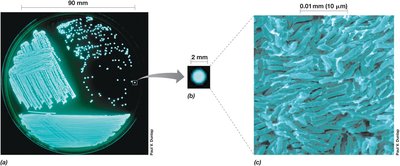
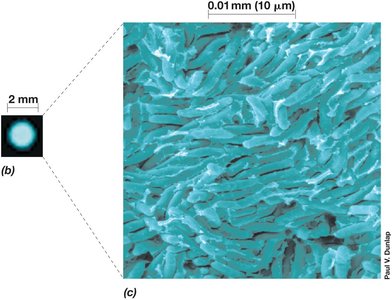
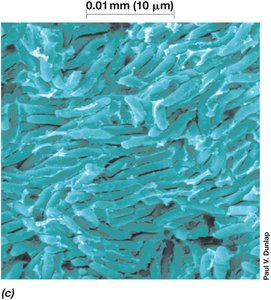
Microbial growth refers to the increase in the number of cells, typically through binary fission. Colonies on solid media originate from a single cell, known as a colony-forming unit (CFU). Each colony ideally contains genetically identical cells, allowing for the study of pure cultures.
Prokaryotic vs. Eukaryotic Cell Structure
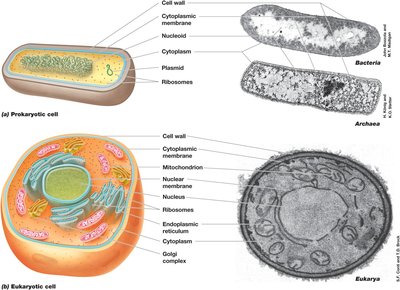
Microbial cells are classified as either prokaryotic (Bacteria and Archaea) or eukaryotic (Eukarya). Prokaryotes lack a membrane-bound nucleus, while eukaryotes possess complex organelles. The cytoplasm is the site of metabolism, and genetic information is stored in DNA. Plasmids in bacteria often carry genes for antibiotic resistance.
Prokaryotes: No nucleus, DNA is not associated with histones (except in Archaea), simple internal structure.
Eukaryotes: Nucleus present, membrane-bound organelles (mitochondria, Golgi apparatus, endoplasmic reticulum).
Properties of Microbial Cells
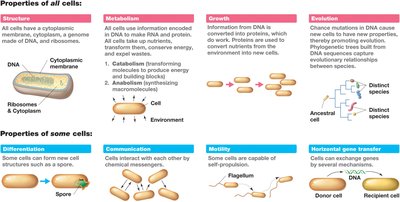
All cells share fundamental properties, including structure, metabolism, growth, and evolution. Some cells also exhibit differentiation, communication, motility, and horizontal gene transfer.
Structure: All cells have a cytoplasmic membrane, cytoplasm, DNA, and ribosomes.
Metabolism: Cells transform energy and matter through catabolism and anabolism.
Growth: Cells use genetic information to synthesize new components and divide.
Evolution: Genetic changes allow adaptation and speciation.
Differentiation: Some cells form specialized structures (e.g., spores).
Communication: Cells interact via chemical signals.
Motility: Some cells move using flagella or cilia.
Horizontal Gene Transfer: Exchange of genetic material between cells.
Microbial Size, Shape, and Diversity
Cell Size and Volume
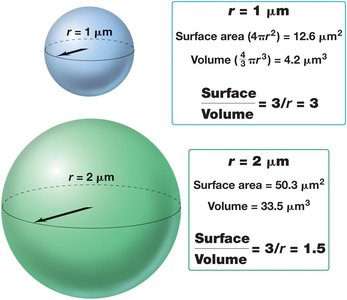
Microbial cells vary greatly in size and volume. The size of a cell influences its surface area-to-volume ratio, which affects nutrient uptake and metabolic rates. Smaller cells have a higher surface area-to-volume ratio, facilitating faster growth and adaptation.
Organism | Characteristics | Morphology | Size (μm3) | Cell Volume (μm3) | Volume Compared to E. coli |
|---|---|---|---|---|---|
Thiomargarita namibiensis | Sulfur chemolithotroph | Cocci in chains | 750,000 | 200,000,000 | 100,000x |
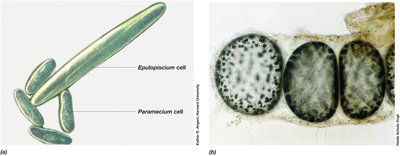
Epulopiscium fishelsoni | Chemoorganotroph | Rods with tapered ends | 80 x 600 | 20,000,000 | 10,000x |
Escherichia coli | Chemoorganotroph | Rods | 2 x 0.5 | 0.6 | 1x |
Mycoplasma pneumoniae | Pathogenic bacterium | Pleomorphic | 0.2 | 0.009 | 0.015x |

Very Large Bacteria
Some bacteria, such as Epulopiscium fishelsoni and Thiomargarita namibiensis, are much larger than typical bacterial cells. These organisms challenge traditional concepts of microbial size and demonstrate the diversity of microbial life.
Surface Area-to-Volume Relationships
The surface area-to-volume ratio is a critical factor in cell physiology. As cell size increases, the ratio decreases, which can limit the rate of nutrient uptake and waste elimination. This relationship is described mathematically as:
Cell Morphologies
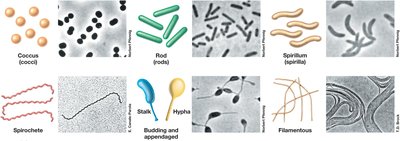
Microorganisms exhibit a variety of shapes, including cocci (spherical), rods (bacilli), spirilla (spiral), spirochetes, and filamentous forms. Cell shape can influence motility, nutrient acquisition, and ecological niche.
Microbial Size and Shape Diversity
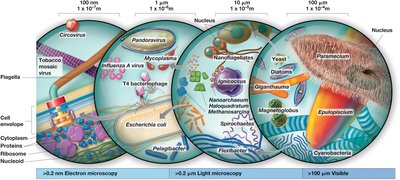
Microorganisms vary greatly in both size and shape, from tiny viruses to large protozoa and algae. This diversity allows microbes to occupy a wide range of ecological niches and adapt to various environmental conditions.
Microbial Evolution and the Tree of Life
Origin and Evolution of Microbial Life
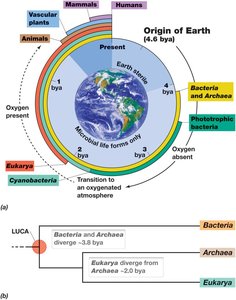
Microbial life originated on Earth billions of years ago and has since diversified into the three domains: Bacteria, Archaea, and Eukarya. The Last Universal Common Ancestor (LUCA) is the hypothetical ancestor of all current life forms. Microbes played a crucial role in shaping Earth's atmosphere and supporting the evolution of complex life.
Extremophiles and Microbial Adaptations
Classes and Examples of Extremophiles
Extremophiles are microorganisms that thrive in extreme environments, such as high or low temperatures, acidic or alkaline pH, high pressure, or high salt concentrations. These adaptations allow them to colonize habitats that are inhospitable to most life forms.
Extreme | Descriptive Term | Genus, Species | Domain | Habitat | Minimum | Optimum | Maximum |
|---|---|---|---|---|---|---|---|
High Temperature | Hyperthermophile | Methanopyrus kandleri | Archaea | Undersea hydrothermal vent | 90°C | 106°C | 122°C |
Low Temperature | Psychrophile | Psychromonas ingrahamii | Bacteria | Sea ice | -12°C | 5°C | 12°C |
Acidic pH | Acidophile | Picrophilus oshimae | Archaea | Acidic hot springs | 0.06 | 0.7 | 4 |
High Pressure | Barophile | Moritella yayanosii | Bacteria | Deep ocean sediments | 700 atm | 1000 atm | --- |
High Salt | Halophile | Halobacterium salinarum | Archaea | Salterns | 15% | 25% | 32% saturation |

Microorganisms and Human Society
Microbes in Health and Disease
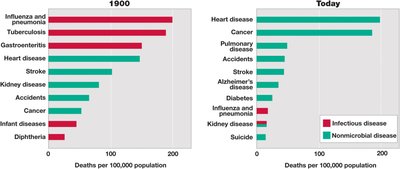
Microorganisms play dual roles in human health, acting as both beneficial symbionts and pathogens. Advances in microbiology have led to significant reductions in infectious disease mortality, but microbes remain important in emerging diseases and antibiotic resistance.
Microbes in Agriculture and the Environment
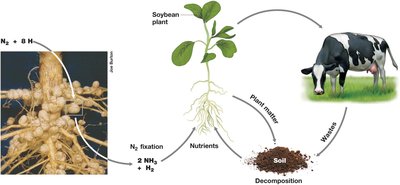
Microbes are essential for nutrient cycling, soil fertility, and plant health. They participate in nitrogen fixation, decomposition, and the recycling of organic matter, supporting sustainable agriculture and ecosystem productivity.
The Human Microbiome
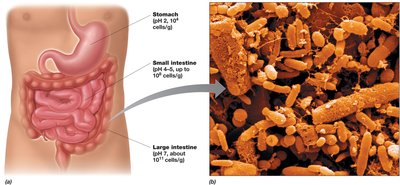
The human gastrointestinal tract harbors a complex community of microbes, known as the gut microbiome. These microbes aid in digestion, synthesize vitamins, and protect against pathogens. The composition of the microbiome varies along the digestive tract and is influenced by diet, health, and environment.
Microbes in Food and Industry
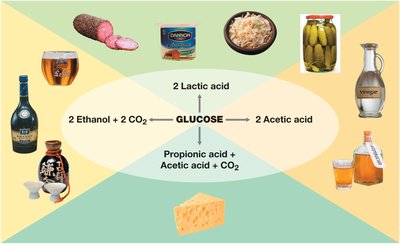
Microorganisms are used in the production of fermented foods and beverages, such as cheese, yogurt, bread, beer, and wine. Industrial microbiology harnesses microbial metabolism for the production of chemicals, enzymes, and pharmaceuticals.