 Back
BackInvasion and Establishment of Microbes in Hosts: Infection and Disease
Study Guide - Smart Notes
 Tailored notes based on your materials, expanded with key definitions, examples, and context.
The Invasion and Establishment of Microbes in Hosts: Infection
Exposure to Microbes: Contamination and Infection
Microbial exposure is the first step in the process leading to infection and disease. Understanding the distinction between contamination and infection is crucial in microbiology.
Contamination: The mere presence of microbes in or on the body. This does not necessarily result in disease or infection.
Infection: Occurs when an organism evades the body’s external defenses, multiplies, and becomes established in the body.
Key Concept: Every infection begins with contamination, but not every contamination leads to infection.
Portals of Entry
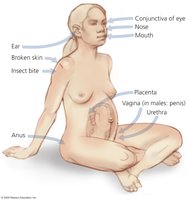
Pathogens must enter the host through specific sites known as portals of entry. These are anatomical locations where microbes can gain access to the body’s internal environment.
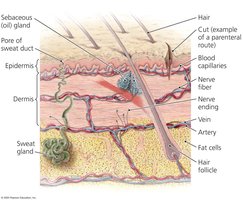
Skin: The outer layer of dead skin cells acts as a barrier, but some pathogens can enter through cuts, abrasions, or by burrowing/digesting the outer layers.
Mucous Membranes: Line body cavities open to the environment (e.g., respiratory, gastrointestinal, urogenital tracts). These provide a moist, warm environment favorable for pathogen entry. The respiratory tract is the most common site of entry, typically via the nose, mouth, or eyes. The gastrointestinal tract is also a route, but pathogens must survive the acidic pH of the stomach.
Placenta: Normally an effective barrier, but some pathogens can cross and infect the fetus, potentially causing spontaneous abortion, birth defects, or premature birth.
Parenteral Route: Not a true portal of entry; refers to pathogens being deposited directly into tissues beneath the skin or mucous membranes (e.g., via punctures, cuts, bites).
The Role of Adhesion in Infection
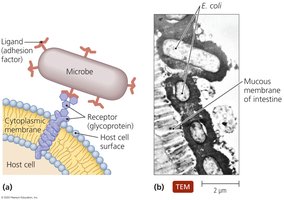
Adhesion is the process by which microorganisms attach themselves to host cells, a critical step for colonization and infection.
Adhesion Factors: Specialized structures or attachment molecules (e.g., ligands, adhesins) that enable microbes to bind to host cell receptors.
Attachment Proteins: Found on viruses and many bacteria; these proteins (ligands) bind to specific receptors on host cells, determining host and tissue specificity.
Prevention of Infection: Altering or blocking ligands or receptors can prevent infection. Microorganisms unable to produce adhesion factors are typically avirulent.
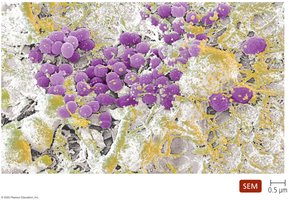
Biofilms: Some bacteria attach to each other and surfaces to form biofilms, which enhance colonization and resistance to host defenses.
The Nature of Infectious Disease
Infection and Disease
Infection refers to the invasion of the host by a pathogen. Disease (also called morbidity) results if the pathogen alters normal body functions.
Infection: Presence and multiplication of a pathogen in the host.
Disease: Any change from a state of health; the body is not functioning normally due to the pathogen.
Manifestations of Disease: Symptoms, Signs, and Syndromes
The effects of infectious disease can be categorized as symptoms, signs, or syndromes.
Symptoms: Subjective characteristics of disease felt only by the patient (e.g., pain, fatigue).
Signs: Objective manifestations observed or measured by others (e.g., fever, swelling).
Syndrome: A group of symptoms and signs that characterize a particular disease or abnormal condition.
Asymptomatic (Subclinical) Infections: Infections that lack symptoms but may still have observable signs.
Causation of Disease: Etiology
Etiology is the study of the cause of disease. Diseases can have various causes, including infectious agents, genetic factors, or environmental influences.
Etiology: The identification and study of the specific cause of a disease.
Categories of Diseases: Diseases may be classified based on their cause (e.g., infectious, genetic, idiopathic, nosocomial).
Term | Definition |
|---|---|
Infectious Disease | Caused by pathogenic microorganisms |
Idiopathic Disease | Cause is unknown |
Nosocomial Disease | Acquired in a hospital setting |
Genetic Disease | Caused by abnormalities in genes |
Degenerative Disease | Results from aging or wear and tear |
Additional info: | Some diseases may fall into more than one category. |
Additional info: The tables referenced in the original material (e.g., Table 14.4, 14.5, 14.6, 14.7) are not fully provided, but key concepts and logical entries have been included above for completeness.
