 Back
Main Themes and Foundations of Microbiology
Study Guide - Smart Notes
 Tailored notes based on your materials, expanded with key definitions, examples, and context.
Introduction to Microbiology
Definition and Scope
Microbiology is the specialized area of biology that deals with microscopic organisms known as microbes or microorganisms. These include bacteria, fungi, algae, viruses, protozoans, and helminths. Microbiology explores their structure, function, classification, and roles in nature and human health.
Bacteria: Single-celled prokaryotes.
Fungi: Eukaryotic organisms, can be unicellular (yeasts) or multicellular (molds, mushrooms).
Algae: Photosynthetic eukaryotes, important in aquatic environments.
Viruses: Acellular entities, require host cells to replicate.
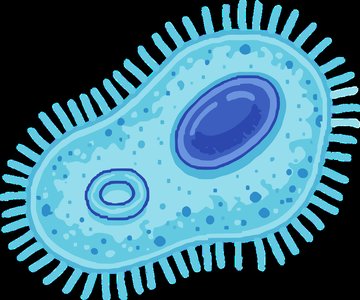
Protozoans: Unicellular eukaryotes, often motile.
Helminths: Parasitic worms, multicellular eukaryotes.
Characteristics of Microbes
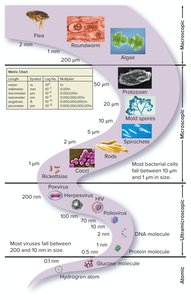
Microscopic: Too small to be seen with the naked eye.
Ubiquitous: Found everywhere on Earth.
Cellular Organization: Can be prokaryotes (simple, no nucleus), eukaryotes (complex, with nucleus), or neither (viruses).
Origins and Importance of Microbes
Origins of Microbes
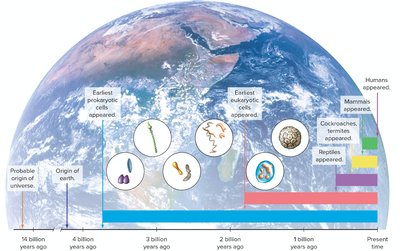
Microbes are among the earliest forms of life on Earth, with prokaryotic cells appearing billions of years ago, followed by eukaryotic cells. Their evolution has shaped the biosphere and enabled the development of complex life forms.
Importance of Microbes
Sewage Treatment: Beneficial microbes help remove harmful substances from wastewater, making it safe for environmental release.
Biotechnology: Use of microbes or their products in industry, including genetic engineering (e.g., production of insulin by bacteria).
Bioremediation: Microbes are used to clean up environmental pollutants such as oil spills and heavy metals.
Photosynthesis: Photosynthetic microbes contribute to about 50% of Earth's photosynthesis, producing oxygen and organic matter.
Decomposition: Microbes recycle nutrients by breaking down dead matter.
Weathering: Microbes contribute to the breakdown of rocks, releasing minerals and enhancing soil quality.
Plant Partners: Mycorrhizal fungi form mutualistic relationships with plant roots, aiding nutrient absorption.
Microbial Relationships
Types of Microbial Relationships
Symbiotic Relationships: At least one partner requires the relationship for survival.
Mutualism: Both partners benefit (e.g., mycorrhizae).
Parasitism: One benefits, the other is harmed (e.g., pathogens in humans).
Commensalism: One benefits, the other is unaffected (e.g., Staphylococcus and Haemophilus).
Amensalism: One produces a substance that harms another (e.g., antibiotic production).
Nonsymbiotic Relationships: Not required for survival by either partner.
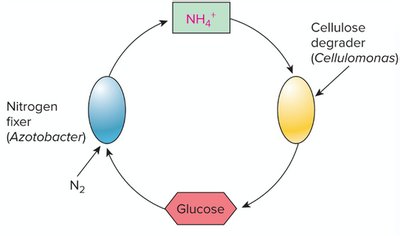
Syntrophy/Crossfeeding: Microbes share nutrients (e.g., Azotobacter and Cellulomonas).
Microbial Relationships with Humans
Normal Microbiota: Microbes that live in and on humans, mostly mutualistic, aiding in digestion, vitamin production, and protection from pathogens.
Pathogens: Disease-causing microbes, all parasitic, responsible for infectious diseases.
Pathogens and Infectious Diseases
Emerging and Reemerging Diseases
Emerging Diseases: Newly identified diseases increasing in incidence (e.g., SARS, COVID-19, Zika).
Reemerging Diseases: Previously controlled diseases that are increasing due to factors like reduced vaccination, global travel, and antibiotic resistance.
History of Microbiology
The Microscope
The invention of the microscope by Antonie van Leeuwenhoek in the late 1600s allowed scientists to observe microorganisms for the first time. Modern light microscopes achieve up to 1000x magnification, while electron microscopes are even more powerful.
Disproving Spontaneous Generation
Spontaneous generation (abiogenesis) was the belief that living things could arise from nonliving matter. This was disproved by experiments from Redi, Jablot, and Pasteur, establishing the principle of biogenesis (life arises from life).
Redi's Experiment: Showed that maggots on meat came from flies, not the meat itself.
Jablot's Experiment: Demonstrated that microbes grew only in open containers, not closed ones.
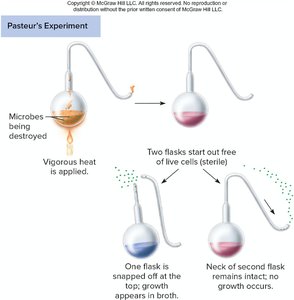
Pasteur's Swan-Neck Flask Experiment: Proved that sterilized broth remained free of microbes unless exposed to contaminated air.
Germ Theory of Disease
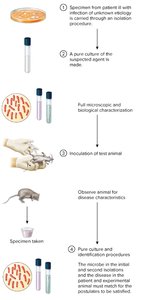
The germ theory states that specific diseases are caused by specific microbes. Robert Koch established this by linking microbes to diseases using Koch's postulates, a series of experimental steps still used today.
Advent of Sterilization and Aseptic Technique
Aseptic Technique: Practices to reduce the presence of pathogens, introduced by Joseph Lister (e.g., disinfecting hands and air with phenol).
Sterilization: Complete elimination of all infectious agents (e.g., autoclave).
Vaccination
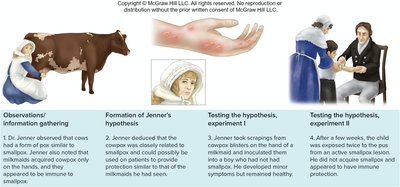
Edward Jenner pioneered vaccination by using cowpox to protect against smallpox. Vaccination uses a less harmful version of a pathogen to stimulate immunity, while variolation used the actual pathogen.
Other Milestones
Discovery of antibiotics (e.g., penicillin by Alexander Fleming).
Identification of DNA as genetic material.
Determination of DNA structure.
Development of genetic engineering and PCR.
Exploration of the human microbiome.
Classification and Naming of Microbes
Taxonomic Hierarchy
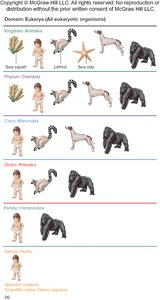
Microbes are classified using a hierarchical system: Domain, Kingdom, Phylum, Class, Order, Family, Genus, Species. The scientific name (binomial nomenclature) consists of the genus (capitalized) and species (lowercase), both italicized (e.g., Staphylococcus aureus).
The Three Domains of Life
Domain | Cell Type | Key Features | Examples |
|---|---|---|---|
Bacteria | Prokaryotic | Traditional bacteria, peptidoglycan in cell walls | Escherichia coli |
Archaea | Prokaryotic | Extreme environments, no peptidoglycan, not typical pathogens | Methanogens, halophiles |
Eukarya | Eukaryotic | Unicellular or multicellular, includes fungi, algae, protozoa, helminths | Staphylococcus aureus, yeasts, protozoa |
Naming of Microbes
Names may reflect a person (e.g., Escherichia coli), characteristics (e.g., Staphylococcus aureus), or common names (e.g., beef tapeworm).
