 Back
BackMajor Groups of Prokaryotic and Eukaryotic Microorganisms: Classification, Structure, and Diversity
Study Guide - Smart Notes
 Tailored notes based on your materials, expanded with key definitions, examples, and context.
Major Groups of Prokaryotic and Eukaryotic Microorganisms
Overview of Microbial Diversity
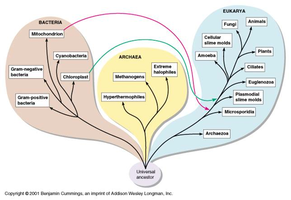
Microorganisms are classified into three major domains: Bacteria, Archaea, and Eukarya. This classification is based on genetic, structural, and metabolic differences. All three domains are believed to have arisen from a universal common ancestor, and each contains a wide variety of unicellular and multicellular organisms.
Naming and Classifying Microorganisms
Binomial Nomenclature and Taxonomy
The system of naming organisms, known as binomial nomenclature, was established by Carolus Linnaeus. Each organism is given a two-part Latin name: the genus (capitalized) and the species (lowercase). For example, Escherichia coli is named after its discoverer and its habitat (the colon). Names can be honorary, descriptive, or both.
Genus: First part, capitalized, underlined or italicized
Species: Second part, lowercase, underlined or italicized
Example: Staphylococcus aureus (clusters of round, gold-colored colonies)
Prokaryotic Microorganisms: Bacteria
General Characteristics
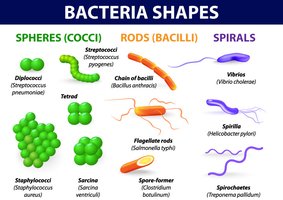
Bacteria are prokaryotic, unicellular organisms that lack a nucleus. They are ubiquitous and display a variety of shapes and arrangements. Most bacteria are either spherical (cocci) or rod-shaped (bacilli), but some are spiral-shaped.
Coccus: Single spherical cell
Cocci: Multiple spherical cells
Bacillus: Single rod-shaped cell
Bacilli: Multiple rod-shaped cells
Spiral forms: Vibrio, spirillum, spirochete
Bacterial Arrangements
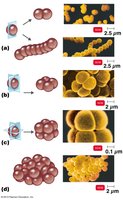
Bacteria can form characteristic arrangements based on their patterns of division:
Diplococci: Pairs of cocci
Streptococci: Chains of cocci
Tetrads: Groups of four cocci
Sarcinae: Cubic configuration of eight cocci
Staphylococci: Irregular clusters of cocci
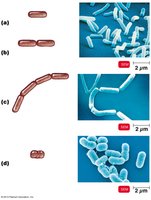
Rod-shaped bacteria (bacilli) also have characteristic arrangements:
Single bacillus: One rod
Diplobacilli: Pairs of rods
Streptobacilli: Chains of rods
Coccobacillus: Short, oval rods
Bacterial Cell Walls
Bacteria are classified by the structure of their cell walls, which contain peptidoglycan. The main types are:
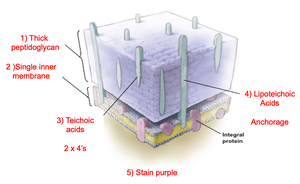
Gram-positive: Thick peptidoglycan layer, stains purple in Gram stain, contains teichoic acids.
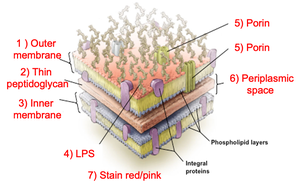
Gram-negative: Thin peptidoglycan layer, outer membrane with lipopolysaccharide (LPS), stains pink/red.
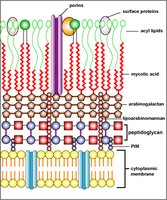
Acid-fast: Waxy cell wall with mycolic acids, characteristic of Mycobacterium species.
Bacterial Metabolism and Reproduction
Bacteria exhibit diverse metabolic strategies:
Heterotrophic: Obtain energy from organic compounds
Autotrophic: Use light (photosynthetic, e.g., with chlorophyll) or inorganic compounds
Reproduction: Mainly asexual via binary fission
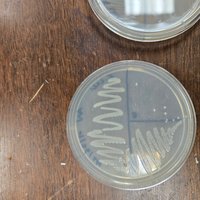
Only about 1% of bacterial species have been discovered, and less than 1% are pathogenic to humans.
Prokaryotic Microorganisms: Archaea
General Characteristics
Archaea are prokaryotic, unicellular organisms with cell walls containing pseudopeptidoglycan. They are often found in extreme environments, such as high temperature, high salinity, or acidic conditions.
Metabolism: Can be heterotrophic or autotrophic (e.g., using bacteriorhodopsin)
Reproduction: Asexual, primarily by binary fission
Pathogenicity: No known archaeal pathogens
Archaea display a variety of shapes, including rods, spheres, irregular forms, and box-shaped cells (e.g., Haloquadratum).
Archaeal Diversity
Crenarchaeota: Mostly hyperthermophiles, thrive in sulfur-rich environments (e.g., volcanoes). Examples: Sulfolobus, Thermoproteus, Pyrolobus.
Euryarchaeota: Includes hyperthermophiles, halophiles, methanogens, and acidophiles. Examples: Thermoplasma, Halobacterium, Methanobacterium.
Eukaryotic Microorganisms: Fungi
General Characteristics
Fungi are eukaryotic organisms that can be unicellular (yeasts) or multicellular (molds, mushrooms). Their cell walls contain chitin. Fungi are important decomposers and can reproduce both asexually and sexually.
Yeasts: Unicellular, reproduce by budding
Molds: Multicellular, composed of hyphae forming a mycelium
Fungal Diversity
Zygomycetes: "Bread molds"; mostly non-pathogenic except Rhizopus (can cause disease in immunocompromised individuals)
Ascomycetes: "Sac fungi"; includes molds and yeasts. Some produce toxins (e.g., Aspergillus), others are beneficial (e.g., Penicillium for antibiotics, Saccharomyces for brewing).
Basidiomycetes: "Club fungi"; includes mushrooms, some edible, others toxic or hallucinogenic.
Eukaryotic Microorganisms: Protozoa
General Characteristics
Protozoa are eukaryotic, unicellular organisms with variable shapes. Most lack cell walls and are motile. They are primarily heterotrophic and reproduce both asexually and sexually.
Amoeba: Move by pseudopodia (e.g., Naegleria fowleri)
Diplomonads: Flagellated, lack mitochondria, parasitic (e.g., Giardia lamblia)
Parabasalids: Flagellated, lack mitochondria, parasitic (e.g., Trichomonas vaginalis)
Kinetoplastids: Flagellated, contain kinetoplast, some are parasitic (e.g., Trypanosoma species)
Euglenids: Flagellated, contain chloroplasts and eyespot, mostly non-pathogenic
Ciliates: Move via cilia, have two nuclei, mostly non-pathogenic (e.g., Paramecium)
Apicomplexans: Non-motile, important pathogens (e.g., malaria, toxoplasmosis)
Eukaryotic Microorganisms: Algae
General Characteristics
Algae are eukaryotic organisms that can be unicellular or multicellular. Their cell walls contain cellulose and pectin. Algae are primarily autotrophic, containing chloroplasts for photosynthesis, and reproduce both asexually and sexually.
Red algae: Source of agar
Brown algae: Also known as kelp, produce alginate
Green algae: Diverse group, closely related to plants
Dinoflagellates: Can cause red tides and paralytic shellfish poisoning
Diatoms: Silica cell walls, important in aquatic ecosystems
Eukaryotic Microorganisms: Protists
Slime Molds and Oomycetes
Algae and protozoa are both classified as protists. Some unusual protists include:
Slime molds: Found on decaying matter, start as amoeba-like cells, aggregate to form sporangia with spores when starved.
Oomycetes (water molds): Produce hyphae, reproduce with spores, similar to fungi but more closely related to brown algae.
Summary Table: Major Groups of Microorganisms
Group | Cell Type | Cell Wall | Metabolism | Reproduction | Examples |
|---|---|---|---|---|---|
Bacteria | Prokaryotic | Peptidoglycan | Heterotrophic/Autotrophic | Asexual (binary fission) | Escherichia coli, Staphylococcus aureus |
Archaea | Prokaryotic | Pseudopeptidoglycan | Heterotrophic/Autotrophic | Asexual (binary fission) | Halobacterium, Thermoplasma |
Fungi | Eukaryotic | Chitin | Heterotrophic | Asexual/Sexual | Aspergillus, Saccharomyces |
Protozoa | Eukaryotic | None (most) | Heterotrophic | Asexual/Sexual | Giardia lamblia, Trypanosoma |
Algae | Eukaryotic | Cellulose, pectin | Autotrophic | Asexual/Sexual | Red algae, brown algae, green algae |
