 Back
Mechanisms of Microbial Genetics: Central Dogma, Transcription, Translation, and Protein Sorting
Study Guide - Smart Notes
 Tailored notes based on your materials, expanded with key definitions, examples, and context.
Central Dogma of Molecular Biology
Overview of Genetic Information Flow
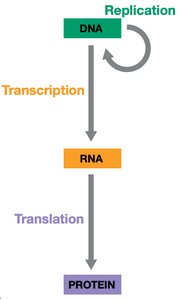
The central dogma of molecular biology describes the directional flow of genetic information within a cell: DNA is replicated, transcribed into RNA, and then translated into protein. This process is fundamental to all living organisms and underpins gene expression and inheritance.
Replication: DNA is duplicated by DNA polymerase to ensure genetic continuity during cell division.
Transcription: Genetic information is transferred from DNA to RNA by RNA polymerase.
Translation: Ribosomes use mRNA as a template to synthesize polypeptides (proteins).
Exceptions: Retroviruses can reverse transcribe RNA into DNA.
Genetic Material and Expression
Genetic material: DNA is responsible for inheritance and directs protein synthesis.
Gene expression: The process by which genetic information is used to synthesize proteins, determining phenotype.
Transcription – RNA Synthesis
Transcriptional Units and Regulation
Transcription is the first step in gene expression, where RNA is synthesized from a DNA template. Genes may be constitutive (always expressed) or regulated (expressed under specific conditions).
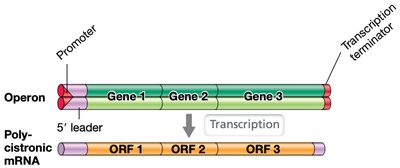
Transcriptional units: Segments of DNA transcribed into a single RNA molecule.
Monocistronic mRNA: Encodes a single gene.
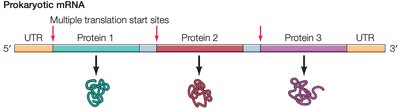
Polycistronic mRNA: Encodes multiple genes (operons), common in prokaryotes.
Transcription in Prokaryotes vs Eukaryotes
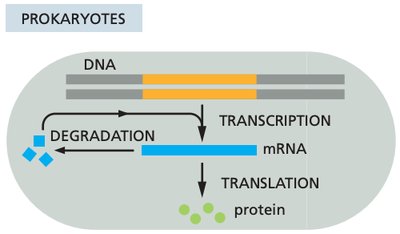
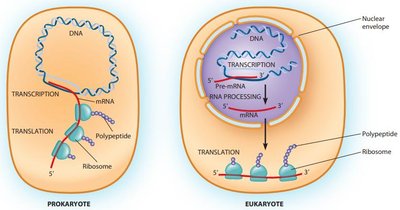
Prokaryotes: Replication, transcription, and translation occur in the cytoplasm; transcription and translation are coupled; polycistronic mRNA is common.
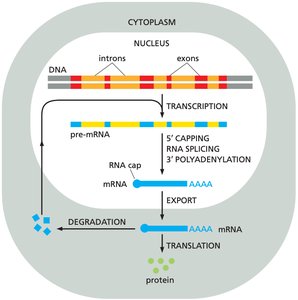
Eukaryotes: Replication and transcription occur in the nucleus; mRNA is processed (5’ cap, splicing, 3’ poly-A tail) and exported to the cytoplasm for translation; monocistronic mRNA is typical.
Transcription Mechanism
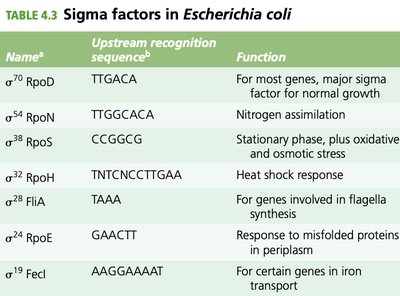
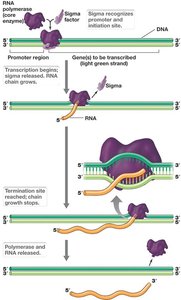
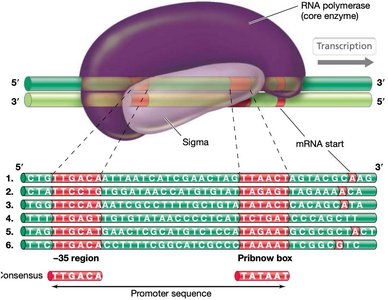
Initiation: Sigma factor recognizes promoter, recruits RNA polymerase, forms transcription bubble, and initiates RNA synthesis.
Elongation: RNA polymerase adds ribonucleotides to the 3’ end of the growing RNA strand.
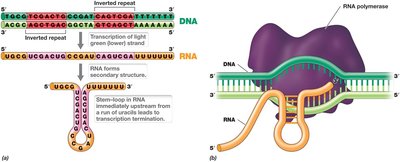
Termination: Can be Rho-dependent (Rho protein releases RNA polymerase) or intrinsic (hairpin loop formation in RNA).
RNA Polymerase and Sigma Factors
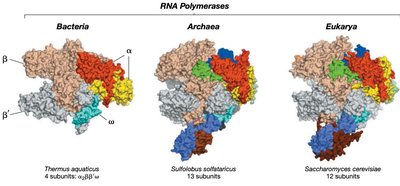
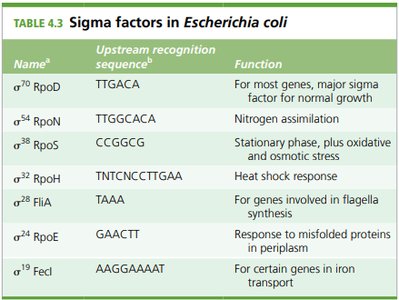
RNA polymerase: Core enzyme synthesizes RNA; sigma factor recognizes promoter regions.
Promoter: Contains conserved sequences (Pribnow box at -10, -35 element) recognized by sigma factors.
RNA Products and Types
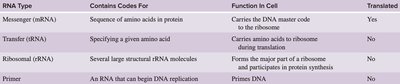
mRNA: Blueprint for protein synthesis (codons).
tRNA: Carries amino acids for translation (anticodon).
rRNA: Catalytic RNA component of ribosomes.
Comparison of Transcription in Bacteria and Eukaryotes
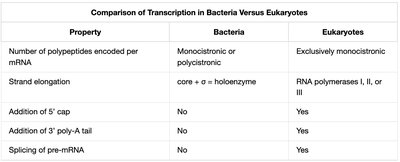
Bacteria: Monocistronic or polycistronic mRNA, no 5’ cap or poly-A tail, no splicing.
Eukaryotes: Exclusively monocistronic mRNA, 5’ cap, poly-A tail, splicing of pre-mRNA.
The Genetic Code
Triplet Code and Codon Dictionary
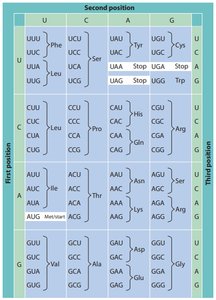
The genetic code is a set of rules by which information encoded in mRNA is translated into proteins. It is universal, unambiguous, and degenerate.
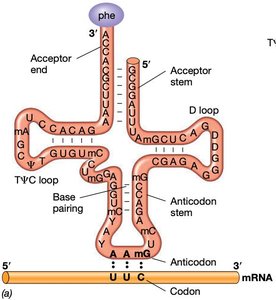
Codon: Three-nucleotide sequence in mRNA specifying an amino acid.
Degeneracy: Multiple codons can specify the same amino acid.
Start codon: AUG (methionine or formyl methionine in prokaryotes).
Stop codons: UAA, UAG, UGA.
Wobble effect: Third base in codon is less important for tRNA binding.

Reading Frames and Mutations
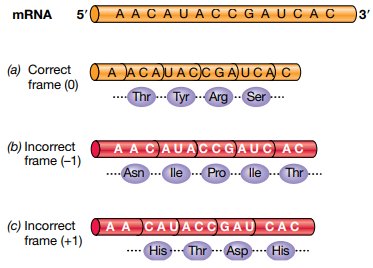
Reading frame: Uninterrupted sequence of nucleotides translated into a polypeptide.
Frame shift mutations: Addition or deletion of nucleotides alters the reading frame, affecting protein synthesis.
Translation – Protein Synthesis
Translation Mechanism and Machinery
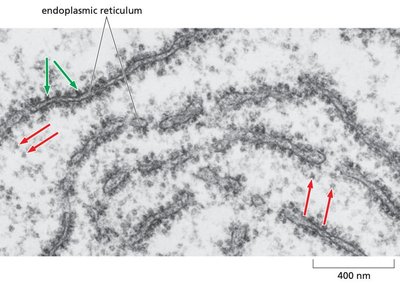
Translation is the process by which ribosomes synthesize proteins using mRNA as a template. It involves tRNA, aminoacyl-tRNA synthetase, and ribosomes.
tRNA: Carries amino acids to ribosome; has acceptor stem and anticodon.
Aminoacyl-tRNA synthetase: Enzyme that attaches correct amino acid to tRNA.
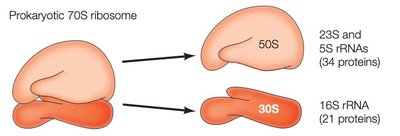
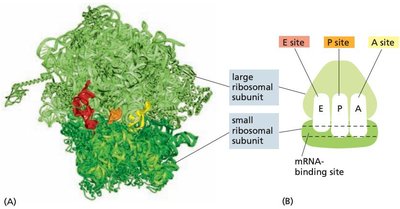
Ribosome: Composed of large and small subunits; catalyzes peptide bond formation.
Binding sites: A (aminoacyl), P (peptidyl), E (exit).
Translation Steps
Initiation: Small ribosomal subunit binds to mRNA (Shine-Dalgarno sequence in prokaryotes), initiator tRNA binds to P site, large subunit joins.
Elongation: Cycles of aminoacyl-tRNA binding, peptide bond formation, and translocation; GTP-driven.
Termination: Stop codon recognized by release factors, polypeptide released, translation machinery dissociates.
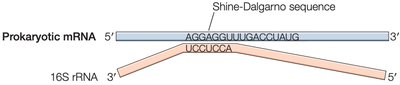
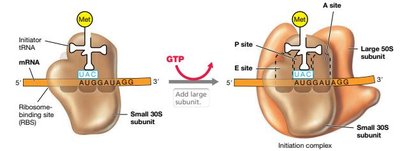
Translation in Prokaryotes vs Eukaryotes
Prokaryotes: Monocistronic and polycistronic mRNA, translation starts at multiple sites.
Eukaryotes: Monocistronic mRNA, translation starts at a single site.
Protein Maturation, Folding, and Sorting
Post-Translational Modifications
Proteins undergo modifications after translation to achieve functional maturity, stability, and proper localization.
Deformylation: Removal of N-formyl group.
Methionine excision: Removal of N-terminal methionine.
Covalent additions: Phosphorylation, glycosylation, methylation, lipidation, acetylation, etc.
Protein Folding – Chaperone Proteins
Chaperones: Assist in proper folding of proteins; ATP-dependent.
Types: Trigger factors, DnaK/DnaJ, GroEL/GroES, heat-shock and cold-shock proteins.
Protein Sorting and Export
Sorting: Proteins are directed to cytosol, membrane, periplasm, outer membrane, or extracellular environment.
Signal sequence: N-terminal peptide directs protein to export pathways.
TAT signal peptide: Contains two arginine residues (RR).
Translocases and Secretion Systems
Sec System
SRP-SecYEG: Signal recognition particle targets ribosome to SecYEG translocon for co-translational translocation.
SecA-SecYEG: SecA targets unfolded protein to SecYEG for post-translational translocation; energy from ATP and PMF.
TAT System (Twin Arginine Translocase)
Transports folded proteins with TAT signal sequence.
Energy: Proton-motive force (PMF).
Secretion Systems in Gram-Negative Bacteria
Two-step systems: Type V (autotransporters), Type II (secretion pore).
One-step systems: Type I (ABC transporter), Type III (injectisome), Type IV (DNA transfer), Type VI (needle-like projection).
Additional Info: Meselson & Stahl Experiment
DNA Replication Mechanism
The Meselson & Stahl experiment used heavy and light nitrogen isotopes to demonstrate the semi-conservative mechanism of DNA replication.
Semi-conservative replication: Each new DNA molecule contains one old and one new strand.
