 Back
Microbe-Human Interactions and Disease: Principles of Pathogenesis and Epidemiology
Study Guide - Smart Notes
 Tailored notes based on your materials, expanded with key definitions, examples, and context.
Principles of Microbe-Human Interactions
Introduction to Disease and Infection
Disease represents a deviation from health, often resulting from a disruption in the balance between the human host and microbes. Infection occurs when a microbe invades the host, but not all infections result in disease. Disease only develops if the invading microbe causes damage to the host.
Infection: The invasion and multiplication of microbes in host tissues.
Infectious Disease: Disease caused by the direct damage of an invading microbe.
Host and Microbe Factors: The outcome depends on both the virulence of the microbe and the effectiveness of host defenses.
Normal Microbiota and Sterile Sites
Normal Microbiota
Normal microbiota, also known as indigenous microflora or normal flora, are microbes that reside in and on the human body. They are stable, predictable, and help defend against pathogens through microbial antagonism.
Functions: Compete with pathogens, stimulate immune responses, and aid in digestion.
Microbe-Free (Sterile) Sites: Heart, circulatory system, liver, kidneys, bladder, lungs, brain, spinal cord, muscles, bones, ovaries/testes, glands, sinuses, middle/inner ear, internal eye.
Pathogenicity and Virulence
True vs. Opportunistic Pathogens
The ability of a microbe to cause disease is termed pathogenicity, while virulence refers to the degree of pathogenicity. Pathogens are classified based on their interaction with the host:
True (Primary) Pathogens: Cause disease in healthy individuals (e.g., Influenza virus, Yersinia pestis).
Opportunistic Pathogens: Cause disease only when host defenses are compromised or when present in unusual locations (e.g., Pseudomonas, Candida).
Virulence Factors: Characteristics or structures that enable microbes to establish infection, evade host defenses, and cause damage (e.g., capsules, fimbriae).
Mechanisms of Pathogenesis
Steps in Microbial Pathogenesis
Microbes cause disease through a series of steps:
Entering the host
Attaching firmly to host tissues
Surviving host defenses
Causing damage and disease
Exiting the host
1. Entering the Host (Portal of Entry)
Microbes enter the host through specific portals of entry, which may include the skin, gastrointestinal tract, respiratory tract, and urogenital tract. The infectious dose (ID) is the minimum number of microbes required to establish infection, varying by pathogen and portal.
Examples: ID for measles is 1 virus; for norovirus, 18 viruses; for plague, 100–500 cells; for salmonellosis, 10,000 cells.
2. Attaching to Host Tissues (Adherence)
Adherence is essential for colonization and disease establishment. Microbes use structures such as fimbriae, pili, flagella, capsules, and specialized receptors to attach to host cells. Biofilms enhance adherence and protection.
3. Surviving Host Defenses
Pathogens employ various strategies to evade or resist host immune responses:
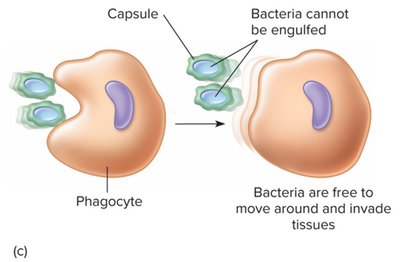
Antiphagocytic Factors: Capsules and slime layers prevent engulfment by phagocytes; some microbes produce leukocidins that kill phagocytes or survive inside them.
Exoenzymes: Enzymes such as mucinase, collagenase, hyaluronidase, and keratinase degrade host tissues and promote invasion.
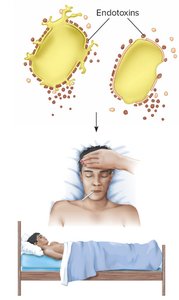
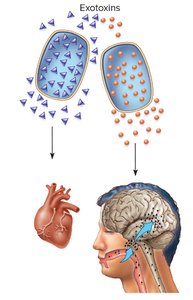
Toxins: Chemical products that damage host cells. Two main types:
Type | Source | Action | Example |
|---|---|---|---|
Endotoxins | Released from Gram-negative bacteria after lysis | Systemic, generalized effects | Lipopolysaccharide (LPS) |
Exotoxins | Secreted by living bacteria | Specific to cell type, potent in small amounts | A-B toxin, hemolysin |
4. Causing Damage and Disease
Microbes cause damage by disrupting host cell function, diverting nutrients, accumulating wastes, and directly destroying cells. Disease results when this damage impairs normal function.
5. Exiting the Host (Portal of Exit)
Microbes exit the host via specific portals, which may be the same as the entry site. Common portals include the respiratory tract (coughing, sneezing), gastrointestinal tract (feces, saliva), genitourinary tract (urine, secretions), skin (lesions), and blood (arthropod bites, needles).
Terminology in Infectious Disease
Symptoms, Signs, and Disease Types
Symptoms: Subjective changes felt by the patient (e.g., pain, fatigue).
Signs: Objective changes observed or measured (e.g., fever, rash).
Infectious Disease: Caused by a pathogen.
Communicable Disease: Easily spread from host to host.
Noncommunicable Disease: Not spread between hosts (e.g., urinary tract infection, rabies).
Stages of Infectious Disease
Incubation Period: Time between infection and first symptoms.
Prodromal Period: Early, mild symptoms.
Period of Invasion: Pathogen multiplies, specific symptoms appear.
Convalescence: Recovery as immune response clears pathogen.
Duration and Patterns of Infection
Acute Disease: Rapid onset, short duration (e.g., cold, norovirus).
Chronic Disease: Slow development, long duration (e.g., HIV/AIDS, hepatitis B).
Latent Disease: Pathogen inactive, then reactivates (e.g., shingles, herpes).
Local Infection: Confined to a small area (e.g., boils).
Focal Infection: Systemic infection that began locally (e.g., scarlet fever from strep throat).
Systemic Infection: Spread throughout the body (e.g., influenza, tuberculosis).
Subclinical/Asymptomatic: No noticeable symptoms (e.g., hepatitis B, HPV).
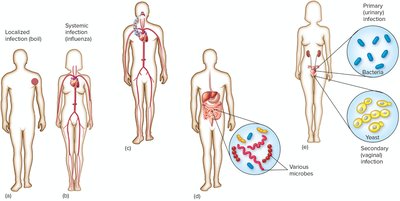
Primary Infection: Initial acute infection.
Secondary Infection: Opportunistic infection following a primary infection.
Reservoirs, Sources, and Transmission of Disease
Reservoirs and Sources
A reservoir is the natural habitat where a pathogen lives and multiplies. A source is the individual or object from which an infection is acquired. Reservoir and source may be the same or different.
Human Reservoirs: Carriers may be asymptomatic or have latent disease.
Animal Reservoirs: Animals harbor pathogens that can cause zoonoses.
Nonliving Reservoirs: Soil and water.
Modes of Transmission
Contact Transmission: Direct (person-to-person), indirect (via fomites), droplet (short-range airborne).
Vehicle Transmission: Via inanimate sources such as water, food, or air.
Vector Transmission: Via insects (mechanical: passive transport; biological: pathogen reproduces in vector).
Epidemiology: Study of Disease in Populations
Principles of Epidemiology
Epidemiology is the study of when and where diseases occur and how they are transmitted in populations. Epidemiologists determine the etiology, track disease spread, and develop control methods.
CDC (Centers for Disease Control and Prevention): Main U.S. agency for epidemiology, collects data on reportable diseases, publishes the Morbidity and Mortality Weekly Report (MMWR).
Morbidity: Incidence of disease (number of people infected).
Mortality: Number of deaths from a specific disease.
Key Epidemiological Terms
Incidence: Number of new cases in a specific time period.
Prevalence: Total number of cases (old and new) at a given time.
Patterns of Disease Occurrence
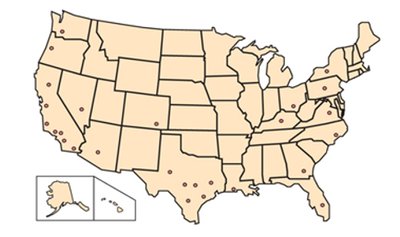
Sporadic Disease: Occurs occasionally and irregularly (e.g., plague in the U.S.).
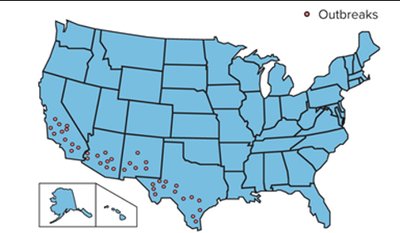
Endemic Disease: Constantly present in a population (e.g., malaria in Africa).
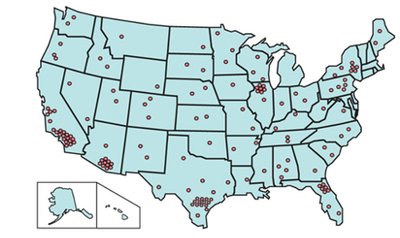
Epidemic Disease: Many people acquire disease in a short time in a given area (e.g., SARS, flu).
Pandemic Disease: Worldwide epidemic (e.g., HIV, COVID-19).
Healthcare-Associated Infections (HAIs)
Overview and Control
HAIs are infections acquired during treatment in a healthcare facility. They are common due to the presence of microbes, compromised hosts, reusable instruments, and drug-resistant organisms.
Prevention: Handwashing, disinfecting equipment, cleaning instruments, using disposable supplies, and isolating patients as needed.
More than one-third of HAIs can be prevented by rigorous control methods.
