Back
BackMicrobes, Disease, and the Microbiome: Core Concepts and Classification
Study Guide - Smart Notes
 Tailored notes based on your materials, expanded with key definitions, examples, and context.
Microbes, Disease, and the Microbiome
Disease, Pathogens, and Tissue Damage
Diseases are disruptions or damage to host tissues caused by biological, chemical, or physical agents. A pathogen is a biological agent that causes disease in a host. Pathogens include bacteria, fungi, protists, viruses, and multicellular parasites. Not all members of a microbial group are pathogenic; some are harmless or beneficial. Disease depends on host damage, site, dose, virulence, and host resistance, not simply microbial presence.
Pathogen: An organism capable of causing disease.
Virulence: The degree of pathogenicity.
Opportunist: Microbes that cause disease only when host defenses are compromised.
Host: The organism that harbors the pathogen.
Example: Escherichia coli is normal in the colon but can cause disease if found in contaminated food or other body sites.
Major Categories of Human Pathogens
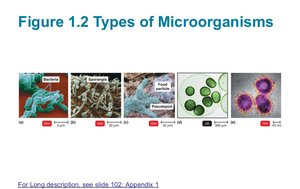
Human infectious diseases are classified by the type and biology of the infectious agent. Bacteria and archaea are prokaryotic, but only bacteria are well-established human pathogens. Fungi, protists, viruses, helminths, and arthropods also play roles in human disease.
Bacteria: Prokaryotic, diverse, many are pathogenic.
Fungi: Eukaryotic, includes yeasts and molds.
Protists: Single-celled eukaryotes, some are parasites.
Viruses: Acellular, require host cells to replicate.
Helminths: Multicellular parasites, often microscopic in some stages.
Vectors: Arthropods that transmit pathogens.
Example: Plasmodium (protist) causes malaria; viruses cause influenza.
Microorganisms Are Not Mostly Enemies
Most microbes are harmless or beneficial. They decompose organic matter, recycle nutrients, contribute to oxygen production, and fix nitrogen. Microbes are used in food production, biotechnology, and medicine. Disease-producing microbes are important but represent only a small fraction of microbial diversity.
Decomposition: Breakdown of organic matter.
Photosynthesis: Oxygen production and carbon fixation.
Nitrogen fixation: Conversion of atmospheric nitrogen to usable forms.
Fermentation: Used in food and industrial processes.
Example: Nitrogen-fixing bacteria support plant growth; yeast is used in bread and beer production.
Normal Microbiota
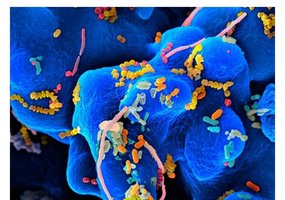
Normal microbiota are microorganisms normally present in or on a healthy human body. They occupy body sites, compete with pathogens, and may produce vitamins. Normal microbiota differ among body sites and can sometimes become opportunistic pathogens.
Colonization resistance: Prevention of pathogen growth by normal microbiota.
Opportunistic infection: Disease caused by normal microbiota under certain conditions.
Example: Skin and gut microbiota protect against infection but can cause disease if displaced.
Microbiome and Human Health
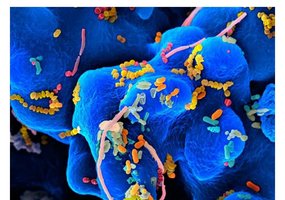
The human microbiome is the community of microbes and microbial genes associated with the body. Microbiome composition affects digestion, immunity, pathogen exclusion, and inflammation. It is dynamic and influenced by birth, diet, age, antibiotics, and environment. Changes in the microbiome can correlate with disease, but correlation does not prove causation.
Resident microbiota: Persistent microbial communities.
Transient microbiota: Temporary microbial presence.
Dysbiosis: Disruption of normal microbiome balance.
Example: Antibiotic use can disrupt gut microbiome, leading to increased infection risk.
Resistance: Host Factors That Ward Off Disease
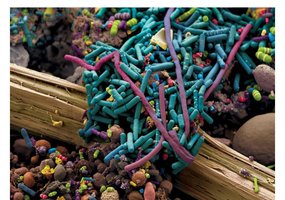
Resistance is the ability of the body to prevent infection or limit disease. Physical barriers (skin, mucous membranes), chemical barriers (stomach acid, lysozyme), and normal microbiota contribute to resistance. Resistance varies with age, nutrition, immune function, wounds, and prior exposure.
Barrier defense: Physical and chemical protection.
Antimicrobial chemicals: Substances that inhibit or kill microbes.
Example: Burns or catheters increase infection risk by disrupting barriers.
Biofilms
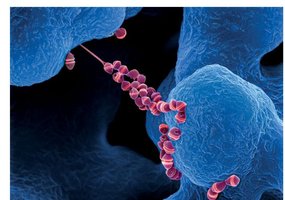
A biofilm is a structured community of microbes attached to a surface and embedded in extracellular material. Biofilms form on teeth, rocks, pipes, medical implants, and mucous membranes. The matrix helps cells attach, retain water, trap nutrients, and resist stress. Biofilm cells behave differently from free-floating cells and often show increased antibiotic tolerance.
Extracellular polymeric substance: Matrix material in biofilms.
Planktonic cells: Free-floating microbial cells.
Example: Dental plaque is a biofilm; biofilms on catheters can cause persistent infections.
Beneficial vs Harmful Biofilms
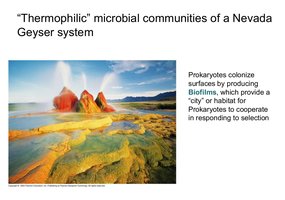
Biofilms can be beneficial or harmful depending on context. Beneficial biofilms protect mucous membranes and contribute to aquatic food webs. Harmful biofilms cause dental plaque, clog pipes, and seed persistent infections on medical devices. Biofilm formation begins with surface attachment by adhesins, fimbriae, or glycocalyx material.
Dental plaque: Biofilm contributing to tooth decay.
Medical implant infection: Biofilm on devices causing persistent infection.
Example: Biofilms in wastewater treatment are beneficial; biofilms on implants are medical risks.
Examples of Human-Associated Bacteria
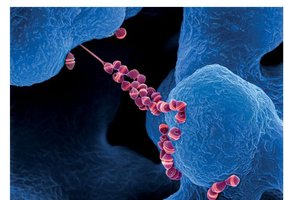
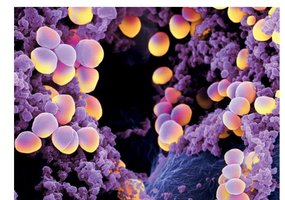
The human body hosts harmless, helpful, and potentially dangerous bacteria. Staphylococcus aureus can be part of normal microbiota but also cause serious infections. Streptococcus pneumoniae illustrates the role of capsules in virulence. Oral and gut flora are mixed communities, and location matters for pathogenicity.
S. aureus: Skin/nasal microbiota and pathogen.
S. pneumoniae: Capsule-associated virulence.
Oral flora: Mixed bacterial community in the mouth.
Gut flora: Mixed bacterial community in the intestines.
Example: A harmless gut bacterium can cause disease if it enters the bloodstream.
Food Webs and Aquatic Microbes
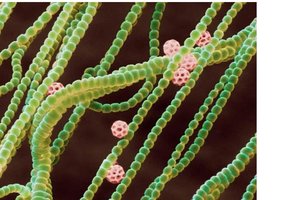
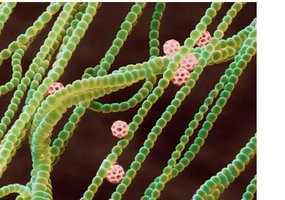
Aquatic ecosystems depend on microbial producers and consumers. Cyanobacteria and algae capture light energy and produce organic matter. Diatoms and protists are major primary producers. Protists such as Paramecium consume bacteria and transfer biomass. Viruses influence microbial population size and gene movement.
Cyanobacteria: Photosynthetic bacteria.
Diatoms: Primary producers in oceans.
Paramecium: Protist consumer.
Bacteriophage: Virus infecting bacteria.
Example: Cyanobacteria form the base of aquatic food webs.
Microbes in Food and Industry
Microbial metabolism is exploited for food production, chemistry, and medicine. Fermentation produces yogurt, cheese, bread, beer, and wine. Microbes produce ethanol, acetone, vitamins, enzymes, and organic acids. Genetically engineered microbes produce proteins such as insulin. Food spoilage also reflects microbial metabolism.
Fermentation: Microbial conversion of sugars.
Biotechnology: Use of microbes in industry.
Recombinant protein: Engineered protein production.
Spoilage: Undesirable microbial growth in food.
Example: Yeast fermentation produces alcohol; spoilage bacteria cause food decay.
Microbes in Environmental Cleanup
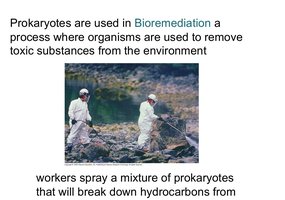
Bioremediation uses organisms to remove, transform, or detoxify pollutants. Some bacteria degrade hydrocarbons and clean oil-contaminated environments. Microbial metabolism transforms toxic compounds into less harmful products. Success depends on environmental conditions and microbial diversity.
Bioremediation: Microbial cleanup of pollution.
Hydrocarbons: Organic pollutants degraded by microbes.
Example: Bacteria used to clean oil spills.
Emerging Infectious Disease
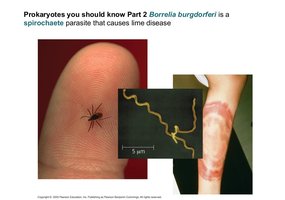
Emerging infectious diseases are new, increasing, or appearing in new populations or regions. Emergence can result from mutation, recombination, host jumps, ecological disturbance, travel, climate shifts, or medical practices. Microbial evolution and antibiotic resistance can turn familiar infections into renewed threats.
Emerging disease: Newly recognized or increasing disease.
Reservoir: Source of pathogen.
Vector: Organism transmitting pathogen.
Antibiotic resistance: Microbial adaptation to drugs.
Example: Antibiotic-resistant bacteria causing new outbreaks.
Temperature Tolerance and Extremes
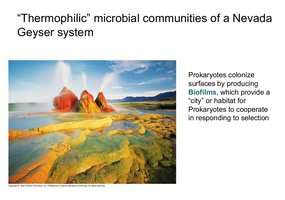
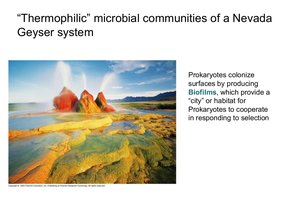
Microbes occupy environments with extreme temperatures, salinity, acidity, dryness, or pressure. Thermophiles thrive at high temperatures; halophiles tolerate high salt. Some microbes survive radiation, desiccation, and chemical extremes. Extremophiles reveal the flexibility of cellular life.
Thermophile: Heat-loving microbe.
Halophile: Salt-loving microbe.
Extremophile: Microbe adapted to extreme conditions.
Example: Thermophilic bacteria in geysers.
Microbial Communities as Cooperative Systems
Microbes often live in communities where interactions shape survival and function. Community members exchange nutrients, remove waste, alter pH, and protect each other. Biofilms create local neighborhoods with different oxygen and nutrient levels. Mixed oral and gut communities show that host-associated microbes rarely live in isolation.
Community ecology: Study of microbial interactions.
Cross-feeding: Exchange of nutrients between microbes.
Microenvironment: Local conditions within a community.
Example: Oral biofilms with multiple bacterial species.