 Back
Microbial Biochemistry: Chemical Principles and Macromolecules
Study Guide - Smart Notes
 Tailored notes based on your materials, expanded with key definitions, examples, and context.
Microbial Biochemistry: Chemical Principles and Macromolecules
Overview
This study guide covers the foundational chemical principles and macromolecules essential to understanding microbial life. It includes the types of chemical bonds, functional groups, carbohydrates, lipids, proteins, and their relevance to microbial structure and function.
Chemical Bonds and Properties of Molecules
Covalent, Ionic, and Hydrogen Bonds
Chemical bonds are the forces that hold atoms together in molecules. The three main types are:
Covalent Bonds: Atoms share electrons. These are strong and form the backbone of organic molecules.
Ionic Bonds: Electrons are transferred from one atom to another, creating charged ions that attract each other.
Hydrogen Bonds: Weak attractions between a hydrogen atom (covalently bonded to an electronegative atom) and another electronegative atom. Important in water and biological macromolecules.
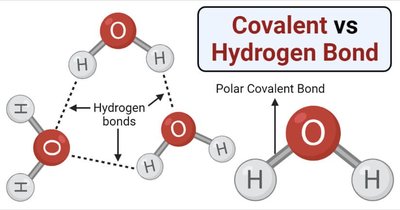
Hydrophilic molecules interact well with water, while hydrophobic molecules do not.
Electronegativity
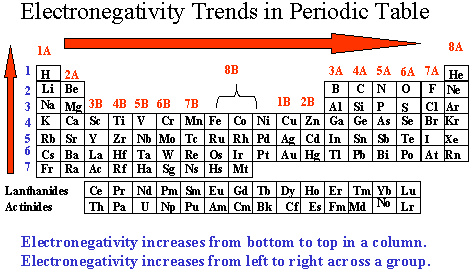
Electronegativity is an atom's ability to attract electrons in a bond. It increases across a period and up a group in the periodic table. Fluorine is the most electronegative element.
Carbon and Covalent Bonds
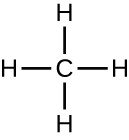
Carbon atoms can form four covalent bonds, allowing for a diversity of stable organic molecules. The simplest is methane (CH4).
Functional Groups in Biomolecules
Common Functional Groups
Functional groups are specific groups of atoms within molecules that are responsible for characteristic chemical reactions. Key groups include amino, carbonyl, carboxylic acid, hydroxyl, methyl, phosphate, and sulfhydryl.
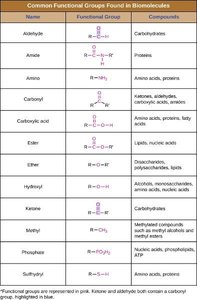
Functional groups determine the reactivity and properties of biomolecules, such as polarity and solubility.
Carbohydrates
Monosaccharides, Disaccharides, and Polysaccharides
Carbohydrates are organic molecules composed of carbon, hydrogen, and oxygen. They serve as energy sources and structural components.
Monosaccharides: Simple sugars (e.g., glucose, ribose, deoxyribose).
Disaccharides: Two monosaccharides joined by a glycosidic bond (e.g., maltose, lactose, sucrose).
Polysaccharides: Long chains of monosaccharides (e.g., starch, glycogen, cellulose).
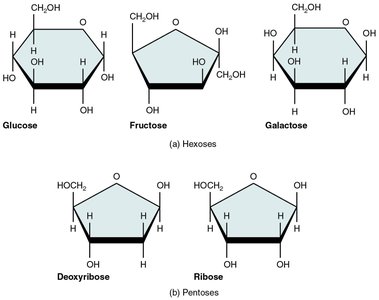
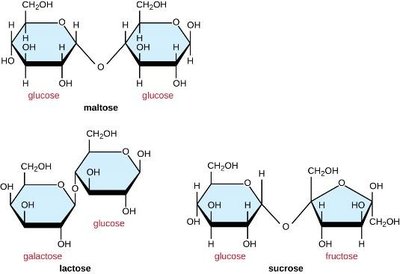
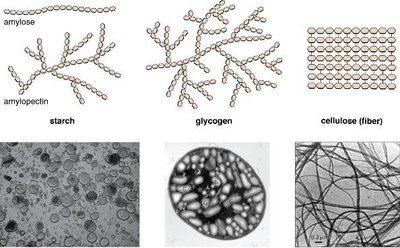
Monomer vs. Polymer
Monomers are single subunits that can be joined to form polymers. Dehydration synthesis forms polymers by removing water, while hydrolysis breaks them down by adding water.
Functions of Carbohydrates
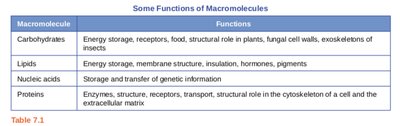
Macromolecule | Functions |
|---|---|
Carbohydrates | Energy storage, receptors, food, structural role in plants, fungal cell walls, exoskeletons of insects |
Lipids
Fatty Acids and Triglycerides
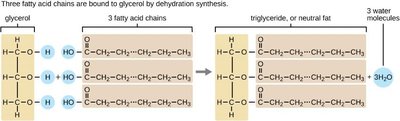
Lipids are hydrophobic molecules, including fats, oils, and steroids. Fatty acids can be saturated (no double bonds) or unsaturated (one or more double bonds). Triglycerides are formed by joining three fatty acids to glycerol via dehydration synthesis.
Phospholipids
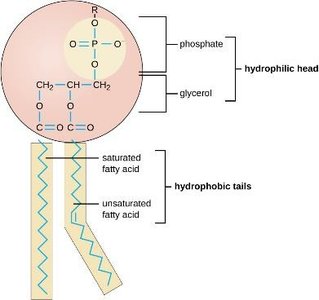
Phospholipids are essential for biological membranes. They are amphipathic, with hydrophilic heads and hydrophobic tails, forming bilayers in aqueous environments.
Steroids
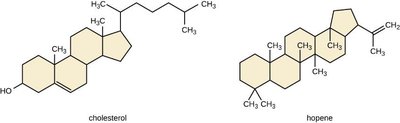
Steroids strengthen cell membranes. Cholesterol is common in eukaryotes, hopene in bacteria (except Mycoplasma), and ergosterol in fungi.
Cholesterol: LDL vs. HDL and Statin Drugs
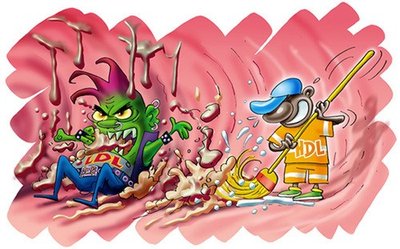
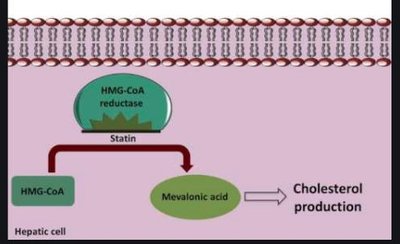
Low-density lipoprotein (LDL) is considered "bad" cholesterol, while high-density lipoprotein (HDL) is "good" cholesterol. Statin drugs are competitive inhibitors of HMG-CoA reductase, reducing cholesterol synthesis in the liver.
Proteins
Amino Acids and Peptide Bonds
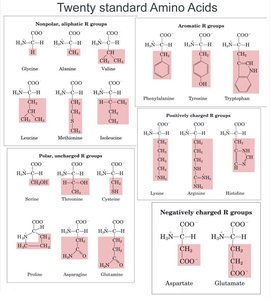
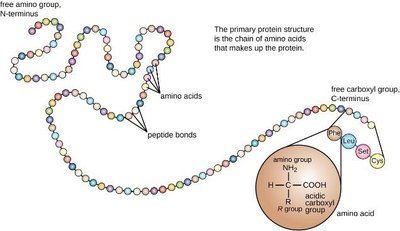
Proteins are polymers of amino acids linked by peptide bonds. The sequence of amino acids determines protein structure and function. There are 20 standard amino acids, each with a unique R group.
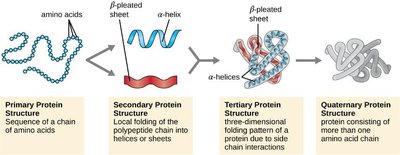
Levels of Protein Structure
Primary Structure: Linear sequence of amino acids.
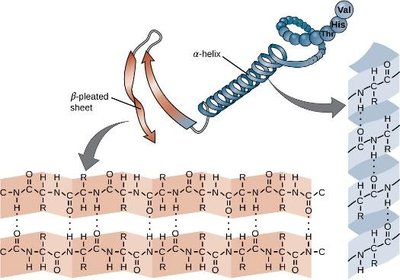
Secondary Structure: Local folding into α-helices or β-pleated sheets, stabilized by hydrogen bonds.
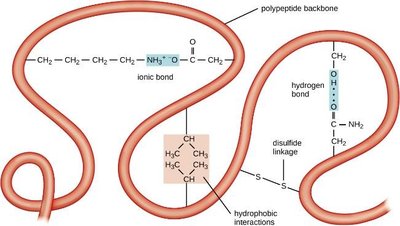
Tertiary Structure: Three-dimensional folding due to side chain interactions (hydrophobic, ionic, hydrogen bonds, disulfide bridges).
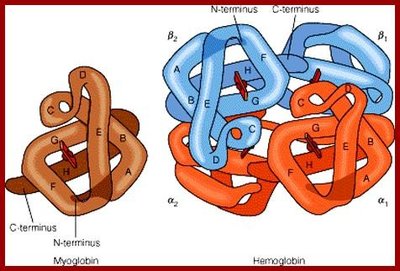
Quaternary Structure: Association of multiple polypeptide chains.
Conjugated Proteins
Conjugated proteins contain non-protein components, such as glycoproteins (protein + sugar), glycolipids (sugar + fat), lipoproteins (fat + protein), proteoglycans (protein + sugars), and peptidoglycan (amino acids + sugars). Peptidoglycan is crucial for bacterial cell walls.
Summary Table: Functions of Macromolecules
Macromolecule | Functions |
|---|---|
Carbohydrates | Energy storage, receptors, food, structural role in plants, fungal cell walls, exoskeletons of insects |
Lipids | Energy storage, membrane structure, insulation, hormones, pigments |
Nucleic acids | Storage and transfer of genetic information |
Proteins | Enzymes, structure, receptors, transport, structural role in the cytoskeleton of a cell and the extracellular matrix |
