 Back
BackMicrobial Classification and Identification: Taxonomy, Systems, and Diagnostic Techniques
Study Guide - Smart Notes
 Tailored notes based on your materials, expanded with key definitions, examples, and context.
Microbial Classification and Identification
Introduction
Microbial classification and identification are foundational concepts in microbiology, enabling scientists to organize, name, and distinguish among the vast diversity of microorganisms. This process is essential for communication, research, and clinical diagnostics. This guide covers the principles of taxonomy, major classification systems, and the practical methods used to identify microbes.
Taxonomy: The Science of Classification
Definition and Purpose
Taxonomy is the science of classifying organisms, providing a universal naming system and a reference framework for identification.
It began with the work of Carl Linnaeus, who established the hierarchical system still in use today.
Key Functions of Taxonomy:
Assigns universal names to organisms
Facilitates identification and comparison
Organizes biological diversity into related groups
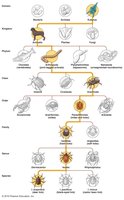
Linnaean Hierarchy
Organisms are classified into a series of ranked groups: Domain, Kingdom, Phylum, Class, Order, Family, Genus, Species.
Each level represents a more specific grouping, with species being the most specific.
Major Systems of Microbial Classification
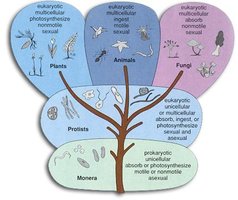
Whittaker's Five-Kingdom System
Developed by Robert Whittaker, this system classifies life into five kingdoms based on cell type, complexity, and mode of nutrition:
Monera (prokaryotes: bacteria and archaea)
Protista (mostly unicellular eukaryotes)
Fungi (eukaryotic, absorptive nutrition)
Plantae (eukaryotic, photosynthetic)
Animalia (eukaryotic, ingestive nutrition)
Woese-Fox Three-Domain System
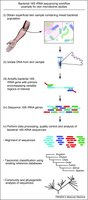
Carl Woese and George Fox introduced a higher-level classification based on ribosomal RNA (rRNA) gene sequencing, dividing life into three domains:
Bacteria (Eubacteria): True bacteria, including most known prokaryotes.
Archaea (Archaeabacteria): Prokaryotes distinct from bacteria, often found in extreme environments.
Eukarya: All eukaryotic organisms (protists, fungi, plants, animals).
This system reflects evolutionary relationships more accurately than previous models.

Classification vs. Identification
Definitions
Classification: Placing organisms into groups of related species based on shared characteristics.
Identification: Determining the identity of an unknown organism by comparing its characteristics to known organisms.
In clinical laboratories, identification is crucial for diagnosing infections and selecting appropriate treatments.
Classification Systems in Prokaryotes
Bergey's Manual
Bergey's Manual of Determinative Bacteriology is the definitive reference for bacterial classification.
Early editions relied on phenotypic traits (morphology, staining, metabolism).
Current editions integrate phenotypic data with molecular (rRNA) sequencing for more accurate classification.

Diagnostic (Identification) Techniques
Overview of Techniques
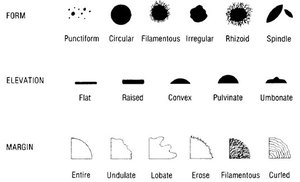
Visual Inspection: Examining colony morphology (shape, color, texture) and cell morphology (shape, arrangement).
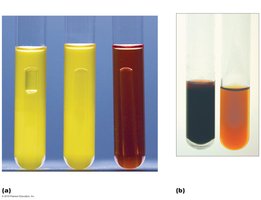
Biochemical Testing: Assessing metabolic capabilities (e.g., sugar fermentation, enzyme production).
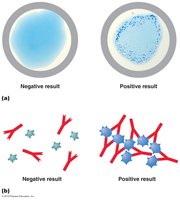
Serological Testing (optional): Detecting specific antigens or antibodies.
Molecular Methods (optional): Analyzing genetic material (e.g., PCR, sequencing).
Dichotomous Keys
Purpose and Structure
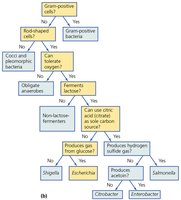
A dichotomous key is a tool used to identify organisms by sequentially answering questions about their characteristics, leading to the correct identification.
Each step presents two choices; the user selects the one that matches the organism, progressing to the next step until identification is achieved.
Nomenclature: Assigning Specific Names
Binomial System
Each organism is given a two-part scientific name: Genus species.
The genus name is capitalized; the species name is lowercase.
Both names are italicized (or underlined if italics are unavailable).
Example: Streptococcus pneumoniae, Bacillus cereus
Summary Table: Key Differences in Microbial Classification Systems
System | Major Groups | Basis of Classification |
|---|---|---|
Linnaean | Domain, Kingdom, Phylum, Class, Order, Family, Genus, Species | Physical and morphological traits |
Whittaker | Monera, Protista, Fungi, Plantae, Animalia | Cell type, complexity, nutrition |
Woese-Fox | Bacteria, Archaea, Eukarya | rRNA gene sequencing |
Key Points to Know
Understand the purpose and structure of taxonomy.
Distinguish between classification and identification.
Be able to explain and use dichotomous keys for microbial identification.
Recognize the main types of tests used to identify bacteria (morphological, biochemical, serological, molecular).
