 Back
BackMicrobial Communities and Biogeochemical Cycles: Study Notes
Study Guide - Smart Notes
 Tailored notes based on your materials, expanded with key definitions, examples, and context.
Microbial Communities and Biogeochemical Cycles
Introduction to Microbial Communities
Microbial communities are complex assemblages of microorganisms that interact with each other and their environment, playing essential roles in nutrient cycling and ecosystem functioning. These communities are found in diverse habitats, including soil, water, and within symbiotic relationships with plants and animals.
Microbial Parameters of Growth: Microbial growth is influenced by environmental factors such as temperature, pressure, pH, oxygen availability, light, and osmotic conditions.
Resources: Microbes require carbon, nitrogen, macronutrients, micronutrients, and electron donors/acceptors for metabolism.
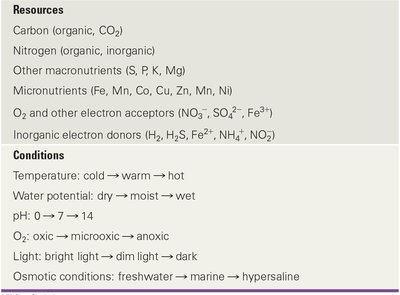
Biogeochemical (Nutrient) Cycles
Biogeochemical cycles describe the flow of macro- and micronutrients through biotic (living) and abiotic (non-living) components of the biosphere. Microbes are central to these cycles, mediating transformations of elements such as carbon, nitrogen, sulfur, and phosphorus.
Abiotic Components: Atmosphere, ocean, Earth's crust.
Biotic Components: Predators, symbiotes, decomposers, autotrophs.
Human Impact: Human activities, such as fossil fuel combustion, alter nutrient cycles, increasing greenhouse gas emissions and affecting climate.
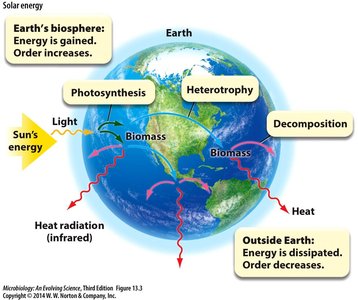
The Carbon Cycle
Overview of the Carbon Cycle
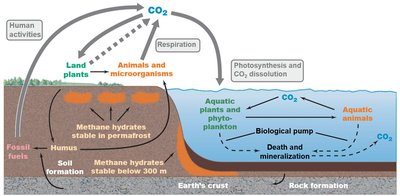
The carbon cycle involves the movement of carbon among the atmosphere, biosphere, hydrosphere, and geosphere. Microbes play a crucial role in carbon fixation, decomposition, and methane production.
Phototrophic Organisms: Foundation of the carbon cycle; plants and microorganisms fix CO2 via photosynthesis.
Decomposition: Microbes decompose organic matter, releasing CO2 and CH4.
Methanogenesis: Anaerobic microbes produce methane, a potent greenhouse gas.
Methanotrophy: Methanotrophs oxidize methane to CO2.
Microbial Roles in the Carbon Cycle
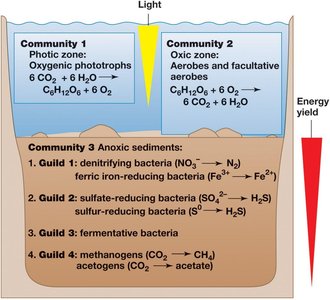
Microbial communities work together to metabolize nutrients, with different guilds performing specific functions in various environmental zones.
Oxygenic Phototrophs: Fix CO2 in the photic zone.
Aerobes and Facultative Aerobes: Metabolize organic matter in oxic zones.
Anoxic Sediments: Host denitrifying, sulfate-reducing, fermentative, and methanogenic bacteria.
Carbon Cycle Pathways and Coupling
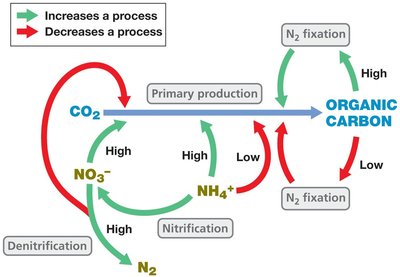
All nutrient cycles are interconnected, and changes in one cycle can affect others. Microbial metabolism links carbon, nitrogen, and other cycles.
Coupled Cycles: Major changes in carbon input/output affect nitrogen and other cycles.
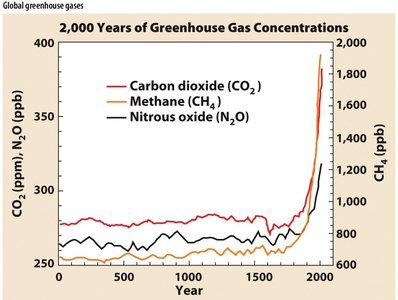
Human Activity: Increased CO2 output, global warming, and accelerated CH4 release.
Greenhouse Gases and Climate Change
Microbial activity contributes to greenhouse gas production, including CO2, CH4, and N2O. Human activities have dramatically increased atmospheric concentrations of these gases.
CO2: Produced by respiration and decomposition.
CH4: Produced by methanogens in anoxic environments.
N2O: Produced by bacteria during nitrification and denitrification.
Microbial Symbioses and Partnerships
Types of Symbiotic Relationships
Microbes form symbiotic partnerships with other organisms, sharing shelter, nutrients, and metabolic cooperation (syntrophy).
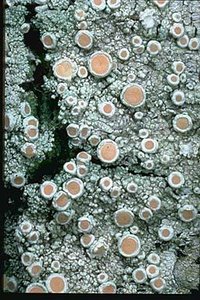
Shelter: Example: lichens.
Nutrients: Macro- and micronutrients, vitamins, growth factors.
Syntrophy: Microbial metabolic cooperation and nutritional interdependence.
Toxin Production: Some symbionts produce toxins that can be beneficial or competitive.
Mycorrhizal Symbiosis
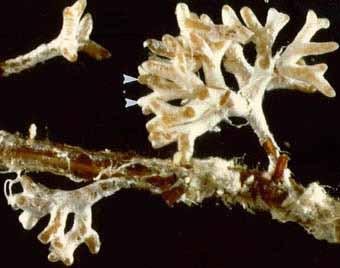
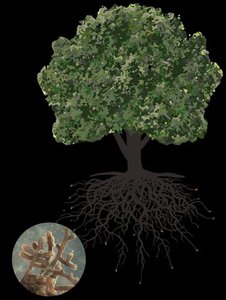
Mycorrhizae are plant root-associated fungi that form mutualistic relationships with plants, enhancing nutrient and water uptake.
Types: Endomycorrhizae (VAM) and Ectomycorrhizae (EM).
Distribution: Infect roots of 75-95% of non-agricultural plant taxa.
Function: Increase root surface area, produce glomalin (soil-building protein).
Obligate Symbionts: Many mycorrhizal fungi require plant roots to survive.
Endomycorrhizae (VAM)
Endomycorrhizae, or vesicular arbuscular mycorrhizae, are ancient symbionts that colonized land with early vascular plants. They form arbuscules inside plant roots, facilitating nutrient transfer.
Phylum: Zygomycota.
Structure: Arbuscules are short-lived, involved in nutrient transfer.
Evolution: Evidence of fungal symbiosis with early land plants (~400 mya).
Ectomycorrhizae (EM)
Ectomycorrhizae form mutualistic associations with gymnosperms and angiosperms, contributing significantly to forest biomass and nutrient cycling.
Phylum: Basidiomycota.
Structure: Form mushrooms and a network of short and long roots.
Function: Enhance nutrient uptake, especially in forest ecosystems.
Microbial Symbiosis with Plants: Rhizobium and Agrobacterium
The α-Proteobacteria
The α-Proteobacteria clade includes many endosymbionts and pathogens, such as Rhizobium and Agrobacterium, which interact with plants.
Rhizobium: Intracellular mutualist, fixes nitrogen in legumes.
Agrobacterium: Pericellular pathogen, causes plant tumors.
Plasmid-Borne Genes: Infection and symbiosis genes are carried on large plasmids.
Rhizobium-Legume Symbiosis
Rhizobium species colonize legume roots, forming nodules where nitrogen fixation occurs. The plant provides nutrients, and Rhizobium reduces N2 to NH3.
Nodulation: Formation of nodules is vital for nitrogen fixation.
Bacteroid Formation: Rhizobium cells differentiate into bacteroids within plant cells.
Leghemoglobin: Plant-produced protein maintains low O2 levels for nitrogenase activity.
Rhizobium Infection Process
The infection process involves root hair curling, formation of infection threads, and colonization of the root cortex.
Root Hair Curling: Plant hairs curl around Rhizobium cells.
Infection Thread: Bacteria penetrate plant cells via infection threads.
Nitrogen Fixation: Occurs in the nodule under anaerobic conditions.
Agrobacterium and Genetic Engineering
Agrobacterium is used in genetic engineering to transfer genes into plants, exploiting its natural infection mechanism.
Type IV Secretion System: Transfers DNA into plant cells.
GM Plants: Agrobacterium is the bacterium behind genetically modified plants.
Summary Table: Microbial Roles in Biogeochemical Cycles
Cycle | Microbial Role | Key Microbes | Major Processes |
|---|---|---|---|
Carbon | Fixation, decomposition, methanogenesis, methanotrophy | Phototrophs, decomposers, methanogens, methanotrophs | Photosynthesis, respiration, fermentation, methane production |
Nitrogen | Nitrogen fixation, nitrification, denitrification | Rhizobium, nitrifiers, denitrifiers | N2 fixation, NH4 oxidation, NO3 reduction |
Symbiosis | Nutrient exchange, syntrophy, toxin production | Mycorrhizae, Rhizobium, lichens | Mutualism, parasitism, metabolic cooperation |
Additional info: Academic context was added to clarify microbial roles, symbiotic relationships, and the coupling of biogeochemical cycles. The notes are structured to provide a comprehensive overview suitable for exam preparation in a college microbiology course.
