 Back
BackMicrobial Control: Physical and Chemical Methods, Growth Limits, and Chemotherapy
Study Guide - Smart Notes
 Tailored notes based on your materials, expanded with key definitions, examples, and context.
Limits to Microbial Growth and Microbial Control
Key Definitions in Microbial Control
Understanding the terminology of microbial control is essential for distinguishing between different methods and their applications in clinical and laboratory settings.
Sterilization: The complete destruction or removal of all living microbes, including spores and viruses.
Sanitization: The reduction or inhibition of microbial contamination to safe levels, as determined by public health standards.
Disinfection: The killing of pathogenic microbes, typically on inanimate objects, often by chemical means.
Disinfectant: Chemical agent used on inanimate objects to destroy microbes.
Antiseptic: Chemical agent used on living tissues to reduce the possibility of infection.
Bactericidal agent: Kills bacteria.
Bacteriostatic agent: Inhibits the growth of bacteria without killing them.
Virucidal agent: Inactivates or destroys viruses.
Fungicidal agent: Kills fungi.
Physical Factors Limiting Microbial Growth
Temperature and Microbial Growth
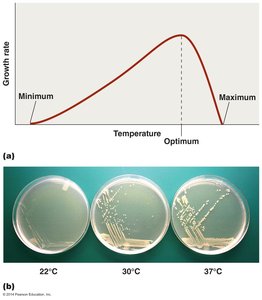
Temperature is a critical factor influencing microbial growth. Each microorganism has a minimum, optimum, and maximum temperature for growth. The optimum temperature is where growth rate is highest.
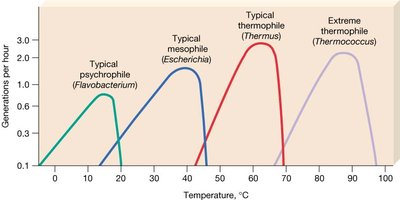
Psychrophiles: Grow best at low temperatures (0–20°C).
Psychrotrophs: Can grow at low temperatures but prefer moderate temperatures.
Mesophiles: Grow best at moderate temperatures (20–45°C); most human pathogens are mesophiles.
Thermophiles: Thrive at high temperatures (45–80°C).
Hyperthermophiles: Grow at extremely high temperatures (>80°C).
Moist Heat Sterilization: The Autoclave
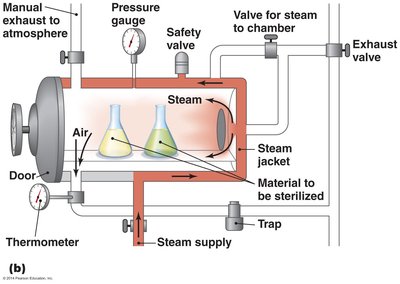
Autoclaving uses moist heat under pressure to achieve sterilization. Standard parameters are 15 psi, 121.5°C, for 15 minutes. Moist heat denatures proteins and destroys cell membranes, but some materials (e.g., plastics, oils) may not be suitable for autoclaving.
Thermal Death Points and Pasteurization
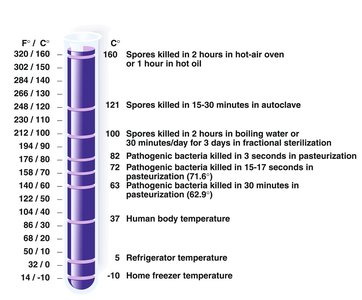
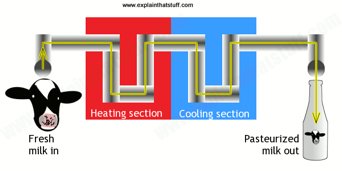
Different microbes and their spores have varying resistance to heat. Pasteurization is used to reduce microbial load in food and beverages, targeting pathogens without sterilizing the product.
Classic pasteurization: 63°C for 30 min
Flash pasteurization: 71.6°C for 15 sec
Ultra-high temperature (UHT): 140°C for 3 sec (sterilizes)
Oxygen Requirements for Microbial Growth
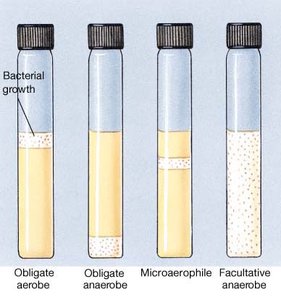
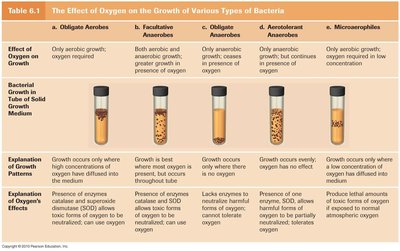
Microbes vary in their oxygen requirements, which affects their growth patterns in different environments.
Obligate aerobes: Require oxygen for growth.
Obligate anaerobes: Cannot tolerate oxygen.
Facultative anaerobes: Can grow with or without oxygen.
Microaerophiles: Require low levels of oxygen.
Aerotolerant anaerobes: Do not use oxygen but tolerate its presence.
pH and Microbial Growth
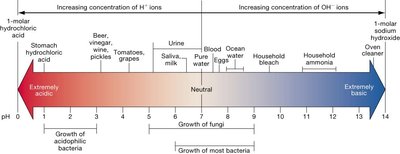
Most bacteria grow best at neutral pH (around 7), but some can tolerate or even prefer acidic or basic environments.
Acidophiles: Grow at low pH (acidic conditions).
Neutrophiles: Prefer neutral pH.
Alkaliphiles: Grow at high pH (basic conditions).
Salt Tolerance (Halophiles)
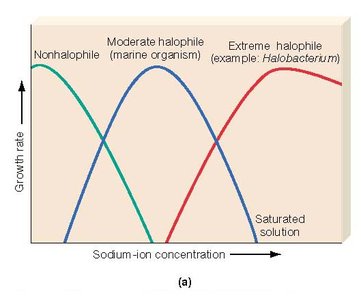
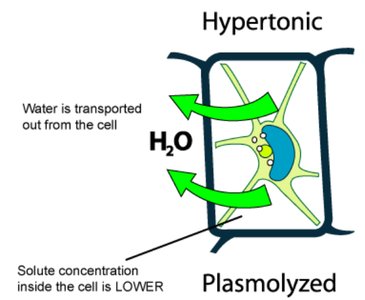
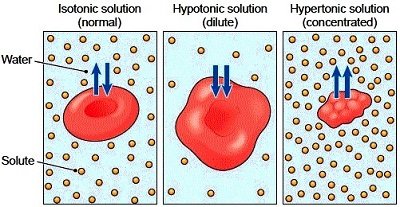
Salt concentration affects microbial growth by influencing osmotic pressure. Halophiles thrive in high-salt environments, while nonhalophiles prefer low salt.
Halophiles: Require high salt concentrations for growth.
Halotolerant: Can tolerate some salt but grow best without it.
Food Preservation by Pickling
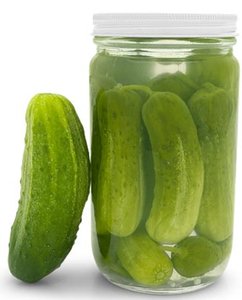
Pickling uses high salt and acidic conditions to inhibit microbial growth, making it an effective method for food preservation. However, halophilic and acidophilic organisms may still survive.
Radiation as a Control Method
Different types of radiation are used to control microbial growth:
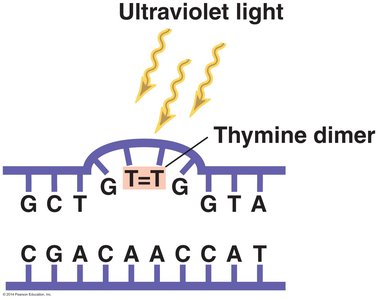
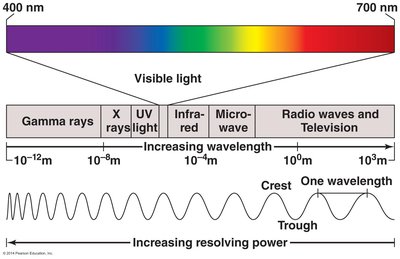
Ultraviolet (UV) light: Causes thymine dimers in DNA, inhibiting replication.
Ionizing radiation: X-rays and gamma rays create free radicals that damage cellular components.
Filtration
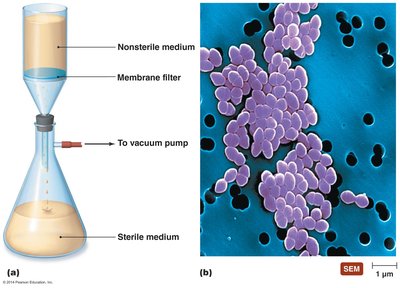
Filtration is used to remove microbes from heat-sensitive liquids and air. High-efficiency particulate air (HEPA) filters are used in clinical and laboratory settings to maintain sterile environments.
Chemical Methods of Microbial Control
Disinfectants and Antiseptics
Chemical agents are used to control microbial growth on surfaces, instruments, and living tissues. The effectiveness of these agents depends on their properties and the type of microbe targeted.
Halogens (e.g., chlorine, iodine): Oxidize proteins and inactivate enzymes.
Heavy metals (e.g., silver, mercury, copper): Interfere with microbial metabolism by binding to proteins.
Surfactants and soaps: Good for degerming but not antimicrobial; disrupt membranes.
Alcohols (e.g., ethanol, isopropanol): Denature proteins and disrupt membranes; effective at 60–90% concentrations.
Hydrogen peroxide: Damages cellular components; effective against anaerobes.
Aldehydes (e.g., formaldehyde, glutaraldehyde): Cross-link proteins and nucleic acids.
Gaseous agents (e.g., ethylene oxide): Used for sterilizing heat-sensitive items.
Chemotherapy and Antimicrobial Drugs
Principle of Selective Toxicity
Selective toxicity refers to the ability of a drug to target microbial cells without harming host cells. This principle is fundamental to the development of effective antimicrobial agents.
Seminal Figures in Antimicrobial Development
Paul Ehrlich: Developed Salvarsan, the first chemotherapeutic agent against syphilis.
Alexander Fleming: Discovered penicillin, the first true antibiotic.
Gerhard Domagk: Developed prontosil, a sulfa drug effective against Gram-positive bacteria.
Types of Antimicrobial Agents
Antibiotics: Naturally produced by microorganisms.
Semisynthetics: Chemically modified antibiotics for improved efficacy.
Synthetics: Completely synthesized in the laboratory.
Mechanisms of Action
Cell wall synthesis inhibitors: Penicillins, cephalosporins, vancomycin, bacitracin.
Protein synthesis inhibitors: Aminoglycosides, tetracyclines, chloramphenicol.
Nucleic acid synthesis inhibitors: Quinolones, nucleoside analogs.
Metabolic pathway inhibitors: Sulfonamides, trimethoprim.
Cell membrane disruptors: Polymyxins, daptomycin.
Antibiotic Resistance
Resistance can develop through mutations or acquisition of resistance genes. Mechanisms include enzymatic degradation, altered targets, efflux pumps, and biofilm formation. The Kirby-Bauer disk diffusion test is used to assess antimicrobial susceptibility.
Summary Table: Physical Methods of Microbial Control
Method | Conditions | Action | Representative Uses |
|---|---|---|---|
Boiling | 10 min at 100°C | Denatures proteins, destroys membranes | Disinfection of lab media, baby bottles |
Autoclaving | 15 min at 121°C | Denatures proteins, destroys membranes | Sterilization of media, instruments |
Pasteurization | 15 sec at 72°C | Denatures proteins, destroys membranes | Milk, juices, beer |
Filtration | Varies | Physically separates microbes | Sterilization of heat-sensitive liquids |
Ionizing radiation | Seconds to hours | Destroys DNA | Sterilization of medical/lab equipment |
UV radiation | Seconds to hours | Forms thymine dimers in DNA | Disinfection of surfaces, air |
Additional info: This guide integrates foundational concepts from microbial control, including physical and chemical methods, and the principles of chemotherapy and resistance, as outlined in standard microbiology curricula (Chapters 6, 9, 10).
