 Back
BackMicrobial Control: Principles, Methods, and Applications
Study Guide - Smart Notes
 Tailored notes based on your materials, expanded with key definitions, examples, and context.
Basic Principles of Microbial Control
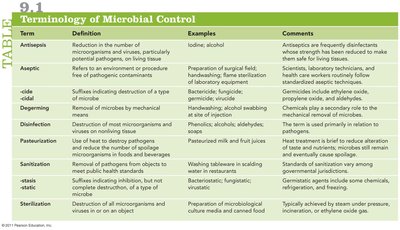
Terminology of Microbial Control
Understanding the terminology is essential for distinguishing between different microbial control strategies. Each term describes a specific method or outcome in reducing or eliminating microorganisms from surfaces, tissues, or environments.
Term | Definition | Examples | Comments |
|---|---|---|---|
Antisepsis | Reduction in the number of microorganisms and viruses, particularly potential pathogens, on living tissue | Iodine, alcohol | Antiseptics are frequently disinfectants whose strength has been reduced to make them safe for living tissues. |
Aseptic | Refers to an environment or procedure free of pathogenic contaminants | Preparation of surgical field, flame sterilization of laboratory equipment | Scientists, laboratory technicians, and health care workers use aseptic techniques. |
-cide/-cidal | Suffix indicating destruction of a type of microbe | Bactericide, fungicide, virucide, germicide | Germicides include ethylene oxide, propylene oxide, and aldehydes. |
Degerming | Removal of microbes by mechanical means | Handwashing, alcohol swabbing | Chemicals play a secondary role to the mechanical removal of microbes. |
Disinfection | Destruction of most microorganisms and viruses on nonliving tissue | Phenolics, alcohols, aldehydes, soaps | Term is used primarily in relation to pathogens. |
Pasteurization | Use of heat to destroy pathogens and reduce the number of spoilage microorganisms in foods and beverages | Pasteurized milk and fruit juices | Heat treatment is brief to reduce alteration of taste and nutrients; microbes still remain. |
Sanitization | Removal of pathogens from objects to meet public health standards | Washing tableware in scalding water in restaurants | Standards of sanitization vary among governmental jurisdictions. |
-stasis/-static | Suffix indicating inhibition, but not complete destruction, of a type of microbe | Bacteriostatic, fungistatic | Chemicals, refrigeration, and freezing are used to control microbial growth. |
Sterilization | Destruction of all microorganisms and viruses on or in an object | Preparation of microbiological culture media and canned food | Typically achieved by steam under pressure, incineration, or ethylene oxide gas. |
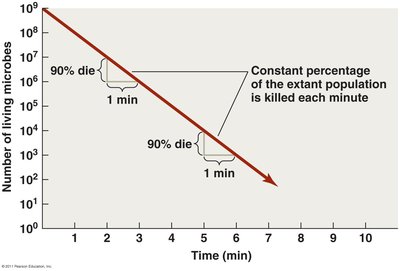
Microbial Death Rate
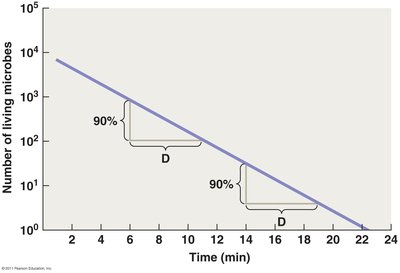
The microbial death rate describes the rate at which microorganisms are killed by antimicrobial agents. A constant percentage of the population is killed each minute, which is important for understanding the effectiveness of sterilization and disinfection processes.
Microbial death rate: The rate at which microbes are killed, often follows a logarithmic decline.
Decimal reduction time (D-value): The time required to kill 90% of the microorganisms present.
Application: Used to determine the duration and intensity of sterilization procedures.
Relative Susceptibility of Microbes
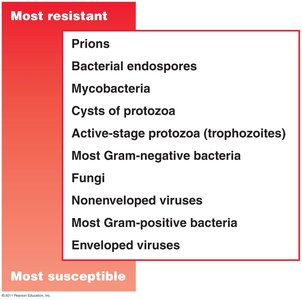
Microorganisms vary in their resistance to antimicrobial agents. Understanding these differences is crucial for selecting appropriate control methods.
Most resistant: Prions, bacterial endospores, mycobacteria, cysts of protozoa.
Intermediate resistance: Active-stage protozoa, most Gram-negative bacteria, fungi, nonenveloped viruses.
Most susceptible: Most Gram-positive bacteria, enveloped viruses.
The Selection of Microbial Control Methods
Factors Affecting Efficacy
Several factors influence the effectiveness of antimicrobial methods, including the site to be treated, the susceptibility of microorganisms, and environmental conditions.
Site to be treated: Harsh chemicals and extreme heat cannot be used on living tissues or fragile objects.
Relative susceptibility: Germicides are classified as high, intermediate, or low effectiveness.
Environmental conditions: Temperature, pH, and presence of organic matter can affect efficacy.
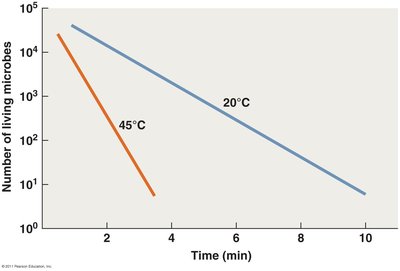
Effect of Temperature on Efficacy
Temperature is a critical factor in the effectiveness of antimicrobial chemicals. Higher temperatures generally increase the rate of microbial death.
Higher temperature: Increases effectiveness of many disinfectants.
Lower temperature: Slows down microbial death rate.
Physical Methods of Microbial Control
Heat-Related Methods
Heat is one of the most common physical methods for controlling microbial growth. It can be applied as moist or dry heat, each with specific applications and mechanisms.
Moist heat: Denatures proteins and destroys cytoplasmic membranes. Methods include boiling, autoclaving, pasteurization, and ultrahigh-temperature sterilization.
Dry heat: Used for materials that cannot be sterilized with moist heat. Denatures proteins and oxidizes chemicals. Requires higher temperatures and longer times.
Thermal death point: Lowest temperature that kills all cells in broth in 10 minutes.
Thermal death time: Time to sterilize a volume of liquid at a set temperature.
Decimal Reduction Time
Decimal reduction time (D-value) is a measure of microbial death rate, indicating the time required to reduce a population by 90% at a specific temperature.
D-value: Used to compare effectiveness of sterilization methods.
Autoclaving
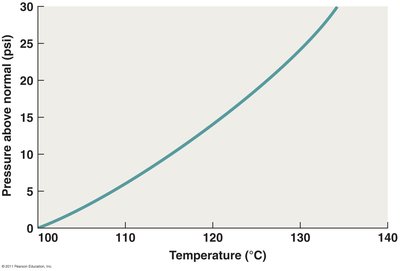
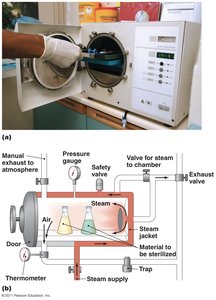
Autoclaving is a highly effective method for sterilization using moist heat under pressure. The relationship between temperature and pressure is crucial for achieving sterilization.
Standard conditions: 121ºC, 15 psi, 15 minutes.
Mechanism: Pressure increases boiling point of water, allowing steam to reach higher temperatures.
Sterility Indicators
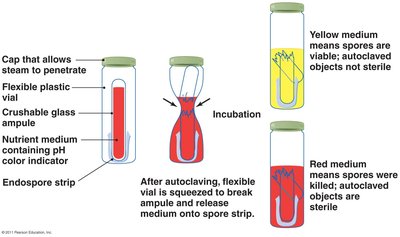
Sterility indicators are used to confirm the effectiveness of autoclaving by detecting the presence or absence of viable spores.
Yellow medium: Spores are viable; autoclaved objects are not sterile.
Red medium: Spores were killed; autoclaved objects are sterile.
Desiccation and Lyophilization
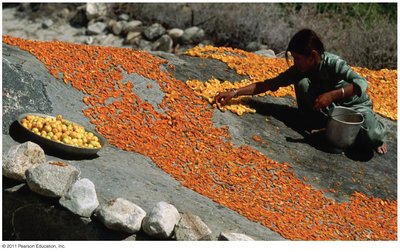
Desiccation (drying) and lyophilization (freeze-drying) are methods used to preserve microbial cultures by removing water, which inhibits microbial growth.
Desiccation: Inhibits growth due to removal of water.
Lyophilization: Used for long-term preservation; prevents formation of damaging ice crystals.
Filtration
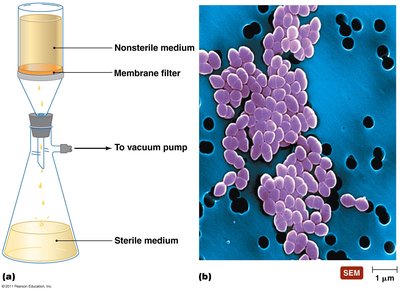
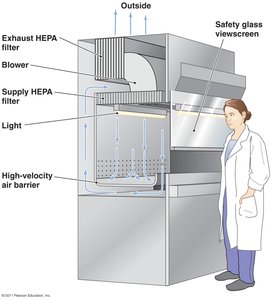
Filtration is a physical method used to remove microbes from liquids and air by passing them through filters with defined pore sizes.
Membrane filters: Used to sterilize heat-sensitive liquids.
HEPA filters: Used in biological safety cabinets to remove airborne microbes.
Radiation
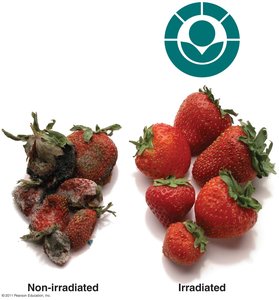
Radiation is used to control microbial growth through ionizing and nonionizing mechanisms.
Ionizing radiation: Includes electron beams and gamma rays; creates ions that disrupt DNA and proteins.
Nonionizing radiation: Includes UV light; causes formation of pyrimidine dimers in DNA.
Chemical Methods of Microbial Control
Phenol and Phenolics
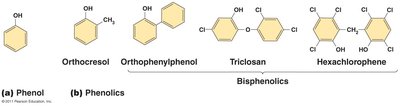
Phenol and phenolic compounds are intermediate- to low-level disinfectants that denature proteins and disrupt cell membranes. They are effective in the presence of organic matter and remain active for prolonged periods.
Common uses: Health care settings, laboratories, homes.
Examples: Orthocresol, orthophenylphenol, triclosan, hexachlorophene.
Alcohols
Alcohols are intermediate-level disinfectants that denature proteins and disrupt cytoplasmic membranes. They are more effective than soap in removing bacteria from hands.
Common use: Swabbing skin with 70% ethanol prior to injection.
Halogens
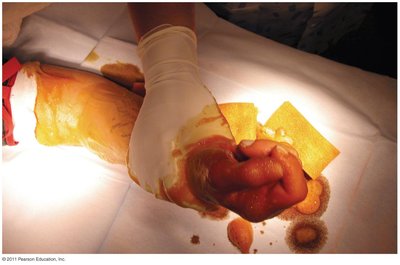
Halogens are intermediate-level antimicrobial chemicals that damage enzymes via oxidation or denaturation. They are widely used in various applications, including water treatment and disinfection.
Examples: Iodine tablets, iodophores, chlorine treatment, bleach, chloramines, bromine.
Surfactants
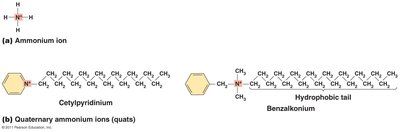
Surfactants are surface-active chemicals that reduce surface tension of solvents, aiding in the removal of microbes. Soaps and detergents are common surfactants; quaternary ammonium compounds (quats) are low-level disinfectants ideal for medical and industrial applications.
Soaps: Good degerming agents but not antimicrobial.
Detergents: Positively charged organic surfactants.
Heavy Metals
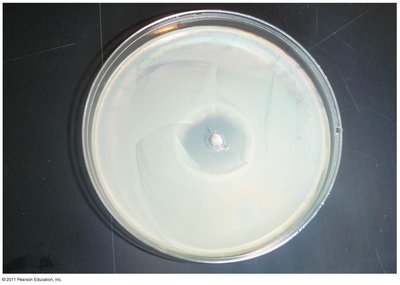
Heavy-metal ions denature proteins and act as low-level bacteriostatic and fungistatic agents. They are used in various applications, such as preventing blindness in newborns and controlling algal growth.
Examples: Silver nitrate, thimerosal, copper.
Additional Methods and Considerations
Biosafety Levels
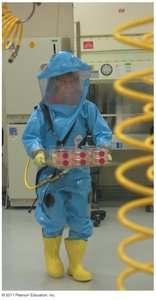
Biosafety levels (BSL) are defined for laboratories handling pathogens, ranging from BSL-1 (minimal risk) to BSL-4 (high risk, severe or fatal disease).
BSL-1: Handling pathogens not causing disease in healthy humans.
BSL-2: Handling moderately hazardous agents.
BSL-3: Handling microbes in safety cabinets.
BSL-4: Handling microbes causing severe or fatal disease.
Development of Resistant Microbes
Overuse of antiseptic and disinfectant products can promote the development of resistant microbes, posing challenges for microbial control in clinical and environmental settings.
Summary Table: Microbial Control Methods
This table summarizes the main physical and chemical methods used for microbial control, their mechanisms, and typical applications.
Method | Mechanism | Application |
|---|---|---|
Heat (moist/dry) | Denatures proteins, disrupts membranes | Sterilization, pasteurization |
Filtration | Physical removal of microbes | Sterilization of heat-sensitive liquids |
Radiation | DNA damage, protein disruption | Sterilization of food, medical equipment |
Phenolics | Protein denaturation, membrane disruption | Disinfection of surfaces |
Alcohols | Protein denaturation, membrane disruption | Skin antisepsis |
Halogens | Enzyme oxidation/denaturation | Water treatment, disinfection |
Surfactants | Reduce surface tension, degerming | Handwashing, cleaning |
Heavy metals | Protein denaturation | Preservation, algal control |
Additional info: Decimal reduction time (D-value) and microbial death rate are key quantitative measures for evaluating sterilization and disinfection processes. The selection of control methods depends on the type of microorganism, site to be treated, and environmental conditions.
