 Back
BackMicrobial Control: Principles, Methods, and Applications
Study Guide - Smart Notes
 Tailored notes based on your materials, expanded with key definitions, examples, and context.
Microbial Control: Principles and Terminology
Introduction to Microbial Control
Microbial control refers to the reduction or elimination of microorganisms to prevent infection, spoilage, or contamination. This is achieved through various physical and chemical methods, each with specific applications and efficacy depending on the context and target organisms.
Reduction in numbers and activity: Includes killing, inhibiting growth, or removing microorganisms from surfaces or environments.
Applications: Healthcare, food production, laboratory safety, and public health.
Key Terminology of Microbial Control
Understanding the terminology is essential for selecting and applying appropriate microbial control methods.
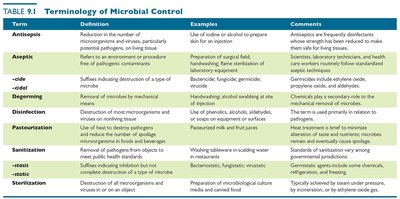
Term | Definition | Example | Comments |
|---|---|---|---|
Antisepsis | Reduction in the number of microorganisms and viruses on living tissue | Iodine or alcohol for skin prep | Antiseptics are less toxic than disinfectants |
Aseptic | Free of pathogenic contamination | Surgical field preparation | Used in labs and surgery |
Degerming | Removal of microbes by mechanical means | Handwashing | Often involves scrubbing |
Disinfection | Destruction of most microbes on nonliving tissue | Phenolics, alcohols | Not all pathogens are killed |
Pasteurization | Use of heat to destroy pathogens in food/drink | Milk, fruit juices | Does not sterilize |
Sanitization | Removal of pathogens to meet public health standards | Washing utensils | Used in food industry |
Sterilization | Destruction of all microorganisms and viruses | Autoclaving, ethylene oxide | Absolute removal |
Principles of Microbial Death
Microbial Death and Death Curves
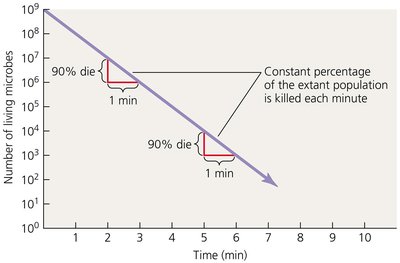
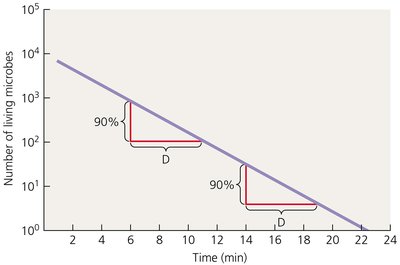
Microbial death is defined as the permanent loss of reproductive ability under ideal environmental conditions. The rate of microbial death is typically exponential, meaning a constant percentage of the population dies per unit time.
Exponential death: Each minute, a fixed percentage of microbes are killed.
Decimal reduction time (D value): The time required to kill 90% of the microbial population at a given condition.
Factors Affecting Efficacy of Antimicrobial Methods
Site to be Treated
The choice of antimicrobial method depends on the nature of the site and the required level of control. Harsh chemicals and extreme heat are unsuitable for living tissues and delicate materials.
Different settings (homes, hospitals, labs, food facilities) require tailored approaches.
Relative Susceptibility of Microorganisms
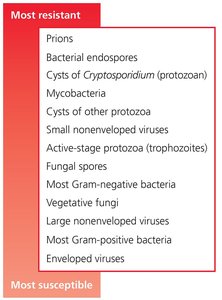
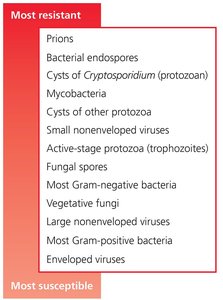
Microbes vary in their resistance to antimicrobial agents. Prions and bacterial endospores are among the most resistant, while enveloped viruses are the most susceptible.
Environmental Factors
Temperature: Higher temperatures generally increase the efficacy of antimicrobial chemicals.
Presence of organic matter: Can inhibit the action of disinfectants and antiseptics.
Risk of Infection and Instrument Classification
Critical items: Contact body tissues; must be sterile (e.g., scalpels, needles).
Semi-critical items: Contact mucous membranes; must be free of viruses and vegetative bacteria (e.g., endoscopes, endotracheal tubes).
Non-critical items: Contact unbroken skin only (e.g., blood pressure cuffs, stethoscopes).
Composition of Item
Some materials (e.g., plastics) are sensitive to heat or chemicals, requiring alternative sterilization methods such as irradiation or filtration.
Biosafety Levels in Laboratories
Biosafety Levels (BSL)
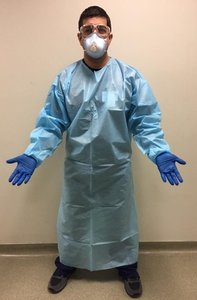
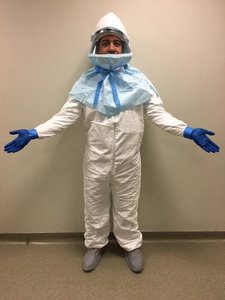
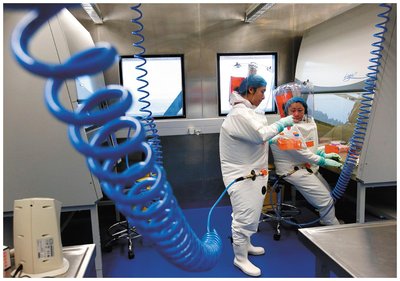
Laboratories are classified into four biosafety levels based on the risk associated with the pathogens handled:
BSL-1: Non-pathogenic microbes; basic precautions.
BSL-2: Moderate risk; gloves, lab coats, limited access.
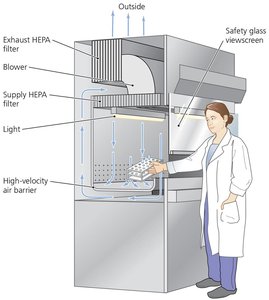
BSL-3: High risk; safety cabinets, controlled access.
BSL-4: Extreme risk; full-body suits, specialized facilities.
Methods of Microbial Control
Physical Methods
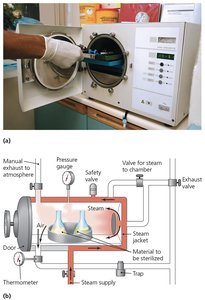
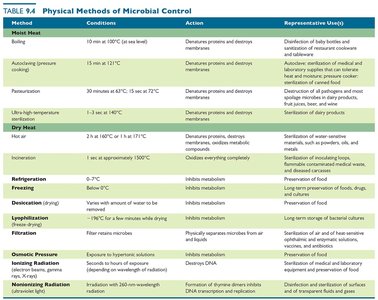
Moist Heat: Denatures proteins and destroys membranes. Includes boiling, autoclaving, and pasteurization.
Dry Heat: Oxidizes cell components; used for glassware and metal instruments.
Refrigeration and Freezing: Inhibits metabolism; used for preservation.
Desiccation and Osmotic Pressure: Inhibits metabolism by removing water or adding solutes (salt/sugar).
Filtration: Physically removes microbes from liquids or air.
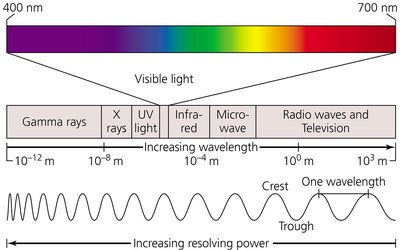
Radiation: Damages DNA; includes ionizing (gamma rays, X-rays) and non-ionizing (UV) radiation.
High Pressure: Denatures proteins and alters membrane permeability; used in food industry.
Moist Heat Methods
Boiling: 100°C; kills most non-spore-forming pathogens.
Autoclaving: 121°C, 15 psi, 15-20 min; sterilizes media and equipment.
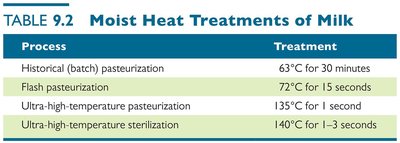
Pasteurization: Reduces microbial load in foods and beverages without damaging quality.
Process | Treatment |
|---|---|
Historical (batch) pasteurization | 63°C for 30 minutes |
Flash pasteurization | 72°C for 15 seconds |
Ultra-high-temperature pasteurization | 135°C for 1 second |
Ultra-high-temperature sterilization | 140°C for 1–3 seconds |
Dry Heat Methods
Oven sterilization: 200°C for 90 min.
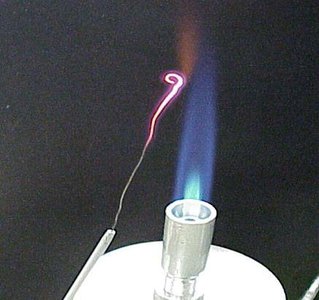
Incineration: 1500°C; used for complete destruction of materials.
Filtration
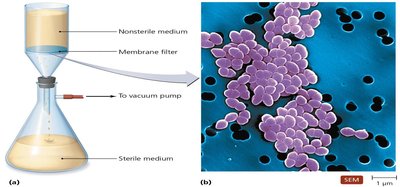
Filtration is used to sterilize heat-sensitive liquids and air by physically removing microorganisms.
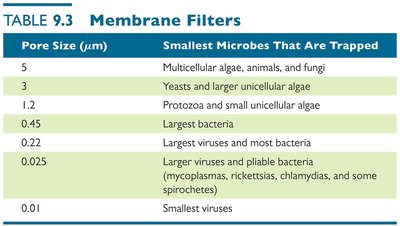
Pore Size (μm) | Smallest Microbes That Are Trapped |
|---|---|
5 | Multicellular algae, animals, fungi |
3 | Yeasts and larger unicellular algae |
1.2 | Protozoa and small unicellular algae |
0.45 | Largest bacteria |
0.22 | Largest viruses and most bacteria |
0.025 | Larger viruses and pliable bacteria |
0.01 | Smallest viruses |
Radiation
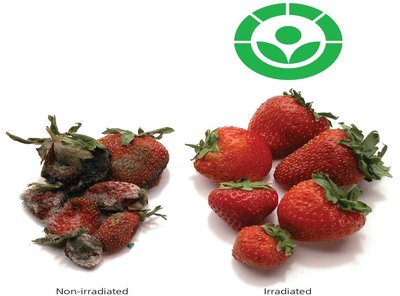
Ionizing radiation: (gamma rays, X-rays) causes DNA breaks; used for sterilization of medical supplies and food.
Non-ionizing radiation: (UV light) causes thymine dimers in DNA; used for surface disinfection.
Chemical Methods of Microbial Control
Major Classes of Chemical Agents
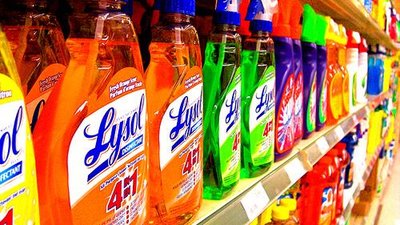
Phenols and Phenolics: Disrupt cell membranes and denature proteins; used in disinfectants like Lysol.
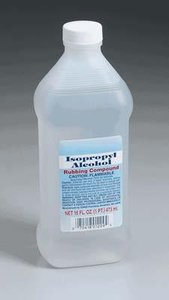
Alcohols: Denature proteins and disrupt membranes; effective at 70–90% concentration (e.g., isopropyl alcohol).
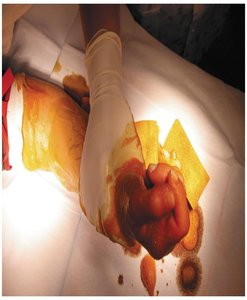
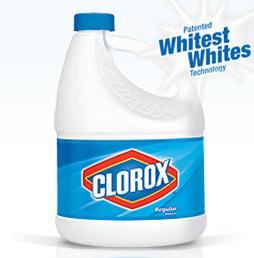
Halogens: Oxidize and denature proteins; includes chlorine, iodine, bromine, and fluorine (e.g., bleach, Betadine).
Oxidizing Agents: High-level disinfectants; include hydrogen peroxide, ozone, peracetic acid.
Surfactants: Soaps and detergents; disrupt membranes and reduce surface tension.
Heavy Metals: Denature proteins; includes silver, mercury, copper compounds.
Aldehydes: Cross-link proteins and nucleic acids; used for sterilization.
Gaseous Agents: Ethylene oxide; used for sterilizing heat-sensitive materials.
Levels of Disinfectants/Antiseptics
High-level: Kill all organisms, including spores (e.g., aldehydes, oxidizing agents).
Intermediate-level: Kill fungal spores, protozoan cysts, viruses, and pathogenic bacteria (e.g., alcohols, halogens).
Low-level: Kill vegetative bacteria, fungi, protozoa, and some viruses (e.g., surfactants, heavy metals).
Factors in Selecting Chemical Agents
Toxicity
Activity in presence of organic material
Compatibility with material being treated
Storage and stability
Cost and availability
Environmental risk
Evaluating Disinfectants and Antiseptics
Methods for Evaluation
Phenol Coefficient: Compares effectiveness to phenol; >1.0 means more effective than phenol.
Use-Dilution Test: Standard test in the US; measures effectiveness against dried bacteria on cylinders.
Kelsey-Sykes Capacity Test: Used in the EU; measures minimum time for effectiveness.
In-Use Test: Swabs before and after application; determines real-world efficacy.
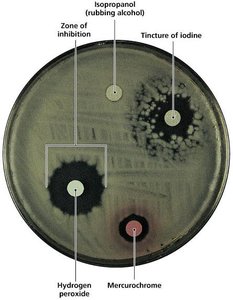
Disk-Diffusion Method: Measures zone of inhibition around chemical-soaked disks on agar plates.
Additional info: This guide expands on the provided material with definitions, examples, and context for each method and term, ensuring a comprehensive overview suitable for microbiology students preparing for exams.
