 Back
BackMicrobial Culture Media: Types, Composition, and Functions
Study Guide - Smart Notes
 Tailored notes based on your materials, expanded with key definitions, examples, and context.
Microbial Culture Media
Overview of Microbial Culture Media
Microbial culture media are essential tools in microbiology, enabling the growth, isolation, and identification of microorganisms. Media are classified based on their physical state, chemical composition, and function, each serving specific purposes in laboratory and clinical settings.
Physical State: Liquid, solid, and semisolid formats
Chemical Composition: Defined (synthetic) or complex (enriched)
Function: Differential, selective, enrichment, and reducing media
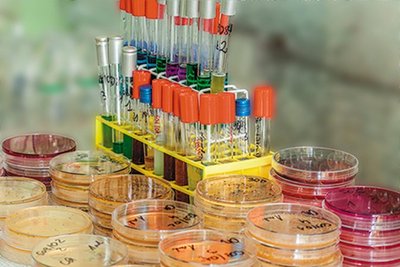
Physical State of Media
Liquid Media
Liquid media, also known as broth media, are used for growing large batches of microbes. They are prepared by adding nutrients to purified water and sterilizing the mixture in flasks or tubes.
Ideal for: Mass cultivation of microorganisms
Preparation: Nutrients dissolved in water, sterilized
Solid and Semisolid Media
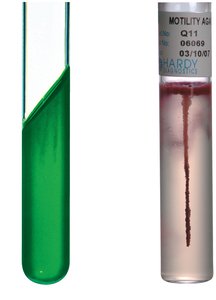
Solid media are used for isolating colonies and observing culture characteristics, while semisolid media are useful for motility testing. Both are made by adding agar, a polysaccharide, to liquid media. Semisolid media contain less agar than solid media.
Solid Media: Agar added, poured into petri plates or tubes, cooled to solidify
Semisolid Media: Less agar, used for motility tests
Slants: Tubes cooled at an angle
Deeps: Tubes cooled upright
Chemical Composition of Media
Defined (Synthetic) Media
Defined media have a precisely known chemical composition, with each organic and inorganic component quantified. They are useful for growing certain autotrophs and some heterotrophs.
Composition: All ingredients and their concentrations are known
Application: Microbiological assays, growth of chemoautotrophs and photoautotrophs
Complex (Enriched) Media
Complex media contain a mixture of organic and inorganic nutrients that are not fully defined. They often include ingredients like blood, milk proteins, or yeast extracts, making them suitable for fastidious organisms with complex growth requirements.
Composition: Exact quantities of nutrients are unknown
Application: Growth of most heterotrophic organisms
Comparison Table: Complex vs. Defined Media
Type | Example Ingredients | Key Features |
|---|---|---|
Complex | Trytone, yeast extract, NaCl | Unknown exact composition; supports diverse growth |
Defined | Glucose, MgSO4, CaCl2, Na2HPO4, KH2PO4, NH4Cl | Precisely known and quantified ingredients |
Functional Classification of Media
Differential Media
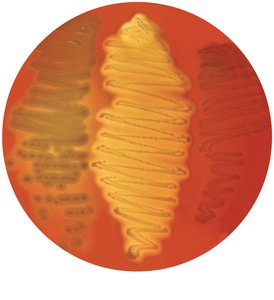
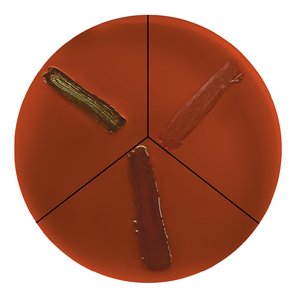
Differential media are formulated to visually distinguish one microbe from another, often based on metabolic properties. Blood agar is a common example, differentiating bacteria by their hemolytic activity.
Beta hemolytic: Complete breakdown of red blood cells
Alpha hemolytic: Partial breakdown of red blood cells
Gamma hemolytic: No lysis of red blood cells

Selective Media
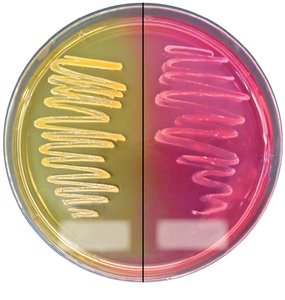
Selective media are designed to foster the growth of certain bacteria while suppressing others. Examples include Mannitol Salt Agar (MSA) and Eosin Methylene Blue Agar (EMB).
Mannitol Salt Agar (MSA): High salt content selects for salt-tolerant bacteria; differentiates based on mannitol fermentation
Eosin Methylene Blue Agar (EMB): Dyes inhibit Gram-positive bacteria; differentiates based on lactose fermentation
Enrichment Media
Enrichment media are similar to selective media but are designed to increase the numbers of desired microbes to detectable levels.
Reducing Media
Reducing media are used for the growth of obligate anaerobes by removing molecular oxygen from the environment. Thioglycate is a common reducing agent, and specialized equipment like anaerobic jars and chambers are used to maintain oxygen-free conditions.
Thioglycate: Converts O2 to water
Anaerobic jar: Oxygen-reacting chemicals create anaerobic conditions
Anaerobic chamber: Large box with gloves for handling samples; nitrogen and other gases displace oxygen


Summary Table: Culture Media Types and Purposes
Type | Purpose |
|---|---|
Chemically Defined | Growth of chemoautotrophs and photoautotrophs; microbiological assays |
Complex | Growth of most heterotrophic organisms |
Reducing | Growth of obligate anaerobes |
Selective | Suppression of unwanted microbes; encouraging desired microbes |
Differential | Differentiation of colonies of desired microbes from others |
Enrichment | Increase numbers of desired microbes to detectable levels |

Applications in Clinical Microbiology
Clinical samples such as urine, throat swabs, and fecal specimens are not pure cultures. Selective and differential media are essential for separating pathogens from normal microbiota, aiding in accurate diagnosis and treatment.
Selective media: Isolate pathogens from mixed samples
Differential media: Identify pathogens based on metabolic activity
Key Terms
Agar: A polysaccharide used to solidify media
Broth: Liquid media for microbial growth
Hemolysis: Breakdown of red blood cells by bacteria
Fastidious organisms: Microbes with complex nutritional requirements
Autotrophs: Organisms that synthesize their own food from inorganic sources
Heterotrophs: Organisms that require organic compounds for growth
Equations and Formulas
Preparation of defined media often involves precise molar calculations:
Example: To prepare 1L of glucose minimal salts media:
$\text{Total mass of Na_2HPO_4} = 12.8\,\text{g}$ $\text{Total mass of KH_2PO_4} = 3.0\,\text{g}$ $\text{Total mass of NaCl} = 0.5\,\text{g}$ $\text{Total mass of NH_4Cl} = 1.0\,\text{g}$ $\text{Volume of 20\% glucose solution} = 20\,\text{mL}$ $\text{Volume of 1M MgSO_4} = 2\,\text{mL}$ $\text{Volume of 1M CaCl_2} = 0.1\,\text{mL}$
Additional info: Defined media are critical for experiments requiring precise control of nutrient variables, while complex media are preferred for routine cultivation of diverse microbes.
