Back
BackMicrobial Diseases of the Cardiovascular and Lymphatic Systems
Study Guide - Smart Notes
 Tailored notes based on your materials, expanded with key definitions, examples, and context.
Microbial Diseases of the Cardiovascular and Lymphatic Systems
Structure and Function of the Cardiovascular and Lymphoid Systems
The cardiovascular and lymphatic systems are essential for transporting nutrients, removing wastes, and defending the body against infections. Microbial diseases affecting these systems can have severe and systemic consequences.
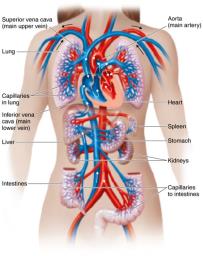
Cardiovascular system: Circulates blood through the body’s tissues, delivering substances and removing wastes. Includes the heart, arteries, veins, and capillaries.
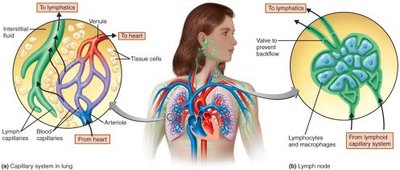
Lymphoid system: Plasma leaves blood capillaries to become interstitial fluid, which is transported as lymph through lymphatic vessels and nodes. Lymph nodes contain macrophages, B cells, and T cells, and filter out microorganisms.
Buboes: Swollen lymph nodes, often a sign of infection.
Sepsis and Septic Shock
Sepsis is a life-threatening condition caused by the body's response to infection, leading to tissue damage, organ failure, and potentially death.
Septicemia: Acute illness due to pathogens or their toxins in the blood.
Sepsis: Systemic inflammatory response syndrome (SIRS) due to infection.
Lymphangitis: Inflammation of lymph vessels, often visible as red streaks under the skin.
Severe sepsis: Sepsis with decreased blood pressure and organ dysfunction.
Septic shock: Sepsis with uncontrollable decreased blood pressure.
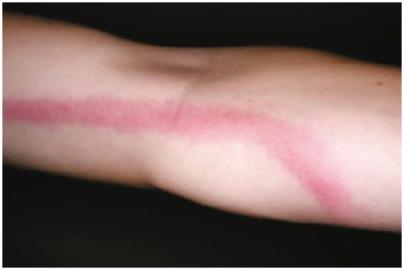
Gram-Negative and Gram-Positive Sepsis
Sepsis can be caused by both Gram-negative and Gram-positive bacteria, each with distinct mechanisms and clinical implications.
Gram-negative sepsis (endotoxic shock): Endotoxins (LPS) from bacteria such as Klebsiella, E. coli, and Pseudomonas aeruginosa cause severe hypotension. Antibiotics may worsen the condition by releasing more endotoxin.
Gram-positive sepsis: Potent exotoxins cause toxic shock syndrome. Common pathogens include Enterococcus faecium, Enterococcus faecalis, and Group B streptococci (Streptococcus agalactiae), often associated with hospital-acquired infections and neonatal sepsis.
Puerperal Sepsis
Puerperal sepsis, also known as childbirth fever, is a postpartum infection usually caused by Streptococcus pyogenes. It can progress from uterine infection to peritonitis.
Bacterial Infections of the Heart
Bacterial infections can affect different layers of the heart, leading to serious complications.
Endocarditis: Inflammation of the endocardium, often impairing heart valve function.
Subacute bacterial endocarditis: Usually caused by alpha-hemolytic streptococci from oral infections.
Acute bacterial endocarditis: Caused by Staphylococcus aureus.
Pericarditis: Inflammation of the sac around the heart, often due to streptococci.
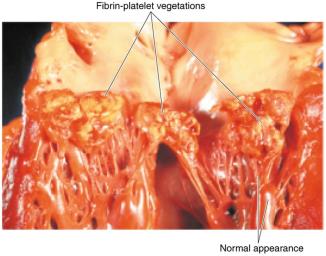
Rheumatic Fever
Rheumatic fever is an autoimmune complication following Streptococcus pyogenes infection, such as strep throat. It can cause arthritis, fever, inflammation of the heart valves, and subcutaneous nodules at the joints. Sydenham’s chorea (involuntary movements) may also occur.
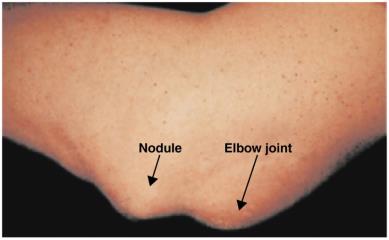
Tularemia
Tularemia is a zoonotic disease caused by Francisella tularensis, a Gram-negative rod. It is transmitted from rabbits, ticks, and insects, causing ulcers at the site of entry and enlarged lymph nodes. Respiratory infection can be severe.
Anthrax
Anthrax is caused by Bacillus anthracis, a Gram-positive, endospore-forming rod found in soil. It primarily affects grazing animals and can infect humans via cutaneous, gastrointestinal, or inhalational routes. Virulence factors include protective antigen, edema toxin, lethal toxin, and an amino acid capsule.
Cutaneous anthrax: Endospores enter through a cut; 20% mortality without treatment.
Gastrointestinal anthrax: Ingestion of contaminated food; >50% mortality.
Inhalational anthrax: Inhalation of endospores; nearly 100% mortality if untreated.
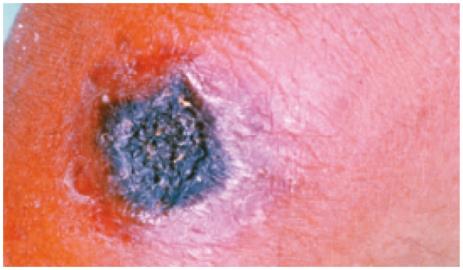
Gangrene
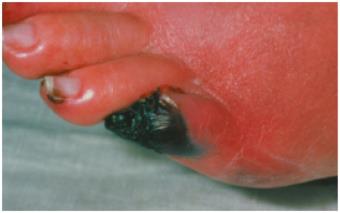
Gangrene is the death of soft tissue due to loss of blood supply (ischemia) and subsequent necrosis. Gas gangrene is caused by Clostridium perfringens, which grows in necrotic tissue and produces toxins. Treatment includes surgical removal and hyperbaric oxygen therapy.
Systemic Diseases Caused by Bites and Scratches
Bites and scratches from animals can introduce pathogens into the bloodstream, leading to localized or systemic infections.
Pasteurella multocida: Gram-negative rod causing severe swelling, pneumonia, or sepsis.
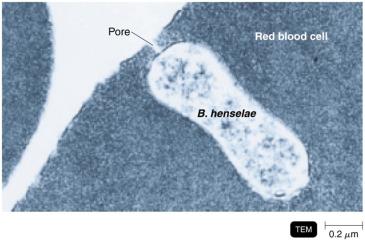
Cat-scratch disease: Caused by Bartonella henselae, leading to papules and swollen lymph nodes. Self-limiting in most cases.
Plague
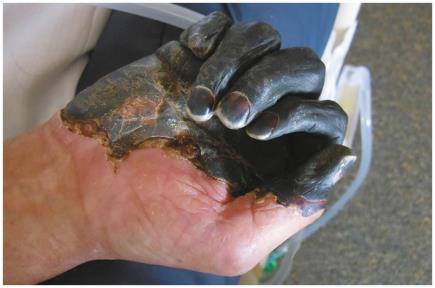
The plague is caused by Yersinia pestis, transmitted by rat fleas. It can present as bubonic (lymph node swelling), septicemic (bloodstream infection), or pneumonic (lung infection) plague. Bubonic plague has a 50–75% mortality rate, while pneumonic plague is nearly always fatal without treatment.
Lyme Disease
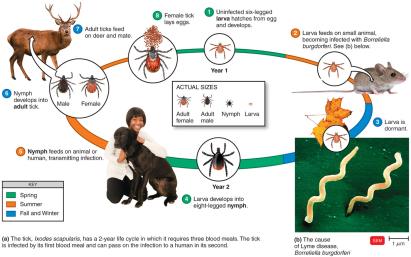
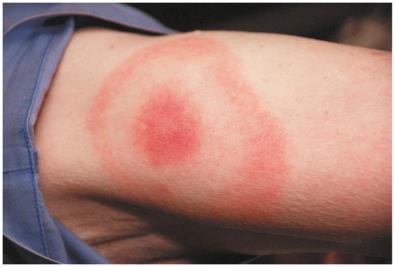
Lyme disease is caused by Borreliella burgdorferi and transmitted by Ixodes ticks. It is the most common tickborne disease in the U.S. The disease progresses through three phases: bull’s-eye rash and flu-like symptoms, neurological and cardiac symptoms, and chronic arthritis.
Rickettsial Diseases
Rickettsial diseases are caused by obligate intracellular, Gram-negative bacteria transmitted by arthropod vectors. They infect endothelial cells, causing vascular damage.
Typhus fever: Caused by Rickettsia prowazekii, transmitted by body lice. High fever, rash, and high mortality if untreated.
Endemic murine typhus: Caused by Rickettsia typhi, transmitted by rat fleas. Similar symptoms but lower mortality.
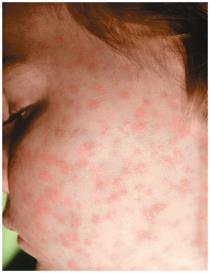
Rocky Mountain spotted fever: Caused by Rickettsia rickettsii, transmitted by ticks. Characterized by fever, headache, and a rash that appears on palms and soles.

Infectious Mononucleosis and Epstein-Barr Virus (EBV)
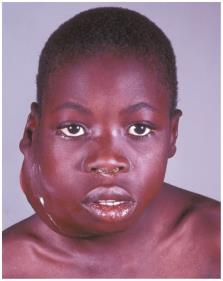
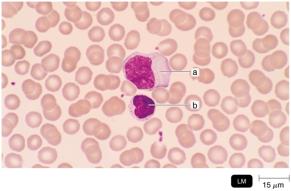
Infectious mononucleosis is caused by EBV, a human herpesvirus. It is transmitted via saliva and is common worldwide. Symptoms include fever, sore throat, swollen lymph nodes, and enlarged spleen. EBV is also associated with Burkitt’s lymphoma, Hodgkin’s lymphoma, and nasopharyngeal cancer.
Cytomegalovirus Infections
Cytomegalovirus (CMV, human herpesvirus 5) remains latent in white blood cells and is widespread. It can cause severe disease in newborns (congenital infection) and immunocompromised patients, including pneumonia and retinitis.
Classic and Emerging Viral Hemorrhagic Fevers
Viral hemorrhagic fevers affect multiple organ systems and are often zoonotic. They include yellow fever, dengue, Marburg, Lassa, Ebola, and hantavirus infections.
Yellow fever: Transmitted by Aedes aegypti mosquitoes; causes jaundice and hemorrhage. Vaccine available.
Dengue: Transmitted by Aedes mosquitoes; can progress to severe dengue with bleeding and organ impairment. Vaccine available for children.
Marburg and Ebola: Cause severe internal and external bleeding, high mortality rates. Ebola is associated with fruit bats as a reservoir.
Hantavirus: Causes pulmonary syndrome or hemorrhagic fever with renal syndrome; transmitted by inhalation of rodent excreta.
Chagas Disease (American Trypanosomiasis)
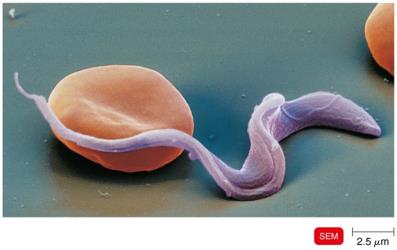
Chagas disease is caused by Trypanosoma cruzi, transmitted by reduviid bugs. It is endemic in Central and South America and can cause chronic heart and digestive system damage.
Toxoplasmosis
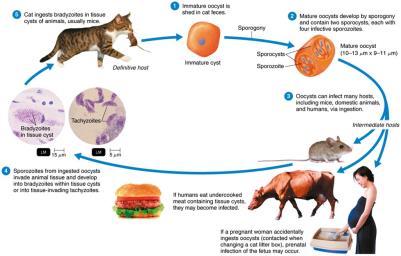
Toxoplasmosis is caused by Toxoplasma gondii. Humans are infected by ingesting oocysts from cat feces or tissue cysts in undercooked meat. The disease is usually mild but can cause severe congenital infections and neurological damage in immunocompromised patients.
Malaria
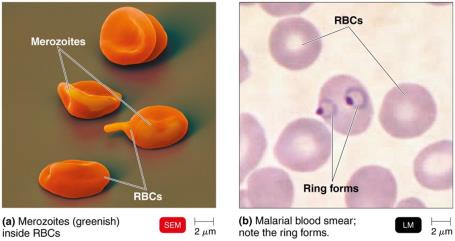
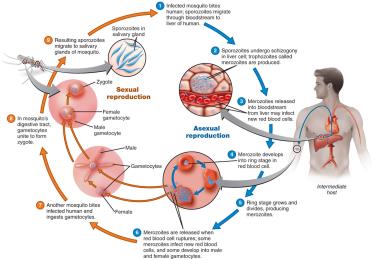
Malaria is caused by Plasmodium species and transmitted by Anopheles mosquitoes. It is characterized by cycles of chills and fever due to the rupture of infected red blood cells. P. falciparum is the most deadly species. Diagnosis is by blood smear, and prevention includes insecticide-treated bed nets and chemoprophylaxis.
Leishmaniasis
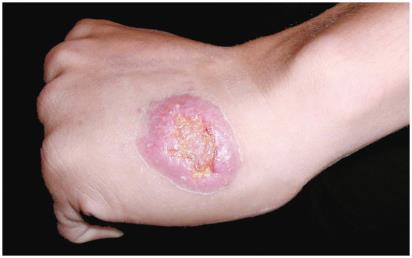
Leishmaniasis is transmitted by female sandflies and caused by Leishmania species. It can be visceral (affecting internal organs), cutaneous (skin ulcers), or mucocutaneous (affecting mucous membranes).
Babesiosis
Babesiosis is caused by Babesia microti and transmitted by Ixodes ticks. It resembles malaria and is more severe in immunocompromised patients.
Schistosomiasis
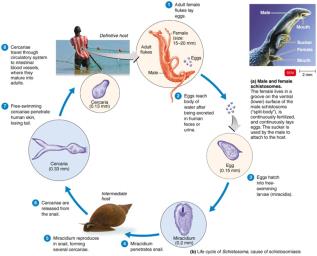
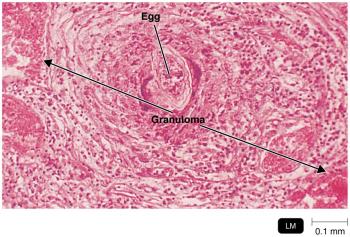
Schistosomiasis is caused by Schistosoma flukes. Eggs are released into water, infect snails, and the resulting cercariae penetrate human skin. Eggs lodge in tissues, causing granulomas and chronic inflammation.