 Back
BackMicrobial Diseases of the Digestive System: Key Pathogens, Epidemiology, and Clinical Features
Study Guide - Smart Notes
 Tailored notes based on your materials, expanded with key definitions, examples, and context.
Microbial Infections of the Digestive System
Overview
The digestive system is susceptible to a wide range of microbial infections caused by viruses, bacteria, protozoa, and helminths. These infections can lead to significant morbidity and mortality worldwide, especially in areas with poor sanitation and limited access to clean water. Understanding the causative agents, epidemiology, transmission, clinical features, and treatment options is essential for effective prevention and management.
Viral Infections of the Digestive System
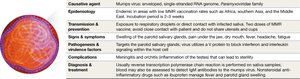
Mumps
Mumps is a viral infection primarily affecting the salivary glands, with potential complications involving the testes and central nervous system.
Causative Agent: Mumps virus (enveloped, single-stranded RNA virus, Paramyxoviridae family)
Epidemiology: Outbreaks in areas with low MMR vaccination rates; incubation 15–21 days
Transmission & Prevention: Respiratory droplets, direct contact with infected saliva; MMR vaccine is effective
Signs & Symptoms: Swelling of parotid salivary glands, fever, headache, muscle aches, loss of appetite
Complications: Orchitis (testicular inflammation), meningitis, encephalitis
Diagnosis & Treatment: Clinical diagnosis; supportive care only
Rotaviral Gastroenteritis
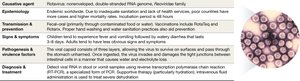
Rotavirus is a leading cause of severe diarrhea in infants and young children, especially in developing countries.
Causative Agent: Rotavirus (nonenveloped, double-stranded RNA virus, Reoviridae family)
Epidemiology: Epidemics in areas with poor sanitation; high mortality in infants
Transmission & Prevention: Fecal-oral route; vaccination available
Signs & Symptoms: Severe watery diarrhea, vomiting, fever (children); milder in adults
Pathogenesis: Virus infects and destroys intestinal epithelial cells, reducing absorption
Diagnosis & Treatment: Detection in stool; supportive therapy with rehydration
Norovirus Gastroenteritis
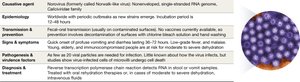
Norovirus is a highly contagious virus causing outbreaks of acute gastroenteritis in all age groups.
Causative Agent: Norovirus (nonenveloped, single-stranded RNA virus, Caliciviridae family)
Epidemiology: Worldwide; common in closed environments (e.g., cruise ships)
Transmission & Prevention: Fecal-oral route; no vaccine; handwashing is key
Signs & Symptoms: Sudden onset vomiting, watery diarrhea, abdominal cramps, low-grade fever
Diagnosis & Treatment: PCR or immunoassays; supportive care with fluids
Hepatitis A, B, and C
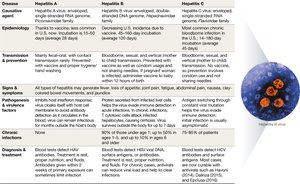
Hepatitis viruses cause inflammation of the liver, with varying modes of transmission and potential for chronic infection.
Disease | Hepatitis A | Hepatitis B | Hepatitis C |
|---|---|---|---|
Causative agent | HAV, nonenveloped, single-stranded RNA | HBV, enveloped, double-stranded DNA | HCV, enveloped, single-stranded RNA |
Epidemiology | Fecal-oral, vaccine available | Blood, sexual, perinatal; vaccine available | Blood, sexual; no vaccine |
Chronic infection | No | Yes (10%) | Yes (75–85%) |
Diagnosis | Serology | Serology, DNA | Serology, RNA |
Hepatitis D and E
Hepatitis D and E are less common but important causes of liver disease, with unique epidemiological features.
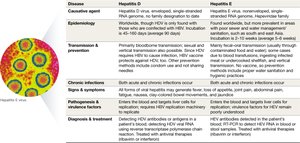
Disease | Hepatitis D | Hepatitis E |
|---|---|---|
Causative agent | HDV, enveloped, single-stranded RNA | HEV, nonenveloped, single-stranded RNA |
Epidemiology | Requires HBV coinfection | Fecal-oral, outbreaks in developing countries |
Chronic infection | Yes | Rare |
Diagnosis | Serology, RNA | Serology, RNA |
Bacterial Infections of the Digestive System
Periodontal Disease and Dental Caries
Oral health is affected by microbial biofilms that cause gum disease and tooth decay.
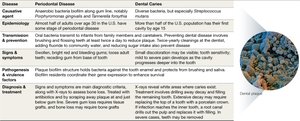
Causative Agents: Periodontal disease: Porphyromonas gingivalis and others; Dental caries: Streptococcus mutans
Epidemiology: Periodontal disease common in adults; caries common in children and adults
Transmission & Prevention: Oral bacteria transmitted from family; prevention by oral hygiene
Signs & Symptoms: Gum bleeding, tooth pain, cavities
Diagnosis & Treatment: Clinical exam, radiographs, scaling, fillings, root canal
Stomach Ulcers
Stomach ulcers are primarily caused by the bacterium Helicobacter pylori, which colonizes the stomach lining.
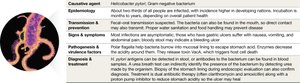
Causative Agent: Helicobacter pylori (Gram-negative bacterium)
Epidemiology: High prevalence worldwide, especially in developing countries
Transmission & Prevention: Fecal-oral suspected; improved sanitation reduces risk
Signs & Symptoms: Abdominal pain, nausea, vomiting, possible bleeding ulcer
Diagnosis & Treatment: Urea breath test, endoscopy, biopsy; treated with antibiotics and acid suppression
Campylobacteriosis
Campylobacteriosis is a common cause of bacterial diarrhea, often associated with poultry.
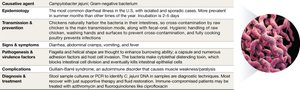
Causative Agent: Campylobacter jejuni (Gram-negative bacterium)
Epidemiology: Most common bacterial diarrhea in the U.S.; associated with undercooked poultry
Transmission & Prevention: Fecal-oral, contaminated food/water; proper cooking and hygiene
Signs & Symptoms: Diarrhea, abdominal cramps, fever, vomiting
Complications: Guillain-Barré syndrome (rare)
Diagnosis & Treatment: Stool culture; supportive care, antibiotics in severe cases
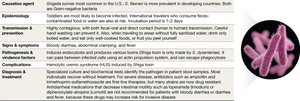
Shigellosis
Shigellosis is a highly contagious bacterial infection causing dysentery, especially in areas with poor sanitation.
Causative Agent: Shigella species (Gram-negative bacteria)
Epidemiology: Common in developing countries; low infectious dose
Transmission & Prevention: Fecal-oral; hand hygiene, sanitation
Signs & Symptoms: Bloody diarrhea, abdominal cramps, fever
Pathogenesis: Shiga toxin production damages intestinal cells
Diagnosis & Treatment: Stool culture; antibiotics in severe cases
Enterohemorrhagic Escherichia coli (EHEC)
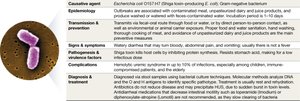
EHEC is a pathogenic strain of E. coli that can cause severe, sometimes life-threatening, gastrointestinal illness.
Causative Agent: E. coli O157:H7 (Gram-negative bacterium)
Epidemiology: Associated with undercooked beef, contaminated produce
Transmission & Prevention: Fecal-oral; proper cooking and hygiene
Signs & Symptoms: Bloody diarrhea, abdominal pain, vomiting
Complications: Hemolytic uremic syndrome (HUS)
Diagnosis & Treatment: Stool culture; supportive care, avoid antibiotics in HUS risk
Nontyphoid Salmonellosis
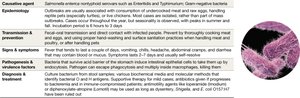
Salmonella infections are a major cause of foodborne illness, often linked to poultry and eggs.
Causative Agent: Salmonella enterica (Gram-negative bacterium)
Epidemiology: Worldwide; associated with contaminated food
Transmission & Prevention: Fecal-oral; proper food handling and cooking
Signs & Symptoms: Diarrhea, fever, abdominal cramps, vomiting
Diagnosis & Treatment: Stool culture; supportive care
Cholera
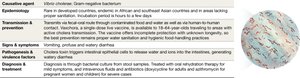
Cholera is a severe diarrheal disease caused by Vibrio cholerae, leading to rapid dehydration and death if untreated.
Causative Agent: Vibrio cholerae (Gram-negative bacterium)
Epidemiology: Endemic in areas with poor sanitation
Transmission & Prevention: Fecal-oral; clean water and sanitation
Signs & Symptoms: Profuse watery diarrhea ("rice-water stool"), vomiting
Pathogenesis: Cholera toxin induces secretion of water and electrolytes
Diagnosis & Treatment: Stool culture; rehydration therapy, antibiotics in severe cases
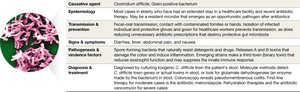
Clostridium difficile Pseudomembranous Colitis
Clostridium difficile causes antibiotic-associated diarrhea and colitis, especially in healthcare settings.
Causative Agent: Clostridium difficile (Gram-positive bacterium)
Epidemiology: Associated with recent antibiotic use, healthcare facilities
Transmission & Prevention: Fecal-oral; hand hygiene, contact precautions
Signs & Symptoms: Diarrhea, fever, abdominal pain
Diagnosis & Treatment: Stool toxin assay; discontinue inciting antibiotic, treat with metronidazole or vancomycin
Protozoal Infections of the Digestive System
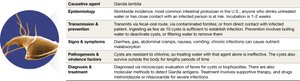
Giardiasis
Giardiasis is a common waterborne protozoal infection causing prolonged diarrhea.
Causative Agent: Giardia lamblia (flagellated protozoan)
Epidemiology: Most common intestinal parasite in the U.S.
Transmission & Prevention: Fecal-oral; avoid untreated water, filter or boil water
Signs & Symptoms: Diarrhea, abdominal cramps, bloating, flatulence
Diagnosis & Treatment: Stool O&P exam; metronidazole or tinidazole
Amebiasis
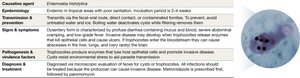
Amebiasis is caused by Entamoeba histolytica, leading to dysentery and, in severe cases, liver abscesses.
Causative Agent: Entamoeba histolytica
Epidemiology: Common in tropical areas with poor sanitation
Transmission & Prevention: Fecal-oral; improved sanitation
Signs & Symptoms: Dysentery, abdominal pain, possible liver abscess
Diagnosis & Treatment: Stool O&P exam; metronidazole followed by paromomycin
Cryptosporidiosis
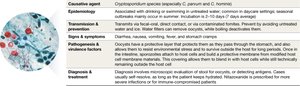
Cryptosporidiosis is a protozoal infection causing watery diarrhea, often associated with contaminated water.
Causative Agent: Cryptosporidium species
Epidemiology: Outbreaks linked to drinking water, swimming pools
Transmission & Prevention: Fecal-oral; avoid contaminated water
Signs & Symptoms: Watery diarrhea, abdominal cramps
Diagnosis & Treatment: Stool O&P exam; nitazoxanide for immunocompetent patients
Helminthic Infections of the Digestive System
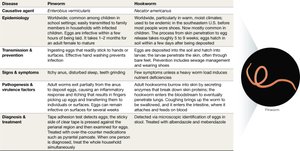
Pinworm and Hookworm
Pinworm and hookworm are common intestinal nematodes with distinct life cycles and clinical presentations.
Disease | Pinworm (Enterobius vermicularis) | Hookworm (Ancylostoma duodenale, Necator americanus) |
|---|---|---|
Epidemiology | Children, worldwide | Warm climates, poor sanitation |
Transmission | Ingestion of eggs | Larvae penetrate skin |
Symptoms | Perianal itching | Anemia, GI symptoms |
Diagnosis | "Tape test" for eggs | Stool O&P for eggs |
Ascariasis
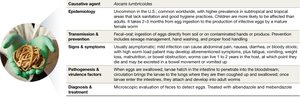
Ascariasis is a large intestinal roundworm infection, common in areas with poor sanitation.
Causative Agent: Ascaris lumbricoides
Epidemiology: Most common helminth infection worldwide
Transmission & Prevention: Fecal-oral; improved sanitation
Signs & Symptoms: Abdominal pain, malnutrition, possible intestinal obstruction
Diagnosis & Treatment: Stool O&P exam; albendazole or mebendazole
Trichinellosis
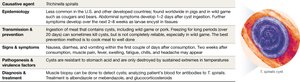
Trichinellosis is a parasitic infection acquired by eating undercooked pork containing Trichinella cysts.
Causative Agent: Trichinella spiralis
Epidemiology: Less common in developed countries; associated with pork and wild game
Transmission & Prevention: Ingestion of cysts in undercooked meat
Signs & Symptoms: GI symptoms, muscle pain, fever, periorbital edema
Diagnosis & Treatment: Muscle biopsy, serology; albendazole or mebendazole
Schistosomiasis
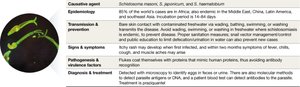
Schistosomiasis is a major parasitic disease caused by blood flukes, affecting millions worldwide.
Causative Agent: Schistosoma species
Epidemiology: Endemic in Africa, Middle East, Asia, South America
Transmission & Prevention: Skin penetration by larvae in contaminated water
Signs & Symptoms: Rash, fever, abdominal pain, chronic liver and bladder disease
Diagnosis & Treatment: Stool or urine O&P praziquantel
Additional info: These notes summarize the causative agents, epidemiology, transmission, clinical features, and management of major microbial infections of the digestive system, integrating information from disease snapshot tables and academic context for microbiology students.
