 Back
BackMicrobial Diseases of the Nervous System: Structure, Pathogenesis, and Clinical Features
Study Guide - Smart Notes
 Tailored notes based on your materials, expanded with key definitions, examples, and context.
Microbial Diseases of the Nervous System
Structure and Protection of the Nervous System
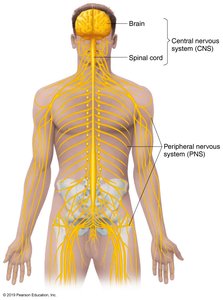
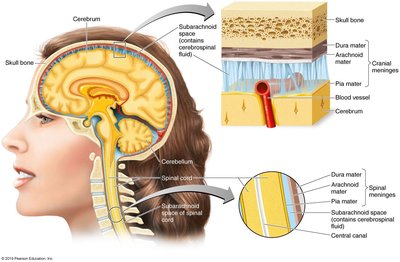
The nervous system is divided into the central nervous system (CNS) and the peripheral nervous system (PNS). The CNS consists of the brain and spinal cord, while the PNS includes all nerves branching from the CNS. The brain and spinal cord are protected by three layers of connective tissue called meninges (dura mater, arachnoid mater, and pia mater), and the subarachnoid space contains cerebrospinal fluid (CSF) for cushioning. The blood-brain barrier (BBB) is a highly selective, semipermeable barrier formed by endothelial cells, restricting the passage of substances from the bloodstream into the CNS.
Common Signs and Symptoms of Nervous System Infections
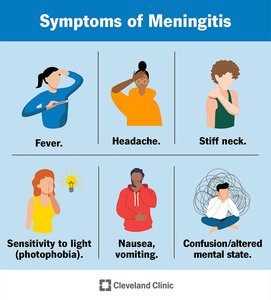
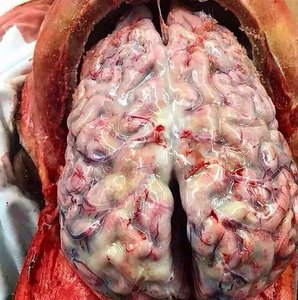
Microbial infections of the nervous system often present with characteristic symptoms. Meningitis is the inflammation of the meninges, encephalitis is inflammation of the brain, and meningoencephalitis involves both. Common symptoms include fever, headache, stiff neck, nausea, vomiting, sensitivity to light (photophobia), and altered mental status. Severe cases may progress to convulsions, coma, and death due to shock and inflammation.
Bacterial Infections of the Nervous System
Bacterial infections are among the most severe causes of nervous system diseases. The most common forms include bacterial meningitis, listeriosis, tetanus, and botulism.
Bacterial Meningitis
Haemophilus influenzae: Gram-negative aerobic bacteria, normal throat microbiota, pathogenic due to capsule antigen type B. Most common in children (6 months to 4 years). Prevented by the Hib vaccine.
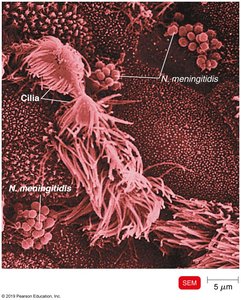
Neisseria meningitidis: Gram-negative aerobic cocci with capsule, causes meningococcal meningitis. Outbreaks common in crowded settings. Mortality rate is high without antibiotics.
Streptococcus pneumoniae: Gram-positive encapsulated diplococcus, causes pneumococcal meningitis. Most common in children and elderly. Prevented by a conjugated vaccine.
Diagnosis of Meningitis
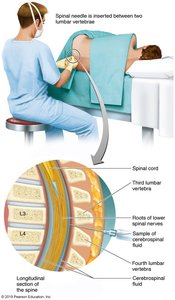
Diagnosis often involves a lumbar puncture (spinal tap) to collect cerebrospinal fluid for laboratory analysis.
Listeriosis
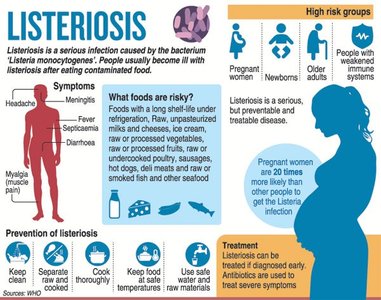
Listeria monocytogenes is a Gram-negative aerobic rod, usually foodborne. It can cause sepsis and meningitis, especially in immunocompromised individuals and pregnant women (can cross the placenta and cause stillbirths). Prevention includes proper food handling and cooking.
Tetanus
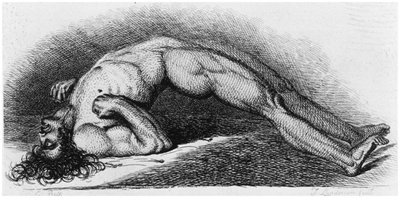
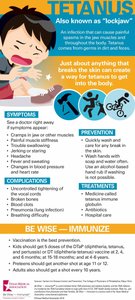
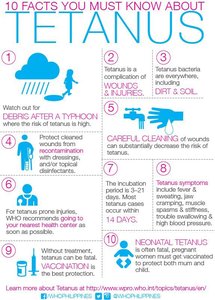
Clostridium tetani is a Gram-positive, endospore-forming, obligate anaerobe. It produces tetanospasmin, a neurotoxin that blocks inhibitory neurotransmitter release, causing rigid paralysis and potentially death from respiratory muscle spasms. Prevention is by vaccination with tetanus toxoid (DTaP), with boosters every 10 years.
Botulism
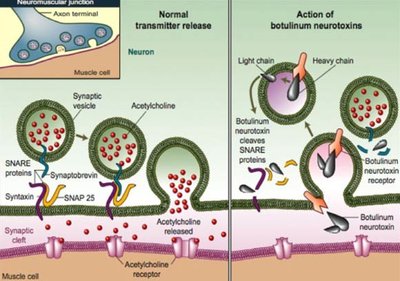
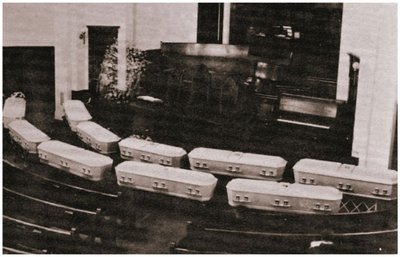
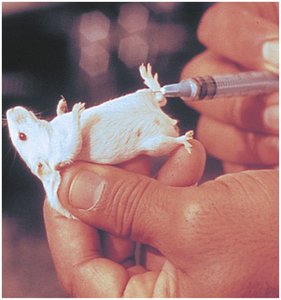
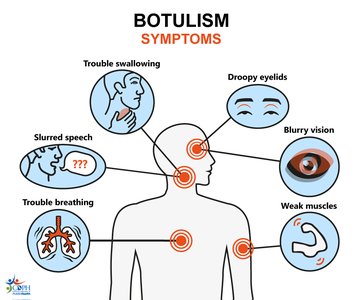
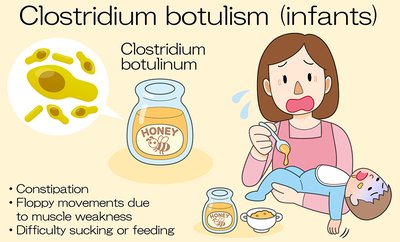
Clostridium botulinum is a Gram-positive, endospore-forming, obligate anaerobe. It produces a potent exotoxin that blocks acetylcholine release at neuromuscular junctions, causing flaccid paralysis. Transmission is usually via ingestion of preformed toxin in improperly canned foods, but can also occur in infants (from honey or soil) and wounds. Treatment includes respiratory support and antitoxins.
Leprosy (Hansen’s Disease)
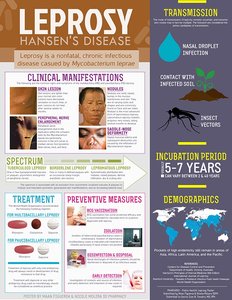
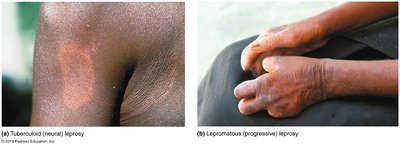
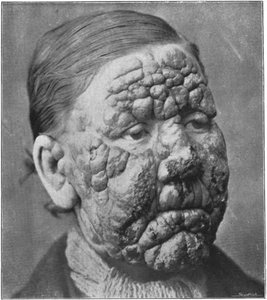
Mycobacterium leprae is an acid-fast rod that grows best at 30°C, with a slow generation time. It infects peripheral nerves and skin, surviving in macrophages and invading the myelin sheath. Transmission requires prolonged contact or inhalation of secretions; armadillos are a zoonotic reservoir. Two forms exist: tuberculoid (neural, with loss of sensation) and lepromatous (progressive, with disfiguring nodules). Treated with antibiotics such as dapsone or rifampin for 6–24 months.
Summary Table: Nervous System Infections
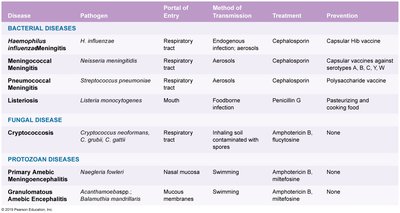
Disease | Pathogen | Portal of Entry | Method of Transmission | Treatment | Prevention |
|---|---|---|---|---|---|
Haemophilus influenzae meningitis | H. influenzae | Respiratory tract | Endogenous infection, aerosols | Cephalosporin | Capsular Hib vaccine |
Meningococcal Meningitis | Neisseria meningitidis | Respiratory tract | Aerosols | Cephalosporin | Capsular vaccines against serotypes A, B, C, Y, W |
Pneumococcal Meningitis | Streptococcus pneumoniae | Respiratory tract | Aerosols | Cephalosporin | Polysaccharide vaccine |
Listeriosis | Listeria monocytogenes | Mouth | Foodborne infection | Penicillin G | Pasteurizing and cooking food |
Cryptococcosis | Cryptococcus neoformans, C. grubii, C. gattii | Respiratory tract | Inhaling soil contaminated with spores | Amphotericin B, flucytosine | None |
Primary Amebic Meningoencephalitis | Naegleria fowleri | Nasal mucosa | Swimming | Amphotericin B | None |
Granulomatous Amebic Encephalitis | Acanthamoeba spp., Balamuthia mandrillaris | Mucous membranes | Swimming | Amphotericin B, miltefosine | None |
