 Back
BackMicrobial Diseases of the Respiratory System: Structure, Pathogenesis, and Clinical Features
Study Guide - Smart Notes
 Tailored notes based on your materials, expanded with key definitions, examples, and context.
Microbial Diseases of the Respiratory System
Overview of the Respiratory System
The respiratory system is responsible for gas exchange between the atmosphere and the blood. It is divided into two main parts: the upper and lower respiratory systems. Each part contains specialized structures and defenses against microbial invasion.
Upper respiratory system: Includes the nose, nasal cavity, pharynx, uvula, and sinuses. Contains antimicrobial chemicals and is colonized by a diverse microbiome.
Lower respiratory system: Includes the larynx, trachea, bronchi, alveoli, and diaphragm. Normally sterile due to protective mechanisms such as ciliated mucous membranes, alveolar macrophages, and secretory antibodies.
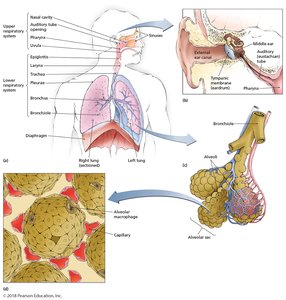
Normal Microbiome of the Respiratory System
The upper respiratory tract is colonized by many microorganisms that help limit the growth of pathogens. However, some members of the normal microbiome can become opportunistic pathogens if the host's defenses are compromised. The lower respiratory tract is typically free of microorganisms in healthy individuals.
Diseases of the Upper Respiratory System
Common Infections and Their Manifestations
Several diseases affect the upper respiratory tract, each with distinct clinical features. These include pharyngitis, laryngitis, tonsillitis, sinusitis, and epiglottitis.
Pharyngitis: Sore throat, often with fever and difficulty swallowing.
Laryngitis: Inflammation of the larynx, leading to voice changes.
Tonsillitis: Inflammation of the tonsils, sometimes with pus formation.
Sinusitis: Inflammation of the sinuses, often associated with headache.
Epiglottitis: Inflammation of the epiglottis; can be life-threatening due to airway obstruction.
Ailment | Manifestations |
|---|---|
Common Cold (Viral) | Sneezing, rhinorrhea, congestion, sore throat, headache, malaise, cough |
Influenza (Viral) | Fever, rhinorrhea, headache, body aches, fatigue, dry cough, pharyngitis, congestion |
"Strep" Throat (Bacterial) | Fever, red and sore throat, swollen lymph nodes in neck |
Bacterial Pneumonia | Fever, chills, congestion, cough, chest pain, rapid breathing, possible nausea and vomiting |
Bronchitis (Viral or Bacterial) | Mucus-producing cough, wheezing |
Inhalational Anthrax (Bacterial) | Fever, malaise, cough, chest discomfort, vomiting |
Coronavirus Respiratory Syndromes (SARS, MERS) | High fever (>38°C), cough, shortness of breath |
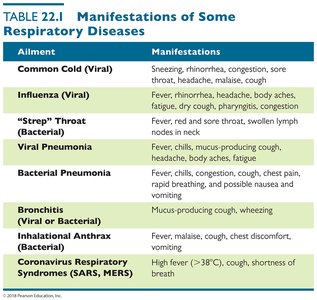
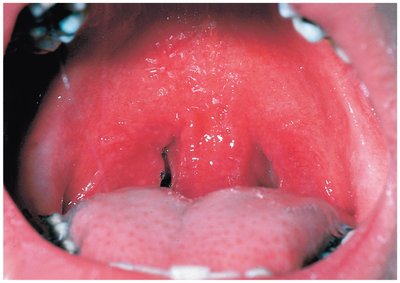
Bacterial Diseases of the Upper Respiratory System
Streptococcal Pharyngitis (Strep Throat)
Strep throat is caused by Streptococcus pyogenes (group A streptococci, GAS). It is characterized by local inflammation, fever, tonsillitis, and enlarged lymph nodes. The bacteria are resistant to phagocytosis and produce virulence factors such as streptokinases (which lyse clots) and streptolysins (which are cytotoxic).
Diagnosis: Enzyme immunoassay (EIA) tests.
Treatment: Oral penicillin is effective.
Complications: Scarlet fever, rheumatic fever, and acute glomerulonephritis may occur.
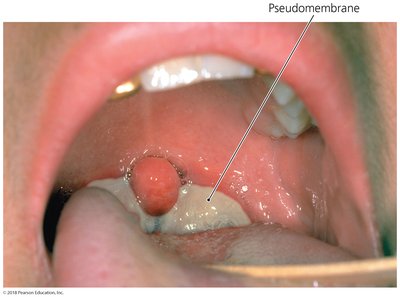
Diphtheria
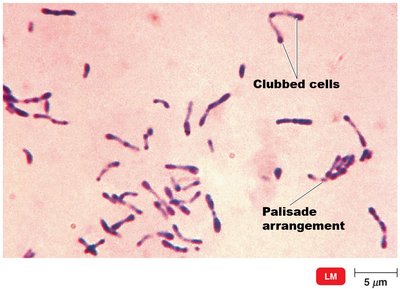
Diphtheria is caused by Corynebacterium diphtheriae, which produces a potent diphtheria toxin that inhibits protein synthesis and causes cell death. The disease is characterized by a sore throat, localized pain, fever, and the formation of a pseudomembrane that can obstruct airways.
Transmission: Respiratory droplets or skin contact.
Diagnosis: Presence of a pseudomembrane in the throat.
Treatment: Antitoxin and antibiotics.
Prevention: Immunization (DTaP vaccine) is highly effective.
Rhinosinusitis and Otitis Media
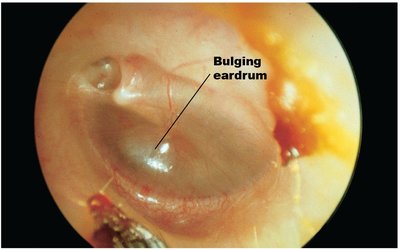
Rhinosinusitis is inflammation of the nasal passages and sinuses, often accompanied by headache and malaise. Otitis media is an infection of the middle ear, resulting in severe ear pain and sometimes a bulging eardrum due to pus accumulation.
Common pathogens: Streptococcus pneumoniae, nonencapsulated Haemophilus influenzae, Moraxella catarrhalis, S. pyogenes, Staphylococcus aureus.
Treatment: Broad-spectrum penicillins for otitis media; saline flushing for rhinosinusitis.
Prevention: Vaccines (e.g., pneumococcal, Hib) can reduce incidence.

Viral Diseases of the Upper Respiratory System
Common Cold
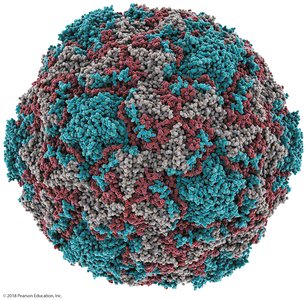
The common cold is caused by over 200 different viruses, most commonly rhinoviruses and coronaviruses. Symptoms include sneezing, runny nose, congestion, sore throat, malaise, and cough. The viruses replicate at the lower temperature of the nasal cavity and are highly infective.
Transmission: Coughing, sneezing, fomites, or person-to-person contact.
Treatment: Supportive care; antibiotics are ineffective.
Prevention: Hand hygiene is crucial.
Bacterial Diseases of the Lower Respiratory System
Bacterial Pneumonias
Pneumonia is an inflammation of the lungs with fluid-filled alveoli and bronchioles. It is classified by the affected region or causative organism. Bacterial pneumonias are the most serious and frequent in adults.
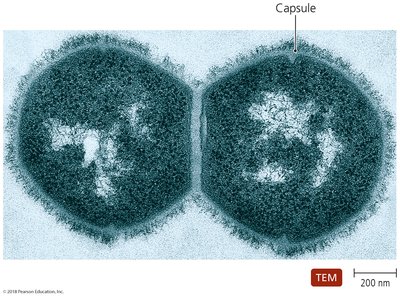
Pneumococcal pneumonia: Caused by Streptococcus pneumoniae. Symptoms include fever, chills, congestion, cough, chest pain, and rust-colored sputum. Virulence factors include adhesins, capsule, and pneumolysin.
Diagnosis: Identification of diplococci in sputum smears.
Treatment: Penicillin (though resistance is increasing); vaccination is preventive.
Primary atypical (mycoplasmal) pneumonia: Caused by Mycoplasma pneumoniae. Symptoms are mild but persistent, including fever, malaise, sore throat, and excessive sweating. Common in teenagers and young adults.
Treatment: Erythromycin or doxycycline; prevention is difficult.

Legionnaires’ disease: Caused by Legionella pneumophila. Presents as typical pneumonia with rapidly decreasing pulmonary function. The bacteria survive in domestic water sources and are diagnosed by culture or serology.
Treatment: Quinolones or macrolides; prevention involves reducing bacterial presence in water.
Tuberculosis
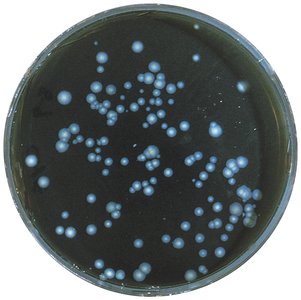
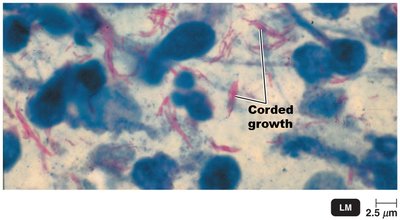
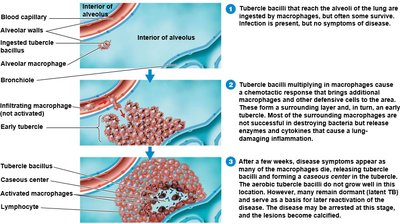
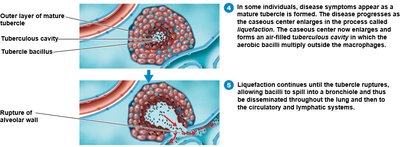
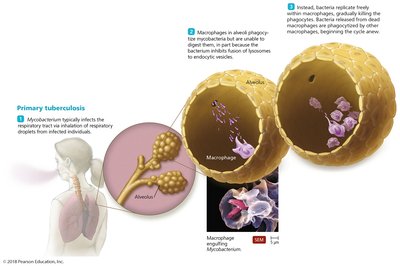
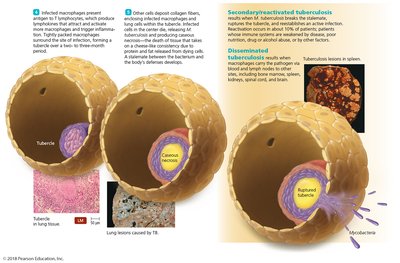
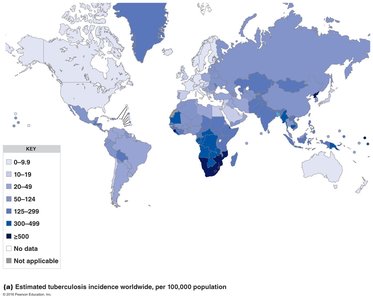
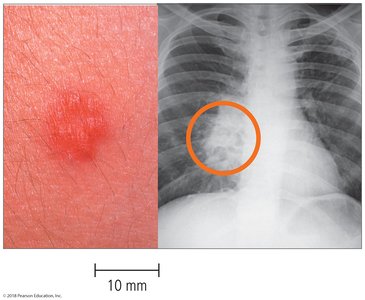
Tuberculosis (TB) is caused by Mycobacterium tuberculosis and is the leading infectious disease killer worldwide. The bacteria have a waxy cell wall containing mycolic acid, which confers resistance to phagocytic lysis and many drugs. TB can be primary, secondary, or disseminated.
Pathogenesis: Inhaled bacteria are phagocytized by alveolar macrophages, form tubercles, and may become latent or reactivate.
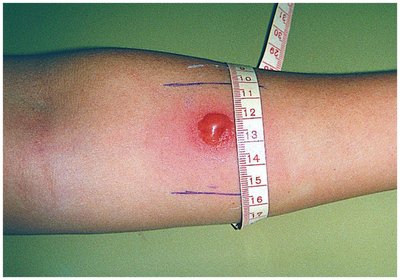
Diagnosis: Tuberculin skin test, chest X-ray, acid-fast staining, PCR.
Treatment: Combination drug therapy for at least 6 months; drug resistance is a growing concern.
Prevention: BCG vaccine in high-risk areas.
Pertussis (Whooping Cough)
Pertussis is caused by Bordetella pertussis, a Gram-negative coccobacillus that produces several toxins and destroys ciliated cells in the trachea. The disease progresses through four stages: incubation, catarrhal (cold-like symptoms), paroxysmal (violent coughing), and convalescent (recovery).
Transmission: Airborne droplets; highly contagious.
Treatment: Supportive care and macrolide antibiotics.
Prevention: DTaP vaccine; booster recommended for teens, adults, and pregnant women.
Inhalational Anthrax
Inhalational anthrax is caused by Bacillus anthracis. It initially resembles a cold or flu but can rapidly progress to severe respiratory distress and death. The bacteria produce a capsule and anthrax toxin. Anthrax is not spread person-to-person but acquired by inhaling endospores.
Diagnosis: Identification of bacteria in sputum.
Treatment: Early and aggressive antimicrobial therapy.
Prevention: Vaccine available for select individuals.
Viral Diseases of the Lower Respiratory System
Influenza
Influenza is caused by influenza virus types A and B. It is characterized by pharyngitis, congestion, cough, myalgia, and sudden fever. The virus undergoes antigenic drift (minor changes) and antigenic shift (major changes), leading to new strains and potential pandemics.
Virulence factors: Hemagglutinin (HA) and neuraminidase (NA) spikes.
Treatment: Supportive care; antivirals such as oseltamivir (Tamiflu) and zanamivir (Relenza) inhibit neuraminidase.
Prevention: Annual multivalent vaccine.
Coronavirus Respiratory Syndromes
Coronaviruses cause several respiratory syndromes, including SARS, MERS, and COVID-19. Symptoms include high fever, shortness of breath, dry cough, and pneumonia. SARS and MERS have higher fatality rates, while COVID-19 has caused a global pandemic.
Transmission: Respiratory droplets; virus can spread to heart and kidneys.
Treatment: Supportive care; prevention focuses on hygiene and isolation.
Respiratory Syncytial Virus (RSV) Infection
RSV is the most common cause of childhood respiratory disease. It causes fever, runny nose, and coughing in infants and immunocompromised individuals. The virus induces the formation of syncytia (fused cells) in the lungs, leading to tissue damage.
Diagnosis: Immunoassay.
Treatment: Supportive care; palivizumab for severe cases.
Prevention: Aseptic technique in healthcare and daycare settings.
Summary Table: Major Respiratory Diseases
Disease | Pathogen | Symptoms | Treatment/Prevention |
|---|---|---|---|
Streptococcal Pharyngitis | Streptococcus pyogenes | Sore throat, fever, tonsillitis | Penicillin |
Diphtheria | Corynebacterium diphtheriae | Pseudomembrane, sore throat | Antitoxin, antibiotics, DTaP vaccine |
Otitis Media | Streptococcus pneumoniae, others | Ear pain, bulging eardrum | Broad-spectrum antibiotics, vaccines |
Pneumococcal Pneumonia | Streptococcus pneumoniae | Fever, cough, chest pain | Penicillin, vaccine |
Mycoplasmal Pneumonia | Mycoplasma pneumoniae | Mild respiratory symptoms | Erythromycin, doxycycline |
Legionnaires’ Disease | Legionella pneumophila | Pneumonia symptoms | Quinolones, macrolides |
Tuberculosis | Mycobacterium tuberculosis | Cough, blood in mucus | Combination therapy, BCG vaccine |
Pertussis | Bordetella pertussis | Paroxysmal cough | Macrolides, DTaP vaccine |
Influenza | Influenza virus A/B | Fever, myalgia, cough | Antivirals, vaccine |
RSV Infection | Respiratory syncytial virus | Pneumonia in infants | Supportive, palivizumab |
Coronavirus Syndromes | Coronaviruses (SARS, MERS, COVID-19) | Fever, cough, pneumonia | Supportive, isolation |
