 Back
BackMicrobial Diseases of the Skin, Eyes, and Nervous System: Study Notes
Study Guide - Smart Notes
 Tailored notes based on your materials, expanded with key definitions, examples, and context.
Diseases of the Skin, Eyes, and Nervous System
Structure and Function of the Skin
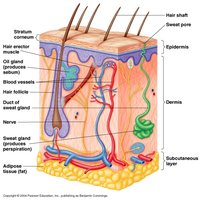
The skin is the body's largest organ and serves as a primary barrier against microbial invasion. It consists of multiple layers and specialized structures that contribute to its protective function.
Epidermis: The outermost layer, providing a physical barrier.
Dermis: The inner, thicker layer containing blood vessels, nerves, and glands.
Sebum: Oily secretion that inhibits some pathogens.
Perspiration: Contains salt and lysozyme, which inhibit microbial growth and hydrolyze peptidoglycan.
Fatty acids: Inhibit certain pathogens.
Normal Flora of the Skin
The skin hosts a variety of microorganisms, most of which are harmless and even beneficial. These organisms are adapted to survive the skin's dry, salty, and acidic environment.
Gram-positive, salt-tolerant bacteria predominate: Includes Staphylococci, Micrococci, and diphtheroids.
Propionibacterium spp.: Metabolize oil and colonize hair follicles.
Pityrosporum ovale: A yeast that grows on oily secretions, possibly associated with dandruff.
Types of Skin Lesions
Skin infections can manifest as various types of lesions, each with distinct characteristics:
Vesicles: Small, fluid-filled lesions.
Bullae: Vesicles larger than 1 cm across.
Macules: Flat, reddened lesions.
Pustules: Raised lesions containing pus.
Bacterial Diseases of the Skin
Staphylococcal Skin Infections
Staphylococcus species are Gram-positive cocci, catalase positive, and can be pathogenic or part of the normal flora.
Staphylococcus aureus: Coagulase positive, pathogenic, produces enterotoxins, leukocidins, and exfoliative toxins. Resistant to penicillin but usually sensitive to vancomycin.
Staphylococcus epidermidis: Coagulase negative, part of normal flora.
Diseases: Folliculitis, sty, furuncle, carbuncle, impetigo of the newborn, scalded skin syndrome, toxic shock syndrome.
Streptococcal Skin Infections
Streptococcus pyogenes is a Gram-positive coccus, catalase negative, and beta-hemolytic. It is sensitive to bacitracin and produces several virulence factors.
Virulence factors: M-protein, erythrogenic toxin, streptokinases, hyaluronidase, deoxyribonuclease.
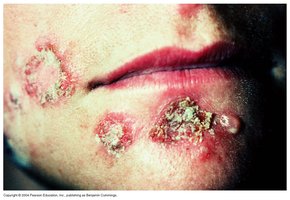
Diseases: Erysipelas (red patches), impetigo (isolated pustules), cellulitis, necrotizing fasciitis, scarlet fever rash (erythrogenic toxin-producing strains).
Treatment: Penicillin.
Pseudomonas Infections
Pseudomonas aeruginosa is an oxidase-positive, Gram-negative bacillus that produces endotoxins and exotoxins.
Clinical manifestations: Otitis externa, respiratory tract infections, burn wound infections, dermatitis.
Acne
Acne is the most common skin disease, especially among teenagers. It is primarily caused by Propionibacterium acnes, which metabolizes sebum, leading to inflammation.
Types: Inflammatory acne, cystic acne (severe, with scarring).
Treatment: Topical benzoyl peroxide, antibiotics (tetracycline, erythromycin), isotretinoin for severe cases.
Viral Diseases of the Skin
Warts
Warts are benign skin growths caused by various papillomaviruses. They are spread by direct contact and can be treated by several methods.
Treatment: Surgical removal, interferon, imiquimod, cryotherapy, electrodesiccation, laser treatment, duct tape therapy.
Chickenpox and Shingles
Both diseases are caused by the Varicella-Zoster virus (human herpesvirus 3). Chickenpox is characterized by a vesicular rash and can lead to complications such as encephalitis and Reye’s syndrome. Shingles is a reactivation of the latent virus, causing a vesicular rash along sensory nerves.
Transmission: Respiratory route.
Prevention/Treatment: Vaccine, acyclovir.
Herpes Simplex Virus (HSV-1 and HSV-2)
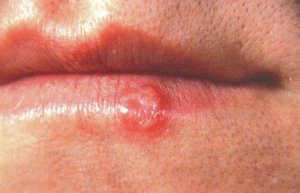
HSV-1 and HSV-2 cause cold sores, fever blisters, and other vesicular lesions. The viruses can remain latent in nerve ganglia and reactivate under certain conditions.
Diseases: Cold sores, herpes gladiatorum, herpes whitlow, herpes encephalitis.
Treatment: Acyclovir may reduce symptoms.
Smallpox
Smallpox is caused by the Variola virus and has been eradicated through vaccination. It is transmitted by the respiratory route and causes a characteristic skin rash.
Types: Variola major (20% mortality), Variola minor (<1% mortality).
Monkeypox: Related disease, prevented by smallpox vaccination.
Measles (Rubeola) and Rubella (German Measles)
Both are viral diseases characterized by a macular rash and are preventable by vaccination.
Measles: Macular rash, Koplik's spots, risk of encephalitis and subacute sclerosing panencephalitis.
Rubella: Macular rash, fever, risk of congenital rubella syndrome in fetuses.
Other Viral Infections
Fifth disease: Caused by human parvovirus B19, produces mild flu-like symptoms and facial rash.
Roseola: Caused by human herpesvirus 6, results in high fever and rash.
Fungal and Parasitic Diseases of the Skin
Cutaneous Mycoses (Dermatophyte Infections)
Dermatophytes are fungi that infect keratinized tissues such as hair, skin, and nails, causing ringworm (tinea).
Common genera: Trichophyton, Epidermophyton, Microsporum.
Types: Tinea capitis (scalp), tinea cruris (groin), tinea pedis (feet), tinea unguium (nails), tinea versicolor (skin discoloration by Malassezia furfur).
Treatment: Oral griseofulvin, topical miconazole.
Candidiasis
Candida albicans is a yeast that can cause infections of the skin, mucous membranes, and genitourinary tract, especially after antibiotic use suppresses normal flora.
Diseases: Thrush (oral), vaginal yeast infections.
Treatment: Topical miconazole or nystatin.
Subcutaneous Mycoses
Sporotrichosis is caused by Sporothrix schenckii, a fungus found in soil and vegetation. Infection occurs via skin puncture and spreads along lymphatics.
Treatment: Potassium iodide.
Parasitic Infestations
Parasitic arthropods can infest the skin, causing irritation and sometimes secondary infections.
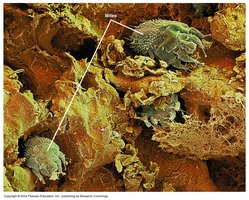
Scabies: Caused by Sarcoptes scabiei mites that burrow into the skin to lay eggs. Treated with topical insecticides.
Pediculosis (Lice): Pediculus humanus capitis (head louse) and P. h. corporis (body louse) feed on blood and lay eggs (nits) on hair. Treated with topical insecticides.

Microbial Diseases of the Eye
Conjunctivitis (Pinkeye)
Conjunctivitis is inflammation of the conjunctiva, commonly caused by Haemophilus influenzae, Pseudomonas aeruginosa, and others. It is often associated with unsanitary contact lenses.
Neonatal Gonorrheal Ophthalmia
Caused by Neisseria gonorrhoeae, transmitted to newborns during birth. Prevented by antibiotic treatment of newborns' eyes.
Inclusion Conjunctivitis and Trachoma
Both are caused by Chlamydia trachomatis. Inclusion conjunctivitis is transmitted during birth or via contaminated water. Trachoma is the leading cause of infectious blindness worldwide due to scarring and abrasion of the cornea.
Other Eye Infections
Herpetic keratitis: Caused by HSV-1, may lead to blindness. Treated with trifluridine.
Acanthamoeba keratitis: Associated with unsanitary contact lenses and water exposure.
Diseases of the Nervous System
Structure and Function of the Nervous System
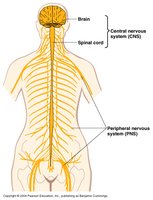
The nervous system is divided into the central nervous system (CNS) and peripheral nervous system (PNS). The CNS includes the brain and spinal cord, while the PNS consists of nerves extending throughout the body.
Meninges and Cerebrospinal Fluid
The CNS is protected by the meninges and cerebrospinal fluid. The blood-brain barrier restricts passage of many substances, including some antimicrobial drugs.
Microbial Diseases of the Nervous System
Meningitis: Inflammation of the meninges, often caused by bacteria growing in the cerebrospinal fluid.
Encephalitis: Inflammation of the brain.
Bacterial Meningitis
Bacterial meningitis is a serious infection characterized by fever, headache, stiff neck, nausea, vomiting, and potentially convulsions and coma. Diagnosis is by Gram stain of CSF; treatment is with cephalosporins.
Neisseria meningitidis: Causes meningococcal meningitis, common in children and military recruits. Vaccine available.
Listeria monocytogenes: Causes meningitis in newborns, immunosuppressed, and pregnant women. Acquired from contaminated food; can cross the placenta.
Tetanus
Caused by Clostridium tetani, a Gram-positive anaerobic rod producing tetanospasmin neurotoxin. Infection occurs via deep wounds, leading to muscle spasms and lockjaw. Prevented by DPT vaccine (tetanus toxoid).
Botulism
Caused by Clostridium botulinum, a Gram-positive, endospore-forming anaerobe. Botulinal toxin blocks neurotransmitter release, causing flaccid paralysis. Prevention includes proper canning and nitrites in sausages. Treated with antitoxin and supportive care.
Types: Type A (60-70% fatality), Type B (25% fatality), Type E (marine/lake sediments).
Leprosy
Caused by Mycobacterium leprae, an acid-fast rod that grows in peripheral nerves and skin cells. Transmission requires prolonged contact. Two forms: tuberculoid (neural, loss of sensation) and lepromatous (progressive, disfiguring nodules).
Poliomyelitis
Caused by poliovirus, transmitted by ingestion. Initial symptoms are mild, but the virus can invade the CNS and cause paralysis in less than 1% of cases. Prevented by vaccination.
Rabies
Caused by rabies virus (rhabdovirus), transmitted by animal bite. The virus multiplies in muscles, then moves to the CNS, causing encephalitis. Symptoms include muscle spasms and hydrophobia. Treated with vaccine and immune globulin.
Cryptococcosis
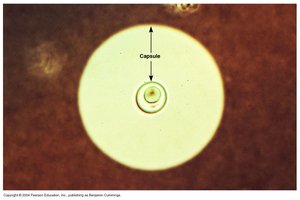
Caused by Cryptococcus neoformans, a soil fungus associated with bird droppings. Transmitted by the respiratory route, can spread to the CNS, especially in immunosuppressed patients. Treated with amphotericin B and flucytosine.
Protozoal Diseases of the Nervous System
African trypanosomiasis (sleeping sickness): Caused by Trypanosoma brucei, transmitted by tsetse fly. Chronic (T. b. gambiense) or acute (T. b. rhodesiense). Treated with eflornithine.
Naegleria meningoencephalitis: Caused by Naegleria fowleri, an amoeba acquired from swimming in warm water.
Diseases Caused by Prions
Prions are infectious proteins that cause slowly progressive, fatal CNS diseases with spongiform degeneration.
Examples: Sheep scrapie, Creutzfeldt-Jakob disease, Kuru, bovine spongiform encephalopathy (mad cow disease).
Transmission: Ingestion, transplant, or inherited.
