 Back
Backlec 22:Microbial Ecology: Community Structure, Interactions, and Human Health
Study Guide - Smart Notes
 Tailored notes based on your materials, expanded with key definitions, examples, and context.
Microbial Ecology: Introduction
Microbial ecology is the study of microorganisms in their natural environments, focusing on their interactions with each other and with both living (biotic) and non-living (abiotic) components of their surroundings. Unlike traditional microbiology, which often isolates single species in laboratory cultures, microbial ecology examines how diverse microbial communities function and adapt in complex ecosystems.
Community Dynamics in Microbial Ecology
Structure: Who is There?
Community structure refers to the types and numbers of microbes present in a given environment. Scientists assess:
Richness: The number of different species present.
Evenness: The relative abundance of each species—whether one dominates or many are present in similar numbers.
Core microbiome: Microbes consistently present in a community.
Transient microbiome: Microbes that appear temporarily.

Diversity: How Varied is the Community?
Diversity encompasses both the variety of microbial species and their functional roles:
Alpha diversity: Diversity within a single environment (e.g., the human gut).
Beta diversity: Differences in diversity between environments (e.g., gut vs. skin).
Functional redundancy: The presence of multiple species capable of performing the same function, contributing to ecosystem stability.
Activity: What are Microbes Doing?
Activity describes the metabolic processes microbes perform, such as nutrient utilization and byproduct formation. Not all present microbes are metabolically active. Microbial communities also undergo succession, where early colonizers are replaced by more stable communities over time.
Community Change: Disturbances and Responses
Pulse disturbances: Short-term events (e.g., antibiotic treatment).
Press disturbances: Long-term pressures (e.g., pollution, climate change).
Resilience: The ability to recover after disturbance.
Resistance: The ability to remain unchanged despite disturbance.
Symbiosis in Microbial Ecology
Symbiosis refers to close relationships between different organisms, shaping community structure and function. The main types include:
Mutualism (Both Benefit)
Both partners benefit from the relationship.
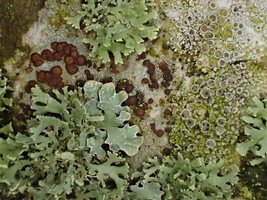
Example: Lichens, a partnership between a fungus and an alga or cyanobacterium. The fungus provides structure and protection, while the alga performs photosynthesis to produce food.
Commensalism (One Benefits, the Other Unaffected)
One organism benefits, while the other is neither helped nor harmed.
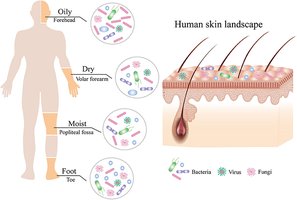
Example: Skin bacteria feed on oils and dead skin cells without affecting the human host.
Parasitism (One Benefits, the Other is Harmed)
One organism benefits at the expense of the host.
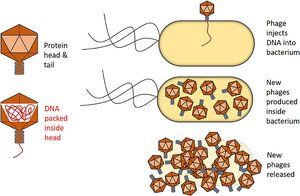
Example: Bacteriophages infect bacteria, using the host cell to reproduce and often destroying it.
Other Interactions
Amensalism: One organism is harmed, the other is unaffected (e.g., fungi producing antibiotics that kill bacteria).
Pathobionts: Normally harmless microbes that can become pathogenic under certain conditions.
Microbes and Global Nutrient Cycles
Microbes are essential for recycling elements such as carbon, nitrogen, and sulfur, maintaining ecosystem balance and supporting life on Earth.
The Carbon Cycle
Carbon fixation: Photosynthetic microbes (e.g., cyanobacteria) convert CO2 into organic molecules.
Decomposition and respiration: Microbes break down dead matter, releasing CO2.
Methanogenesis: In anaerobic environments, certain microbes produce methane (CH4).
The Nitrogen Cycle
Nitrogen fixation: Conversion of N2 gas to ammonia by bacteria.
Nitrification: Conversion of ammonia to nitrates.
Denitrification: Conversion of nitrates back to N2 gas.
The Sulfur Cycle
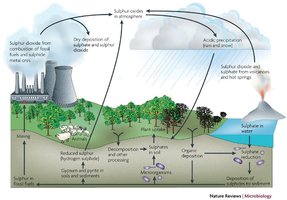
Sulfate reduction: Microbes convert sulfate to hydrogen sulfide (H2S).
Chemosynthesis: Microbes use sulfur compounds for energy in deep-sea environments.
Microbial Adaptation
Microbes adapt rapidly due to fast reproduction, allowing them to survive in diverse and extreme environments. Adaptation strategies include genetic changes, metabolic flexibility, and structural modifications.
Living in Extreme Environments (Extremophiles)
Hyperthermophiles: Survive high temperatures with heat-stable enzymes.
Piezophiles: Adapted to high-pressure environments (e.g., deep sea).
Acidophiles: Thrive in low pH by maintaining internal pH stability.
Adaptation in the Human Gut
Specialized metabolism: Genes for breaking down specific dietary fibers.
Immune evasion: Mimicking host molecules to avoid immune detection.
Horizontal gene transfer: Exchange of genes between microbes, spreading traits like antibiotic resistance.
Specialists vs. Generalists
Specialists: Adapted to specific environments or resources.
Generalists: Can utilize a wide range of nutrients and survive in variable conditions.
The Rare Biosphere
Most environments contain many rare microbial species that can rapidly increase in abundance when conditions change, aiding ecosystem adaptation.
Microbial Ecology and Human Health
The human body hosts trillions of microbes, collectively known as the human microbiome. This community is crucial for immunity, digestion, and disease prevention, often described as a "forgotten organ."
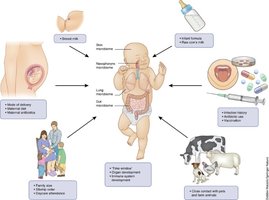
Immunity: Training the Immune System
Hygiene hypothesis: Early exposure to diverse microbes strengthens immune development; lack of exposure may increase allergies.
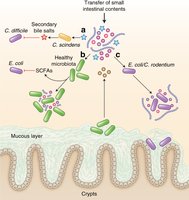
Colonization resistance: Healthy microbes outcompete pathogens for space and nutrients.
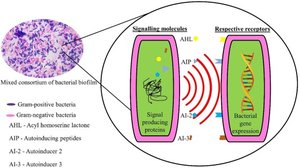
Microbial signaling: Microbes produce molecules that modulate immune responses.
Digestion: Microbes Help Break Down Food
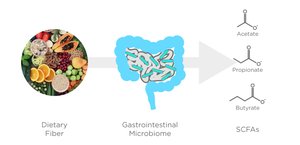
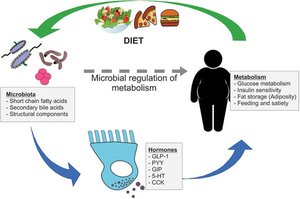
Short-chain fatty acids (SCFAs): Produced by gut microbes from dietary fiber; provide energy for intestinal cells (e.g., butyrate).
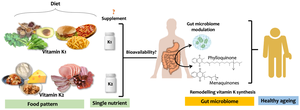
Vitamin production: Some gut microbes synthesize vitamin K and B vitamins.
Energy extraction: Microbial community composition affects how efficiently energy is extracted from food.
Spread of Infection: Microbial Balance
Pathobionts: Normally harmless microbes that can cause disease if the microbial balance is disrupted.
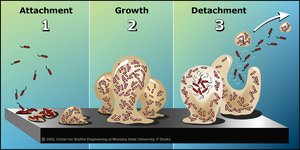
Biofilms: Microbial communities that form protective layers, increasing resistance to antibiotics (e.g., dental plaque).
Body connections: Microbial communities in one body site (e.g., gut) can influence immune responses in distant organs (e.g., lungs).
Medical Application: Fecal Microbiota Transplant (FMT)
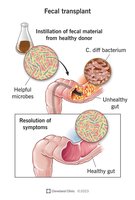
FMT involves transferring gut microbes from a healthy donor to a patient to restore a balanced microbiome, often used to treat recurrent Clostridioides difficile infections.
Practice Questions: Microbial Ecology Concepts
A microbial community in a freshwater lake shows no change in species richness after a pollutant spill, but one species becomes overwhelmingly dominant while several others become rare. Which ecological metric changed most significantly? Answer: Evenness
Two soils contain the same number of microbial species. However, one soil loses its ability to degrade cellulose after a fungal pathogen eliminates a single bacterial species responsible for cellulose degradation. This observation suggests that the original community had: Answer: Low functional redundancy
After a forest fire, a microbial community initially dominated by spore-forming bacteria is gradually replaced by nitrogen-fixing cyanobacteria and later by diverse heterotrophic decomposers. This pattern illustrates: Answer: Microbial succession
Which of the following scenarios represents amensalism? Answer: A bacterium secretes antibiotics that inhibit nearby bacterial competitors.
In a marine microbial community, cyanobacteria fix carbon through photosynthesis, while heterotrophic bacteria degrade organic matter and release CO2. This interaction primarily contributes to: Answer: Carbon cycling
Which process directly returns nitrogen to the atmosphere during the nitrogen cycle? Answer: Denitrification
A microbe isolated from a deep-sea hydrothermal vent contains enzymes that remain stable at temperatures exceeding 100°C and has specialized proteins that stabilize DNA. This organism is most likely a: Answer: Hyperthermophile
A microbial species survives across many different environments by switching between aerobic respiration, nitrate respiration, and fermentation depending on environmental conditions. This organism is best described as a: Answer: Generalist
Which evolutionary mechanism most rapidly spreads antibiotic resistance between unrelated bacterial species in the gut? Answer: Horizontal gene transfer
A patient receives broad-spectrum antibiotics and subsequently develops a severe Clostridioides difficile infection. This outcome most directly demonstrates the loss of: Answer: Colonization resistance
Which microbial product directly fuels colon epithelial cells and helps maintain gut barrier integrity? Answer: Butyrate
A microbial biofilm forming on a medical implant becomes highly resistant to antibiotics compared to planktonic cells of the same species. This resistance is primarily due to: Answer: Protective extracellular matrix and cooperative microbial interactions
Which ecological principle explains why a highly diverse microbial gut community reduces pathogen colonization? Answer: Competitive exclusion
A microbial community exposed to a temporary antibiotic treatment returns to its original composition after the antibiotic is removed. This property is best described as: Answer: Resilience
Permafrost thaw due to climate change releases previously frozen organic matter. Microbial metabolism of this carbon produces CO2 and methane, which accelerate global warming. This phenomenon represents: Answer: Positive climate feedback loop
