 Back
BackMicrobial Ecology: Diversity, Interactions, and Environmental Roles
Study Guide - Smart Notes
 Tailored notes based on your materials, expanded with key definitions, examples, and context.
Microbial Ecology: Diversity and Community Structure
Species Richness vs. Species Abundance
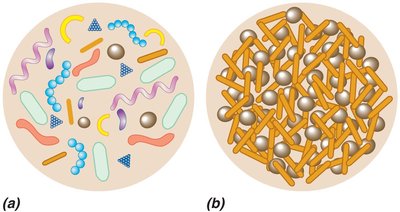
Microbial communities are characterized by two key parameters: species richness (the number of different species present) and species abundance (the proportion of each species in the community). Undisturbed, organic-rich soils typically exhibit high richness and evenness, while extreme environments may be dominated by a few specialized species.
Microbial Communities and Ecosystems
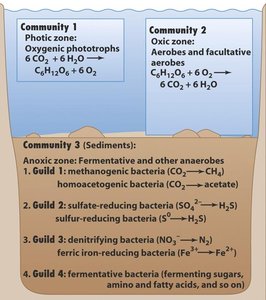
A microbial community consists of guilds of metabolically related organisms. These communities, together with their natural environment, form an ecosystem. Microorganisms play essential roles in recycling elements such as carbon (C), sulfur (S), nitrogen (N), and iron (Fe) in the environment.
The microenvironment is the specific location where a microorganism lives, which can differ greatly from the bulk environment due to gradients in nutrients, oxygen, and other factors.
Methods for Studying Microbial Communities
Fluorescent In Situ Hybridization (FISH)
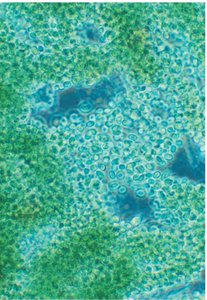
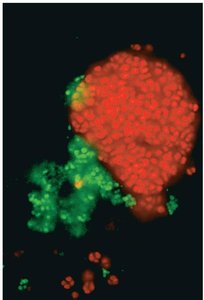
FISH is a molecular technique that uses fluorescently labeled oligonucleotide probes complementary to rRNA sequences to identify and distinguish microorganisms in environmental samples. Probes can be general (distinguishing prokaryotes from eukaryotes), domain-specific (Bacteria vs. Archaea), or group-specific.
MAR-FISH (Microautoradiography-FISH)
MAR-FISH combines microautoradiography with FISH to determine the metabolic activity of specific microorganisms by tracking the uptake of radiolabeled substrates.
Molecular Analysis of Microbial Communities
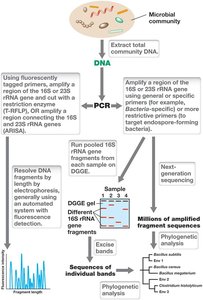
Modern approaches use PCR amplification of 16S or 23S rRNA genes from environmental DNA, followed by sequencing or fingerprinting techniques (e.g., DGGE, ARISA) to assess community composition and diversity.
Microbial Guilds and Biogeochemical Cycling
Guilds and Functional Groups
Microbial guilds are groups of species that exploit the same resources in a similar way. In sediments, for example, different guilds are responsible for processes such as methanogenesis, sulfate reduction, denitrification, and fermentation.
Soil Microbial Ecology
Soil Structure and Microbial Habitats
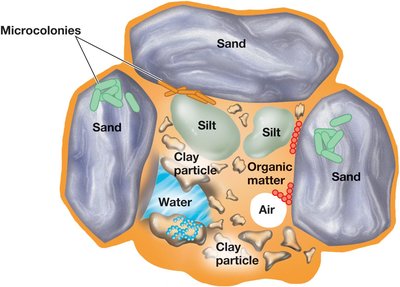
Soil is a complex environment composed of sand, silt, clay, organic matter, air, and water. Microbial growth is concentrated on the surfaces of soil particles, especially in the rhizosphere (the region around plant roots).
Soil Bacterial and Archaeal Diversity
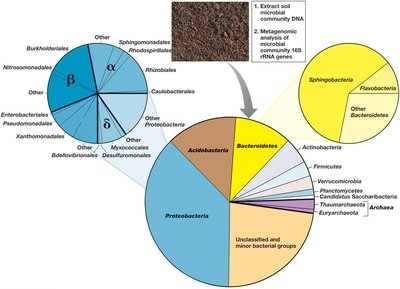
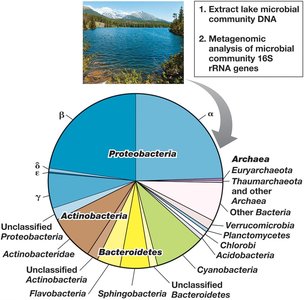
Soil harbors an immense diversity of Bacteria and Archaea, with major groups including Proteobacteria, Acidobacteria, Actinobacteria, Bacteroidetes, and others. Metagenomic analysis of 16S rRNA genes reveals the relative abundance of these groups.
Plant-Microbe Interactions: Root Nodules and Mycorrhizae
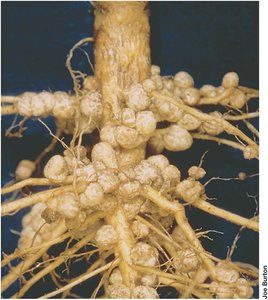
Leguminous plants form root nodules in association with nitrogen-fixing bacteria (e.g., Rhizobium), which enhance plant growth by providing fixed nitrogen.
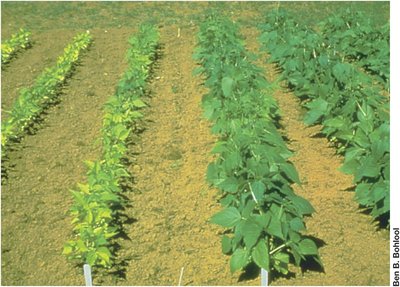
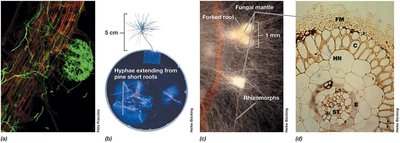
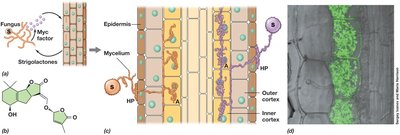
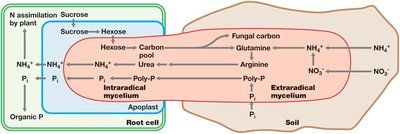
Mycorrhizae are mutualistic associations between plant roots and fungi. There are two main types:
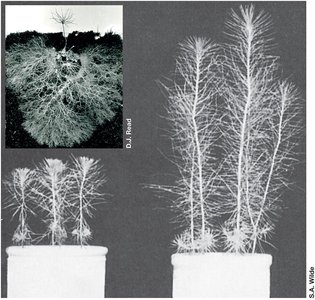
Ectomycorrhizae: Fungal hyphae form a sheath around roots, with little penetration into root tissue. Common in forest trees.
Endomycorrhizae (Arbuscular Mycorrhizae): Fungal hyphae penetrate root cells, forming arbuscules. Found in over 80% of terrestrial plants.
Aquatic Microbial Ecology
Freshwater Environments
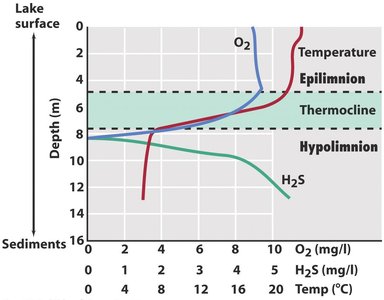
Freshwater habitats are stratified into oxic and anoxic zones, each supporting distinct microbial communities. Oxygenic phototrophs dominate oxic zones, while fermentative and anaerobic chemoorganotrophs inhabit anoxic zones.
Microbial Consortia in Freshwater
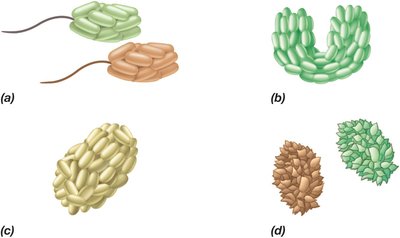
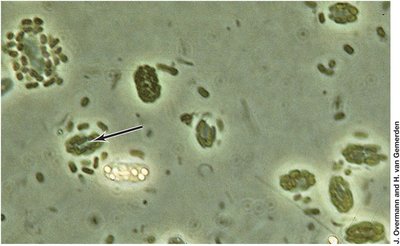
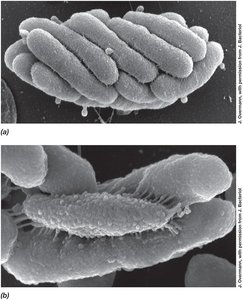
Consortia such as Chlorochromatium aggregatum are mutualistic associations between green sulfur bacteria and flagellated rod-shaped bacteria, found in stratified, sulfidic lakes. Green sulfur bacteria are obligate anaerobic phototrophs and can constitute a major portion of the bacterial biomass in these environments.
Impact of Organic Waste on Aquatic Systems
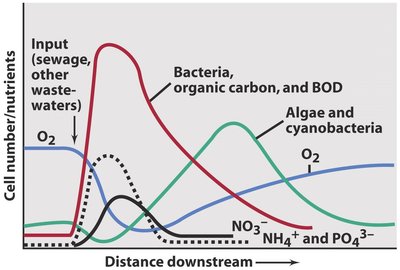
The input of organic-rich wastewaters into rivers and lakes increases bacterial numbers and biochemical oxygen demand (BOD), leading to decreased oxygen levels and shifts in microbial and algal populations downstream.
Marine Microbial Ecology
Deep Sea Environments
The deep sea is characterized by high pressure, low temperature, and low nutrient availability. Microbial life includes phototrophs (e.g., Prochlorococcus), chemoorganotrophs, and chemolithotrophs. Distinct groups of Bacteria and Archaea are adapted to these extreme conditions, including piezophiles (organisms that require high pressure for growth).
Hydrothermal vents support unique communities of autotrophic chemolithotrophs, which use inorganic electron donors and acceptors for energy.
Biofilms and Microbial Mats
Biofilm Formation and Function
Biofilms are structured communities of microorganisms attached to surfaces and embedded in a self-produced extracellular matrix. Biofilms provide defense, allow cells to remain in favorable niches, and facilitate metabolic cooperation.
Biofilms are implicated in various medical and industrial problems, including chronic infections, device-associated infections, pipeline corrosion, and degradation of submerged objects.
Quorum Sensing in Biofilms
Quorum sensing is a cell-density-dependent regulatory mechanism in which bacteria produce, release, and detect signaling molecules (e.g., acylated homoserine lactones, AHLs). When a threshold concentration is reached, gene expression changes, leading to coordinated behaviors such as bioluminescence, virulence, and biofilm formation.
Microbial Mats
Microbial mats are extremely thick, multi-layered biofilms found in hypersaline or geothermal habitats. They consist of layers of different microbial guilds, with chemical and biological structure changing over diel cycles in response to light and other factors.
Summary Table: Major Microbial Guilds in Sediments
Guild | Metabolic Activity | Electron Donor | Electron Acceptor | Product |
|---|---|---|---|---|
Methanogenic bacteria | Methanogenesis | CO2 | H2 | CH4 |
Sulfate-reducing bacteria | Sulfate reduction | SO42− | H2 | H2S |
Denitrifying bacteria | Denitrification | NO3− | Organic C | N2 |
Fermentative bacteria | Fermentation | Sugars, amino acids | None | Acids, alcohols, gases |
Key Equations
Oxygenic photosynthesis:
Aerobic respiration:
Additional info: This guide integrates foundational concepts from microbial ecology, including community structure, methods of study, functional roles, and key interactions with plants and the environment. It is suitable for exam preparation and as a reference for core microbiology topics.
