 Back
Microbial Evolution: Evidence and Mechanisms in Living Organisms
Study Guide - Smart Notes
 Tailored notes based on your materials, expanded with key definitions, examples, and context.
Microbial Evolution: Evidence and Mechanisms in Living Organisms
Introduction to Microbial Evolution
Microbial evolution is a fundamental concept in microbiology, describing how microorganisms change over time through genetic variation and selection. This process underpins the emergence of new traits, adaptation to environments, and the development of antibiotic resistance and virulence in pathogens.
Major Concepts in Evolution
Mutation: Heritable changes in the nucleotide sequence of a genome, the ultimate source of genetic variation.
Natural Selection: The process by which beneficial traits become more common in a population due to increased fitness.
Genetic Drift: Random changes in allele frequencies, especially significant in small populations.
Fitness: The reproductive success of an organism relative to others in the population.
Adaptation: Traits that enhance survival and reproduction in a specific environment.
Speciation: The formation of new species through evolutionary processes.
Homology and Analogy: Homology refers to traits inherited from a common ancestor; analogy refers to traits that arise independently due to similar selective pressures.
Horizontal Gene Transfer: The movement of genetic material between organisms other than by descent, crucial in microbial evolution.
Evidence for Evolution in Living Organisms
Evolutionary change can be observed directly in living populations, through anatomical, molecular, and developmental evidence.
Selective Breeding
Selective breeding demonstrates intentional evolutionary change by humans. For example, all dog breeds (Canis familiaris) are derived from the grey wolf, with traits selected for specific purposes.
Different breeds show extreme variation in morphology, behavior, and physiology.
Similar processes have produced diverse breeds of cattle, horses, and cats.
In plants, Brassica oleracea has been bred into cabbage, broccoli, kale, kohlrabi, brussels sprouts, and cauliflower.
Vestigial Structures
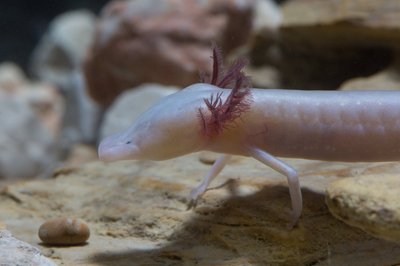
Vestigial structures are reduced or functionless versions of body parts that have important functions in related species.
Examples include the pelvic remnants in whales and snakes, wings in flightless birds, and the human appendix.
Vestigial organs can often be detected in embryos but are lost during development.
Atavisms
Atavisms are traits that reappear after being absent for many generations, reflecting ancestral developmental pathways.
Human tails are a classic example, as every embryo forms a tail that is usually removed by apoptosis.
Other debated cases include hypertrichosis (excessive body hair), though genetic evidence is less clear.
Pseudogenes: Vestigial Structu / res at the Molecular Level
Pseudogenes are DNA sequences similar to functional genes but rendered nonfunctional by mutations.
Humans have ~6,000 pseudogenes, including olfactory receptor genes and hemoglobin pseudogenes.
Loss of function can occur via early stop codons, frameshifts, or regulatory mutations.
Direct Observation of Evolution in Natural Populations
Evolutionary change can be measured directly in living populations.
The peppered moth (Biston betularia) changed color in response to industrial pollution, with the genetic mutation dated to around 1819.
Soapberry bugs evolved shorter beaks to feed on introduced thin-fruited plants.
Mutation: The Source of Variation
Mutation is the ultimate source of genetic variation, providing the raw material for evolution.
Point mutations: Substitution of one base for another (transition or transversion).
Indels: Insertions or deletions of bases, which can cause frameshifts.
Large-scale rearrangements: Duplications, deletions, inversions, translocations.
Horizontal gene transfer: Acquisition of new DNA via transformation, transduction, or conjugation.
Synonymous/nonsynonymous mutations: Affect whether the amino acid sequence changes.
Nonsense mutations: Create premature stop codons.
Regulatory mutations: Affect gene expression without altering coding sequence.
Fitness effects of mutations can be deleterious, neutral, or beneficial, depending on environmental context.
Microevolution vs. Macroevolution
Microevolution: Small-scale changes in gene frequencies and trait distributions within pop ulations and species.
Macroevolution: Large-scale changes at or above the species level, including speciation and extinction.
Summary of Evidence Types
Vestigial structures: Reduced versions of functional traits in relatives.
Retained ancestral structures: Traits that still function in some species (e.g., hoatzin chick wing claws).
Atavisms: Ancestral traits reappearing in individuals.
Pseudogenes: Molecular evidence of lost function.
Direct observation: Measured evolutionary change in living populations.
Key Terms and Definitions
Evolution: Change in the genetic composition of a population across generations.
Mutation: Heritable change in DNA sequence.
Natural Selection: Differential survival and reproduction of individuals due to differences in phenotype.
Genetic Drift: Random changes in allele frequencies.
Fitness: Relative reproductive success.
Adaptation: Trait that increases fitness in a given environment.
Speciation: Formation of new species.
Homology: Similarity due to shared ancestry.
Analogy: Similarity due to convergent evolution.
Horizontal Gene Transfer: Movement of genetic material between organisms.
Pseudogene: Nonfunctional gene sequence.
Atavism: Reappearance of ancestral traits.
Vestigial Structure: Reduced or functionless trait.
Example Table: Mutation Types and Effects
Mutation Type | Description | Effect on Gene Product |
|---|---|---|
Point Mutation | Single base substitution | May be silent, missense, or nonsense |
Insertion/Deletion (Indel) | Bases added or removed | Frameshift if not a multiple of three |
Large-scale Rearrangement | Duplication, deletion, inversion, translocation | May disrupt gene function or regulation |
Horizontal Gene Transfer | Acquisition of new DNA | Can introduce new genes |
Regulatory Mutation | Changes in gene expression | Alters timing, location, or amount of product |
Summary
Microbial evolution is evidenced by anatomical, molecular, and direct observational data in living organisms. Understanding these mechanisms is essential for interpreting microbial adaptation, the emergence of resistance, and the evolution of pathogenicity.
