 Back
Microbial Gene Expression, Mutations, and Genetic Exchange: Study Notes
Study Guide - Smart Notes
 Tailored notes based on your materials, expanded with key definitions, examples, and context.
Gene Expression in Microbiology
Overview of Gene Expression
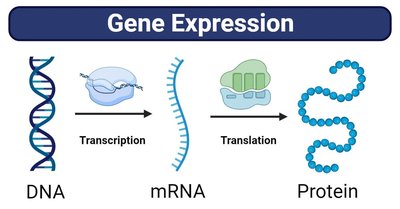
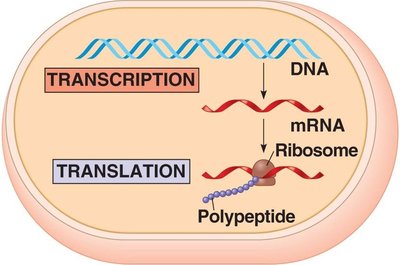
Gene expression is the process by which information from a gene is used to synthesize a functional gene product, typically a protein. This process is fundamental to all living organisms and determines whether a gene is "on" or "off".
Transcription: DNA is transcribed into messenger RNA (mRNA).
Translation: mRNA is translated into protein by ribosomes.
Importance: Proper gene expression is essential for normal cellular function; errors can lead to diseases or abnormal phenotypes.
Applications: Understanding microbial gene expression aids in drug development, identification of pathogens, and biotechnological applications.
Types of Gene Expression
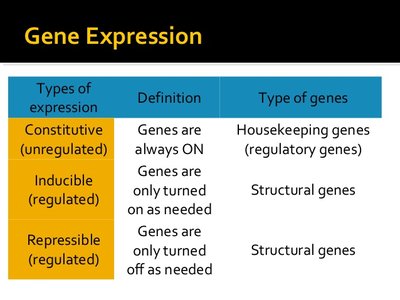
Gene expression can be classified based on regulation:
Constitutive (unregulated): Genes are always "on" (housekeeping genes).
Inducible (regulated): Genes are turned "on" as needed (structural genes).
Repressible (regulated): Genes are turned "off" as needed (structural genes).
Type of Expression | Definition | Type of Genes |
|---|---|---|
Constitutive | Genes are always ON | Housekeeping genes (regulatory genes) |
Inducible | Genes are only turned on as needed | Structural genes |
Repressible | Genes are only turned off as needed | Structural genes |
Operons and Regulation of Gene Expression
Structure and Function of Operons
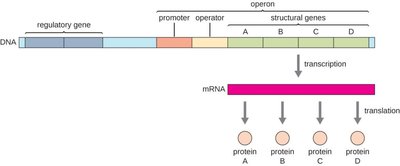
An operon is a cluster of genes under the control of a single promoter and operator, allowing coordinated regulation.
Promoter: Site where RNA polymerase initiates transcription.
Operator: Regulatory region controlling access to structural genes.
Structural Genes: Code for proteins with related functions.
Regulatory Gene: Produces a repressor or activator protein.
Inducible Operons: The Lac Operon
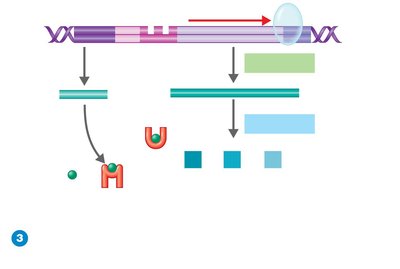
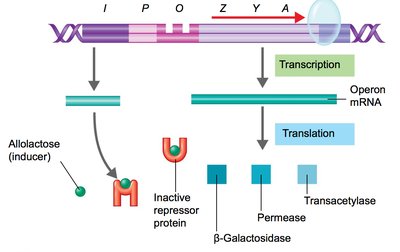
The lac operon in E. coli is a classic example of an inducible operon, which is activated in the presence of lactose.
Default State: Off; repressor protein binds operator, blocking transcription.
Inducer (Allolactose): Binds repressor, inactivating it and allowing transcription.
Enzymes Produced: β-galactosidase, permease, transacetylase (for lactose metabolism).
Repressible Operons: The Trp Operon
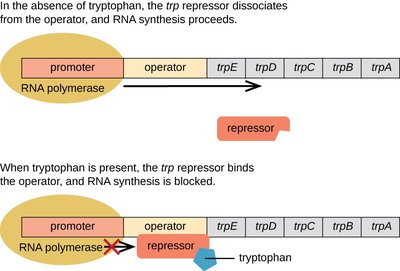
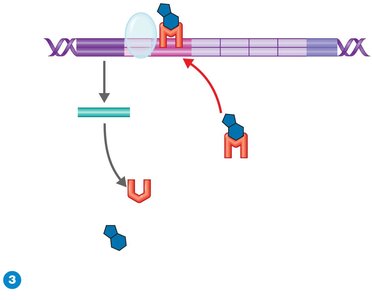
The trp operon in E. coli is repressible, meaning it is usually "on" but can be turned "off" when tryptophan is abundant.
Default State: On; repressor protein is inactive.
Corepressor (Tryptophan): Binds repressor, activating it and blocking transcription.
Enzymes Produced: For tryptophan biosynthesis.
Epigenetic and Post-Transcriptional Control
Epigenetic Control
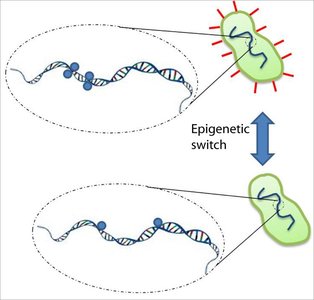
Epigenetic regulation involves modifications to DNA or histones that affect gene expression without altering the DNA sequence.
Methylation: Addition of methyl groups to DNA (often adenine in bacteria) turns genes off.
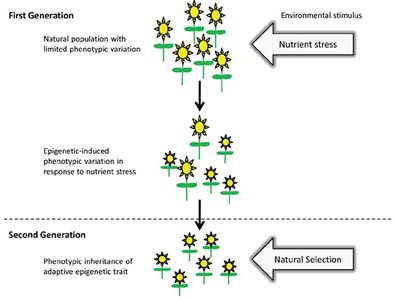
Inheritance: Methylated genes can be passed to offspring, but changes are reversible.
Phenotypic Variation: Environmental cues can induce epigenetic changes, affecting traits across generations.
Post-Transcriptional Control
Gene expression can also be regulated after transcription:
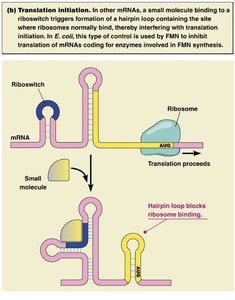
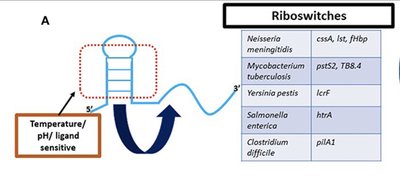
Riboswitches: mRNA regions that bind substrates, altering mRNA structure and affecting translation initiation.
MicroRNAs (miRNAs): Small RNAs that bind mRNA, leading to its degradation and preventing protein production.
Mutations and Genetic Variation
Types of Mutations
A mutation is a permanent change in the DNA sequence. Mutations can be neutral, beneficial, or harmful.
Point Mutation (Base Substitution): A single base is replaced.
Missense Mutation: Changes one amino acid in the protein.
Nonsense Mutation: Creates a stop codon, truncating the protein.
Frameshift Mutation: Insertions or deletions shift the reading frame.
Mutagens and DNA Damage
Mutations can occur spontaneously or be induced by mutagens:
Chemical Mutagens: Nitrous acid, nucleoside analogs.
Radiation: Ionizing (X-rays, gamma rays) and non-ionizing (UV) radiation.
DNA Repair: Photolyases and nucleotide excision repair enzymes fix damaged DNA.
Identifying Mutagens: The Ames Test
The Ames test uses mutant bacteria to detect mutagenic substances by measuring mutation reversion rates, indicating carcinogenic potential.
Application: Used to screen chemicals for mutagenicity and carcinogenicity.
Genetic Exchange in Microbes
Mechanisms of Genetic Exchange
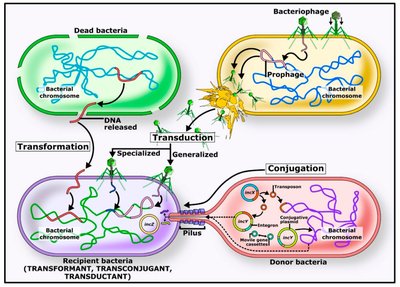
Microbes can exchange genetic material through several mechanisms, increasing genetic diversity:
Transformation: Uptake of free DNA from dead bacteria.
Transduction: Transfer of DNA via bacteriophages (viruses).
Conjugation: Direct transfer of DNA between bacteria via a pilus.
Genetic Variation and Evolution
Importance of Genetic Variation
Genetic variation is crucial for the survival and adaptation of populations. Mutations and recombination create diversity, which is the raw material for evolution.
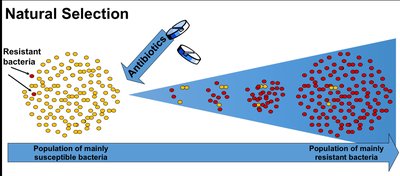
Natural Selection: Acts on populations, favoring organisms best suited to their environment.
Example: Antibiotic resistance in bacteria.
Additional info: These notes expand on brief points from the original materials, providing definitions, examples, and context for each topic. All images included are directly relevant to the adjacent explanations, reinforcing key concepts in microbial gene expression, mutation, and genetic exchange.
