 Back
Microbial Genetics and Control of Microbial Growth: Study Guide
Study Guide - Smart Notes
 Tailored notes based on your materials, expanded with key definitions, examples, and context.
Microbial Genetics
The Central Dogma of Genetics
The central dogma of genetics describes the flow of genetic information within a cell, outlining how genetic instructions are used to synthesize proteins. This process is fundamental to all living organisms and involves two main steps: transcription and translation.
DNA stores the genetic blueprint for all cellular functions.
Transcription is the process by which DNA is copied into messenger RNA (mRNA).
Translation is the decoding of mRNA into a sequence of amino acids, forming proteins.
Proteins are the final functional products that carry out cellular activities.
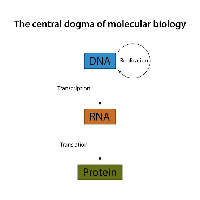
Example: In Escherichia coli, the lac operon is transcribed into mRNA, which is then translated into enzymes that metabolize lactose.
Prokaryotic vs. Eukaryotic Genetic Processes
Genetic processes differ significantly between prokaryotes and eukaryotes, affecting how genetic information is stored, replicated, and expressed.
Feature | Prokaryotes (Bacteria) | Eukaryotes |
|---|---|---|
Chromosome & DNA Shape | Single, circular DNA in nucleoid | Multiple, linear DNA in nucleus |
Location of Processes | All in cytoplasm | Replication & transcription in nucleus; translation in cytoplasm |
Simultaneous Timing | Transcription & translation occur together | Transcription must finish before translation begins |
Proofreading & Editing | Less extensive; higher mutation rate | Highly extensive proofreading and repair |
Core Genetic Processes
DNA Replication: Initiation (unwinding DNA), elongation (adding nucleotides), termination (completion and separation).
Transcription: Initiation (RNA polymerase binds promoter), elongation (mRNA synthesis), termination (release of mRNA).
Translation: Initiation (ribosome binds mRNA), elongation (tRNA brings amino acids), termination (release of polypeptide).
Key Enzymes in DNA & RNA Processes
Topoisomerase: Relaxes supercoiled DNA ahead of replication fork.
DNA Gyrase: Bacterial topoisomerase that relieves strain during DNA unzipping.
RNA Polymerase: Synthesizes RNA from DNA template during transcription.
DNA Polymerase: Synthesizes new DNA and proofreads for errors.
Ligase: Joins Okazaki fragments on the lagging strand.
Leading vs. Lagging Strand Synthesis
Leading Strand: Synthesized continuously toward the replication fork.
Lagging Strand: Synthesized discontinuously away from the fork as Okazaki fragments, which are later joined by ligase.
Nucleotide Structure
Each nucleotide consists of three components:
Phosphate group
Pentose sugar (deoxyribose in DNA, ribose in RNA)
Nitrogenous base (A, T/U, C, G)
Types of Mutations
Silent Mutation: Alters a base but does not change the amino acid.
Missense Mutation: Changes one amino acid in the protein.
Nonsense Mutation: Converts a codon into a stop codon, truncating the protein.
Frameshift Mutation: Insertion or deletion shifts the reading frame, altering downstream amino acids.
Plasmids
Small, circular, extra-chromosomal DNA molecules in microbes.
Provide advantages such as antibiotic resistance, toxin production, and metabolic capabilities.
Semiconservative Replication
Each new DNA molecule contains one original (parental) strand and one newly synthesized strand.
Types of RNA
mRNA (Messenger RNA): Carries genetic code from DNA to ribosome.
tRNA (Transfer RNA): Brings amino acids to the ribosome during translation.
rRNA (Ribosomal RNA): Forms the core of ribosome structure and catalyzes protein synthesis.
Operon Regulation
Inducible Operon: Normally off; activated by an inducer (e.g., lac operon).
Repressible Operon: Normally on; deactivated by a corepressor (e.g., trp operon).
Mutations, Mutagens, and Mutants
Mutation: Permanent change in DNA sequence.
Mutagen: Physical or chemical agent causing mutations (e.g., UV light, chemicals).
Mutant: Organism with a genetic mutation.
Nucleotide Analogs
Chemicals resembling nucleotides that cause mutations when incorporated into DNA/RNA (e.g., 5-bromouracil).
Used in antiviral and chemotherapy treatments to disrupt replication.
DNA Repair Mechanisms
Photoreactivation: Enzymes use light to repair UV-induced thymine dimers.
Excision Repair: Damaged DNA is cut out and replaced.
Mismatch Repair: Enzymes correct mispaired bases after replication.
Horizontal Gene Transfer
Transformation: Uptake of naked DNA from the environment.
Transduction: Transfer of DNA by bacteriophages.
Conjugation: Direct transfer of DNA between bacteria via pilus.
Control of Microbial Growth
Key Definitions
Sterilization: Complete destruction of all microbial life, including endospores.
Aseptic: Free of pathogenic contaminants.
Antiseptic: Chemical agent used on living tissue to inhibit or destroy pathogens.
Disinfection: Destruction of most microbes on non-living surfaces.
Pasteurization: Mild heat treatment to reduce pathogens in food and beverages.
Degerming: Mechanical removal of microbes from a surface.
Physical Methods of Microbial Control
Moist Heat: Denatures proteins and destroys membranes (e.g., boiling, autoclaving).
Autoclaving: Pressurized steam at 121°C and 15 psi kills all microbes, including endospores.
Dry Heat: Kills by oxidation; requires higher temperatures and longer times.
Refrigeration: Slows microbial metabolism; bacteriostatic effect.
Desiccation: Removes water, halting metabolism.
Lyophilization: Freeze-drying for long-term preservation.
Mechanisms of Antimicrobial Agents
Cell Wall: Disruption leads to osmotic lysis.
Cell Membrane: Damage causes leakage of cellular contents.
Proteins/Enzymes: Denaturation halts metabolism.
DNA/Nucleic Acids: Disruption prevents replication and transcription.
Ideal Microbial Control Agent
Inexpensive, fast-acting, stable, and harmless to humans.
Note: No agent is perfect; trade-offs exist between effectiveness and safety.
Microbial Resistance Hierarchy
Most Resistant: Endospores, prions.
Moderately Resistant: Mycobacteria.
Least Resistant: Gram-positive bacteria, enveloped viruses.
Environmental Factors Affecting Control
Temperature: Higher temperatures increase effectiveness.
pH: Extreme pH enhances agent activity.
Time: Longer exposure increases microbial death.
Osmotic Pressure
Hypertonic Solutions: High salt/sugar draws water out, causing plasmolysis and inhibiting growth.
Hypotonic Solutions: Water enters cell; if wall is damaged, cell bursts.
Preservation: Salt and sugar are used to create hypertonic environments in food preservation.
Chemical Method Example: Alcohols
Alcohols are intermediate-level disinfectants and antiseptics. They denature proteins and disrupt cell membranes, most effective at 70–90% concentration. Alcohols are bactericidal, fungicidal, and virucidal against enveloped viruses but do not kill endospores. Isopropyl alcohol is commonly used for skin degerming before injections.
Antimicrobial Drugs
Key Definitions
Antimicrobials: Agents against microbes.
Antibiotics: Naturally produced by microbes.
Semisynthetics: Modified natural antibiotics.
Synthetics: Entirely artificial drugs.
Selective Toxicity
Drugs must target microbes without harming host cells.
Fewer options for eukaryotic and viral infections due to similarities with host cells or reliance on host machinery.
Mechanisms of Antimicrobial Action
Inhibition of Cell Wall Synthesis: Blocks peptidoglycan (bacteria) or glucan/chitin (fungi) synthesis.
Inhibition of Protein Synthesis: Targets bacterial ribosomes.
Disruption of Cytoplasmic Membranes: Damages membrane integrity (e.g., polymyxins, polyenes).
Inhibition of Metabolic Pathways: Blocks unique microbial pathways (e.g., folic acid synthesis).
Inhibition of Nucleic Acid Synthesis: Inhibits DNA/RNA polymerases or gyrase.
Prevention of Attachment/Entry/Uncoating: Blocks viral entry or uncoating in host cells.
Broad vs. Narrow Spectrum Drugs
Narrow-spectrum: Targets specific microbes.
Broad-spectrum: Targets many microbes but may disrupt normal flora, leading to superinfections.
Routes of Administration
Topical, oral, intramuscular, intravenous.
Therapeutic Index (TI)
TI = Toxic Dose / Therapeutic Dose
High TI = safer drug; Low TI = requires monitoring.
Major Side Effects
Toxicity to organs
Allergic reactions
Disruption of normal microbiota
R Plasmids & Resistance
R plasmids carry genes for antibiotic resistance and can be transferred between bacteria via conjugation.
Mechanisms of Antimicrobial Resistance
Drug destruction (e.g., beta-lactamase)
Prevention of entry
Alteration of drug target
Metabolic pathway alteration
Efflux pumps
Biofilm formation
Target mimicry
Slowing Antimicrobial Resistance
Complete prescribed courses
Use combination therapy
Restrict unnecessary use
Develop new drug derivatives
