 Back
BackMicrobial Genetics: From DNA to Protein Synthesis and Genetic Variation
Study Guide - Smart Notes
 Tailored notes based on your materials, expanded with key definitions, examples, and context.
Microbial Genetics
The Central Dogma of Molecular Biology
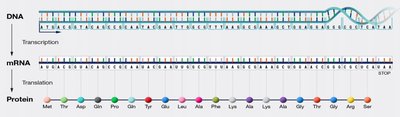
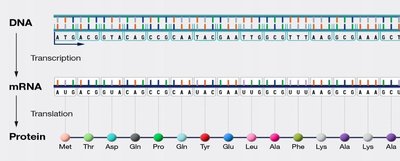
The central dogma describes the flow of genetic information within a biological system. In microbes, as in all organisms, genetic information is stored in DNA, transcribed into RNA, and then translated into proteins. This process is fundamental to gene expression and cellular function.
DNA: The hereditary material containing genes.
Transcription: The process by which a DNA sequence is copied into messenger RNA (mRNA).
Translation: The process by which ribosomes synthesize proteins using the sequence encoded in mRNA.
Proteins: Functional molecules that perform cellular activities.
Example: The sequence of bases in DNA determines the sequence of amino acids in a protein, which in turn determines the protein's structure and function.
Genes and Gene Expression in Microbes
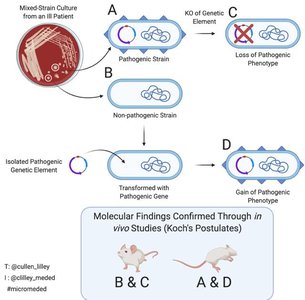
Understanding microbial genes and their expression is crucial for identifying disease mechanisms, developing treatments, and harnessing microbes for biotechnology. For example, different strains of Escherichia coli can be harmless or pathogenic depending on their genetic content.
Koch's Postulates: Criteria to establish a causative relationship between a microbe and a disease.
Molecular Koch Postulates: Focus on the genetic basis of pathogenicity, requiring demonstration that specific genes are responsible for virulence traits.
Applications: Production of human insulin using genetically modified bacteria.
Structure and Function of Genetic Material
Genome Organization
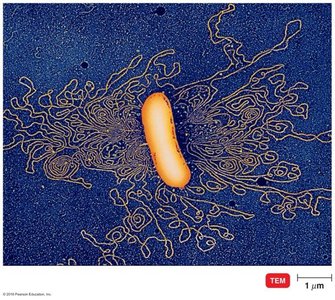
The genome of a microbe includes all its genetic material. In bacteria, this typically consists of a single circular chromosome and may include plasmids. Genes are segments of DNA that encode functional products, usually proteins.
Chromosome: Structure containing DNA and associated proteins.
Gene: DNA segment encoding a functional product.
Genotype: The genetic makeup of an organism.
Phenotype: Observable characteristics resulting from gene expression.
DNA Structure
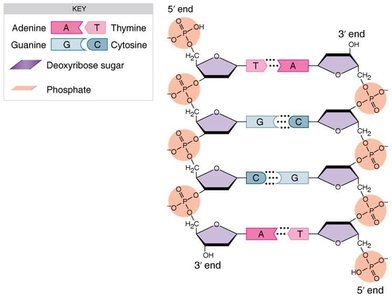
DNA is a double helix composed of nucleotides, each containing a phosphate group, deoxyribose sugar, and a nitrogenous base (adenine, thymine, cytosine, or guanine). The strands are antiparallel and held together by hydrogen bonds between complementary bases (A-T, C-G).
Antiparallel Strands: One strand runs 5' to 3', the other 3' to 5'.
Base Pairing: Adenine pairs with thymine; cytosine pairs with guanine.
DNA Replication
Mechanism of Replication
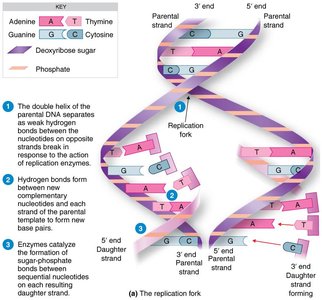
DNA replication is the process by which a cell duplicates its DNA before cell division. It is semi-conservative, meaning each new DNA molecule consists of one parental and one newly synthesized strand.
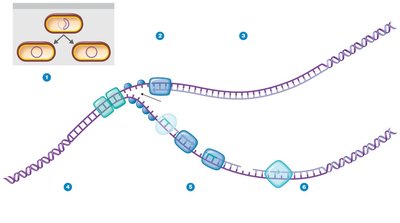
Helicase: Unwinds the DNA double helix.
Primase: Synthesizes RNA primers to initiate DNA synthesis.
DNA Polymerase: Adds nucleotides in the 5' to 3' direction.
Leading Strand: Synthesized continuously.
Lagging Strand: Synthesized discontinuously as Okazaki fragments.
DNA Ligase: Joins Okazaki fragments.
Topoisomerase/Gyrase: Relieves supercoiling tension.
Energy for Replication
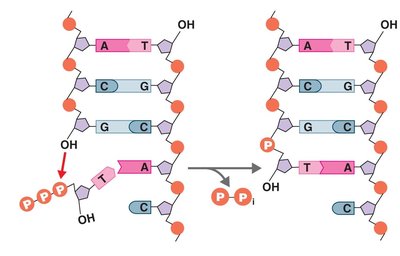
The energy required for DNA synthesis comes from the hydrolysis of nucleoside triphosphates, which release pyrophosphate upon incorporation into the growing DNA strand.
Equation:
Transcription: DNA to RNA
Transcription in Prokaryotes
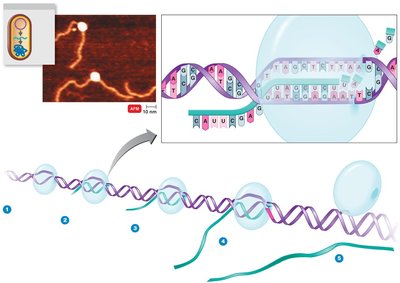
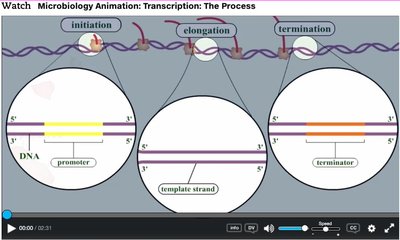
Transcription is the synthesis of a complementary RNA strand from a DNA template. In bacteria, RNA polymerase binds to the promoter region, synthesizes RNA in the 5' to 3' direction, and stops at the terminator sequence.
Promoter: DNA sequence where RNA polymerase binds to initiate transcription.
Terminator: Sequence signaling the end of transcription.
mRNA: Carries genetic information from DNA to ribosomes.
Transcription in Eukaryotes
In eukaryotes, transcription occurs in the nucleus and involves additional regulatory elements such as the TATA box and transcription factors. The initial RNA transcript (pre-mRNA) undergoes processing to remove introns and splice exons together before becoming mature mRNA.
TATA Box: A promoter element recognized by transcription factors.
snRNPs: Small nuclear ribonucleoproteins involved in RNA splicing.
Translation: RNA to Protein
Mechanism of Translation
Translation is the process by which ribosomes synthesize proteins using the sequence of codons in mRNA. Each codon specifies an amino acid, and tRNA molecules bring the appropriate amino acids to the ribosome, where they are joined by peptide bonds.
Start Codon: AUG (methionine).
Stop Codons: UAA, UAG, UGA.
Degeneracy: Multiple codons can code for the same amino acid.
tRNA: Transfers amino acids to the ribosome and matches codons with anticodons.
Ribosome Structure and Function
Ribosomes are composed of rRNA and proteins and consist of two subunits. Bacterial ribosomes (70S) differ from eukaryotic ribosomes (80S), which is important for antibiotic targeting.
Bacterial Ribosome: 30S (small) + 50S (large) = 70S.
Eukaryotic Ribosome: 40S (small) + 60S (large) = 80S.
Mutations and Genetic Variation
Types of Mutations
Mutations are permanent changes in the DNA sequence. They can be spontaneous or induced by mutagens such as chemicals or radiation. Types of mutations include:
Base Substitution (Point Mutation): Change of a single base pair.
Missense Mutation: Results in a different amino acid.
Nonsense Mutation: Results in a stop codon.
Silent Mutation: No change in amino acid sequence.
Frameshift Mutation: Insertion or deletion shifts the reading frame.
Genetic Transfer in Bacteria
Horizontal and Vertical Gene Transfer
Bacteria can exchange genetic material through vertical (parent to offspring) and horizontal (between cells of the same generation) gene transfer. Horizontal gene transfer mechanisms include transformation, conjugation, and transduction.
Transformation: Uptake of naked DNA from the environment.
Conjugation: Transfer of plasmids via direct cell-to-cell contact (sex pilus).
Transduction: Transfer of DNA by bacteriophages (viruses that infect bacteria).
Plasmids
Plasmids are small, circular DNA molecules separate from the bacterial chromosome. They often carry genes for antibiotic resistance, virulence factors, or metabolic functions and are important tools in biotechnology.
Conjugative Plasmids: Carry genes for pilus formation and plasmid transfer.
Resistance Plasmids (R factors): Encode antibiotic resistance.
Virulence Plasmids: Encode factors that enhance pathogenicity.
