Back
BackMicrobial Genetics II: Mechanisms of Genetic Exchange in Bacteria
Study Guide - Smart Notes
 Tailored notes based on your materials, expanded with key definitions, examples, and context.
Genetic Mapping by Conjugation
Principles of Bacterial Conjugation and Genetic Mapping
Bacterial conjugation is a process of horizontal gene transfer in which genetic material is exchanged between bacterial cells through direct contact. This mechanism is fundamental for mapping the relative positions of genes on a bacterial chromosome by analyzing the order and timing of gene transfer.
Conjugation: The transfer of DNA from a donor to a recipient cell via a pilus, often involving plasmids or chromosomal DNA.
Genetic Mapping: The order and distance between genes can be determined by the time at which different markers appear in the recipient population.
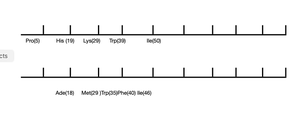
Markers: Genes such as Pro, His, Lys, Trp, Ile, Ade, Met, Phe, and Lac are used to track gene transfer.
Units: The numbers in parentheses (e.g., Pro 6) represent the time or distance units between gene markers.
Example: The following genetic map shows the relative positions of several markers based on conjugation data:
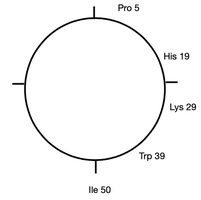
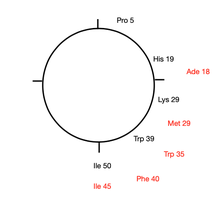
Further analysis and mapping can be visualized as circular genetic maps, reflecting the circular nature of bacterial chromosomes:
Transformation in Bacteria
The Transforming Principle
Transformation is a process by which bacteria take up free DNA from their environment and incorporate it into their genome. This mechanism was pivotal in identifying DNA as the genetic material.
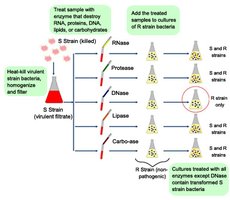
Transforming Principle: The substance responsible for transformation was identified as DNA through classic experiments by Avery, MacLeod, and McCarty.
Key Experiment: Treatment of cell extracts with DNase (which degrades DNA) prevented transformation, proving DNA was the genetic material.
Example: The Avery-MacLeod-McCarty experiment demonstrated that only DNase destroyed the transforming activity, confirming DNA as the hereditary material.
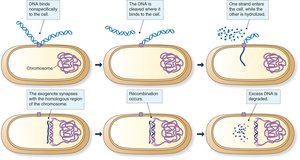
Mechanism of Transformation in Gram-Positive Bacteria
Gram-positive bacteria can take up DNA from the environment in a process that is generally nonspecific and involves the uptake of single-stranded DNA.
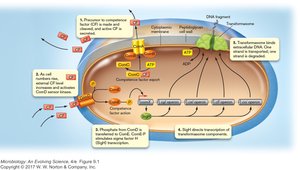
Transformasome Complex: A protein complex that facilitates the uptake of DNA into the cell.
Competence: The physiological state that allows cells to take up DNA, often regulated by quorum sensing.
DNA Entry: DNA binds to the cell surface, one strand enters the cell, and homologous recombination incorporates the new DNA.
Transduction: Gene Transfer by Bacteriophages
Discovery and Mechanism
Transduction is a form of horizontal gene transfer mediated by bacteriophages (viruses that infect bacteria). It was first described by Zinder and Lederberg in 1952 during experiments with Salmonella.
Filterable Agent: The agent responsible for gene transfer could pass through a 0.45 micron filter but not a 0.22 micron filter, suggesting a viral particle (bacteriophage).
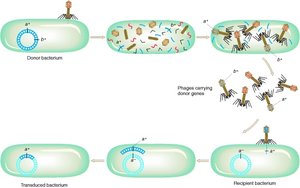
Transduction: Accidental packaging of host DNA into phage particles leads to gene transfer between bacteria.
Rarity: Transduction is a rare event but has significant evolutionary implications.
Types of Transduction
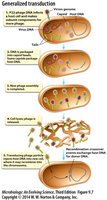
Generalized Transduction: Any gene from the donor can be transferred. Occurs due to random packaging errors during the lytic cycle of phage replication.
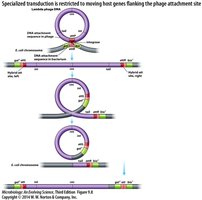
Specialized Transduction: Only specific genes near the phage integration site are transferred. Occurs during the lysogenic cycle when prophage excision is imprecise.
Generalized Transduction Mechanism:
Phage infects donor bacterium and degrades host DNA.
Fragments of host DNA are mistakenly packaged into phage heads.
These transducing particles inject donor DNA into a new recipient, where it may recombine with the host genome.
Specialized Transduction Mechanism:
Phage integrates into the host genome at a specific site (prophage).
Upon induction, excision may be imprecise, capturing adjacent host genes.
Only genes near the integration site are transferred to new hosts.
Summary of DNA Transfer Mechanisms
Comparison of Conjugation, Transformation, and Transduction
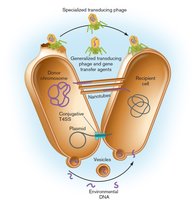
Bacteria can exchange genetic material through three main mechanisms, each with distinct features and biological significance.
Mechanism | Agent | DNA Source | Specificity | Example |
|---|---|---|---|---|
Conjugation | Cell-to-cell contact (pilus) | Plasmid or chromosomal | High (requires contact) | F plasmid transfer in E. coli |
Transformation | Uptake from environment | Naked DNA | Low (any DNA) | Griffith's experiment with Streptococcus pneumoniae |
Transduction | Bacteriophage | Host DNA (packaged by phage) | Varies (generalized or specialized) | P1 phage in E. coli |
Horizontal Gene Transfer in the Human Gut
Significance of HGT in the Gastrointestinal Tract
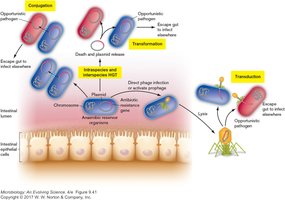
The human intestine is a hotspot for horizontal gene transfer (HGT) due to high bacterial density and frequent cell-to-cell contact. This environment facilitates the spread of traits such as antibiotic resistance among diverse microbial species.
Biofilms: Dense microbial communities enhance opportunities for gene exchange.
Antibiotic Resistance: HGT in the gut is a major concern for the spread of resistance genes.
Induction by Antibiotics: Exposure to antibiotics can increase the frequency of HGT events.