 Back
BackMicrobial Genetics: Mechanisms of Gene Expression, Mutation, and Gene Transfer
Study Guide - Smart Notes
 Tailored notes based on your materials, expanded with key definitions, examples, and context.
Microbial Genetics
Overview of Genetic Traits and Their Manifestation
Microbial genetics explores how genetic information in prokaryotic and eukaryotic cells determines their physical characteristics, such as motility or metabolic capabilities. The central dogma of molecular biology describes the flow of genetic information from DNA to RNA to protein, which ultimately defines the genotype and phenotype of an organism.
Genotype: The genetic makeup of an organism.
Phenotype: The observable physical traits resulting from gene expression.
Mendelian Genetics: Focuses on inheritance patterns of traits.
Molecular Genetics: Examines how DNA is expressed as proteins.
DNA vs. RNA: Structure and Function
DNA and RNA are nucleic acids with distinct structural and functional properties.
DNA: Double-stranded, contains deoxyribose sugar, and nucleotides A, T, G, C.
RNA: Mostly single-stranded, contains ribose sugar, and nucleotides A, U, G, C. Exists as mRNA, tRNA, and rRNA.
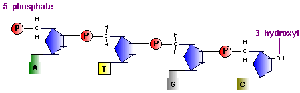
Nucleotides: Each contains a sugar, a nitrogenous base, and a phosphate group.
DNA Replication
Mechanism and Enzymes Involved
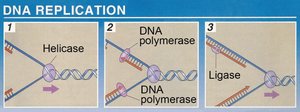
DNA replication is the process by which a cell duplicates its DNA, ensuring genetic continuity. It is semiconservative, meaning each new DNA molecule contains one old and one new strand.
Helicase: Unwinds the DNA helix.
RNA Primase: Synthesizes RNA primers to initiate replication.
DNA Polymerase: Adds complementary nucleotides and proofreads the new strand.
DNA Ligase: Seals gaps between nucleotides.
Topoisomerase/DNA Gyrase: Relieves supercoiling and rewinds DNA.
Directionality: DNA polymerase synthesizes DNA in the 5' to 3' direction.
Transcription
Conversion of DNA to RNA
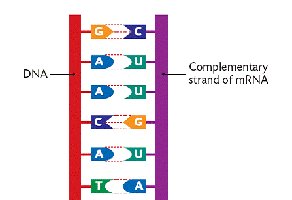
Transcription is the process by which DNA is converted into RNA. RNA polymerase synthesizes RNA in the 5' to 3' direction using DNA as a template.
mRNA: Carries genetic information for protein synthesis.
tRNA: Adapts the genetic code for translation.
rRNA: Forms the core of ribosomes.
Translation
Protein Synthesis in Ribosomes
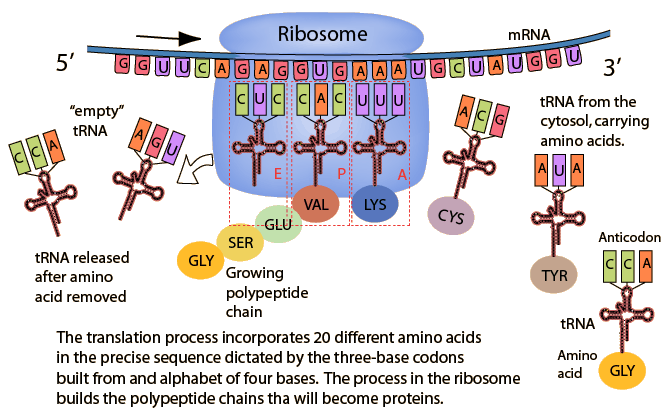
Translation occurs in ribosomes, where mRNA is decoded to synthesize proteins.
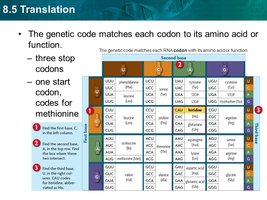
Codons: Three-base sequences in mRNA that specify amino acids.
tRNA: Contains anticodons complementary to mRNA codons and carries amino acids.
Ribosome: Facilitates the assembly of amino acids into polypeptides.
Gene Expression and Regulation
Modes of Gene Expression
Gene expression is the process by which genetic information is used to synthesize proteins. It can be regulated in three ways:
Constitutive: Genes are always expressed.
Induction: Genes are turned on by an inducer (positive control).
Repression: Genes are turned off by a corepressor (negative control).
Operon Model
An operon is a cluster of genes regulated together, containing a promoter, operator, and structural genes.
Promoter: Site where RNA polymerase binds to initiate transcription.
Operator: Site where repressor proteins bind to block transcription.
Structural Genes: Code for enzymes or proteins.
Lactose Operon (Induction)
The lac operon is inducible and synthesizes enzymes to convert lactose to glucose. It is regulated by the presence of glucose and secondary messengers (CAP and cAMP). 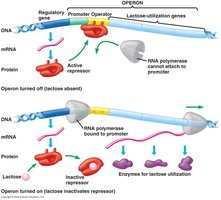
Tryptophan Operon (Repression)
The trp operon is repressible and synthesizes the amino acid tryptophan. It is regulated by tryptophan acting as a corepressor. 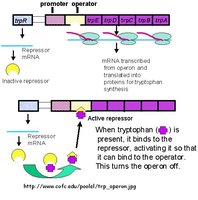
Mutations
Types and Effects of Mutations
Mutations are changes in the DNA sequence that can affect gene function.
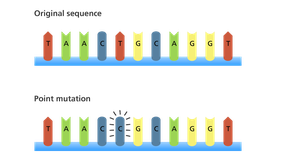
Point Mutation: Substitution of one base for another.
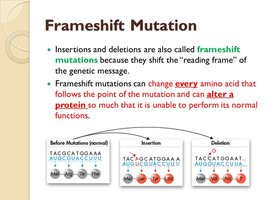
Frameshift Mutation: Addition or deletion of bases, altering the reading frame and potentially changing every amino acid downstream.
Causes: Induced (environmental agents) or spontaneous (unknown factors).
Gene Transfer in Bacteria
Mechanisms of Horizontal Gene Transfer
Bacteria can transfer genes through three main mechanisms, contributing to genetic diversity and adaptation.
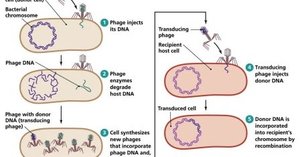
Transduction: Transfer of genes by bacteriophages (viruses that infect bacteria).
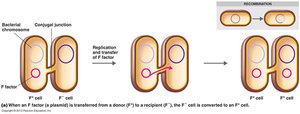
Conjugation: Transfer of genes via a pilus between bacterial cells.
Transformation: Uptake of naked DNA from the environment.
Transformation Experiments
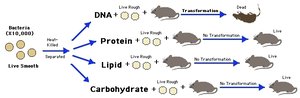
Frederick Griffith demonstrated transformation using Streptococcus pneumoniae, showing that genetic material from dead cells could transform live cells. Oswald Avery later proved that DNA was the molecule responsible for transformation. 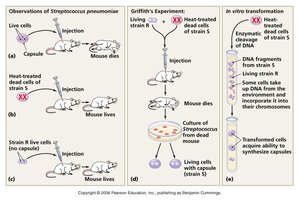
Summary Table: DNA vs. RNA
Trait | DNA | RNA |
|---|---|---|
Sugar | Deoxyribose | Ribose |
Functional Forms | 1 | 3 (mRNA, tRNA, rRNA) |
Nucleotides | A, T, G, C | A, U, G, C |
Strands | Double-stranded | Single-stranded (mostly) |
Complementary Base Pairing | A:T, G:C | A:U, G:C |
Summary Table: Lac vs. Trp Operons
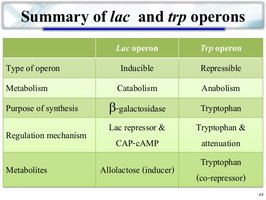
Feature | Lac Operon | Trp Operon |
|---|---|---|
Type | Inducible | Repressible |
Metabolism | Catabolism | Anabolism |
Purpose | β-galactosidase | Tryptophan |
Regulation | Lac repressor & CAP-cAMP | Tryptophan & attenuation |
Metabolites | Allolactose (inducer) | Tryptophan (co-repressor) |
Key Equations
Central Dogma
Semiconservative Replication
Mutation Types
Conclusion
Microbial genetics is fundamental to understanding how microorganisms inherit, express, and transfer genetic information. These processes underpin microbial diversity, adaptation, and pathogenesis, making them essential topics in microbiology.
