 Back
BackMicrobial Genetics: Structure, Expression, Regulation, and Mutation
Study Guide - Smart Notes
 Tailored notes based on your materials, expanded with key definitions, examples, and context.
Microbial Genetics
Overview of Genetics
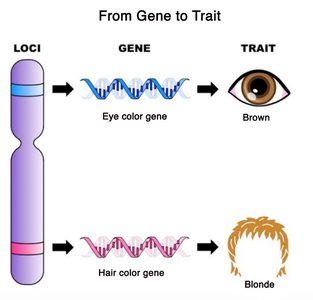
Genetics is the study of genes and how they determine traits in organisms. Genes are sequences of DNA that code for specific traits, which are observable characteristics often resulting from protein structures. The locus is the position of a gene on a chromosome.
Gene: Sequence of DNA coding for a trait.
Trait: Observable characteristic derived from a gene, often protein-based.
Locus: Specific location of a gene on a chromosome.
Gene Expression: The process by which information in a gene is used to synthesize a gene product, typically a protein.
Central Dogma: Information flows from DNA → RNA → protein.
Example: Eye color gene codes for melanin protein, determining eye color.
Structure of DNA
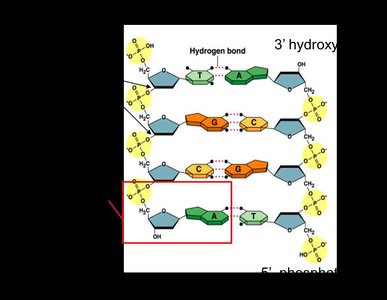
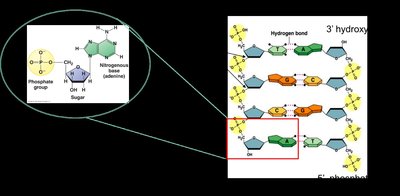
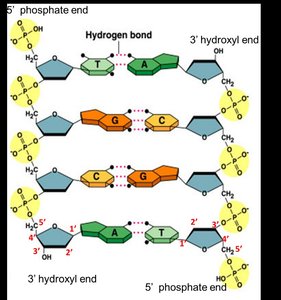
DNA is a double-stranded helical molecule composed of four nucleotides: adenine (A), thymine (T), cytosine (C), and guanine (G). The primary function of DNA is to store genetic information. Nucleotides are linked by strong phosphodiester bonds within a strand, while opposite strands are held together by weak hydrogen bonds. DNA strands are antiparallel, with distinct 5’ phosphate and 3’ hydroxyl ends.
Nucleotide: Monomer of DNA and RNA, consisting of a nitrogenous base, a 5-carbon sugar, and a phosphate group.
Base-pairing rules: A pairs with T, G pairs with C.
Antiparallel: DNA strands run in opposite directions (5’ to 3’ and 3’ to 5’).
DNA Replication
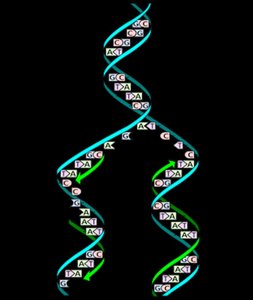
DNA replication is the process by which DNA is duplicated before cell division. The double helix is opened, forming a replication fork, and each strand serves as a template for a new complementary strand. The main enzyme involved is DNA polymerase.
Replication fork: The region where DNA is unwound for replication.
DNA polymerase: Enzyme that synthesizes new DNA strands.
Result: Two identical DNA double helices.
Structure of RNA
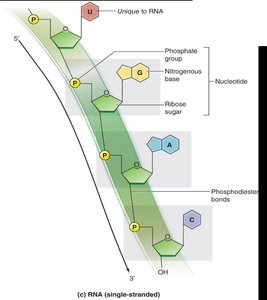
RNA is a single-stranded molecule composed of nucleotides: adenine (A), cytosine (C), guanine (G), and uracil (U). RNA’s primary function is to transfer genetic information. Like DNA, RNA has 5’ phosphate and 3’ hydroxyl ends, and bases are linked by phosphodiester bonds.
Uracil (U): Unique to RNA, replaces thymine.
Phosphodiester bonds: Link adjacent nucleotides.
Structure of Proteins
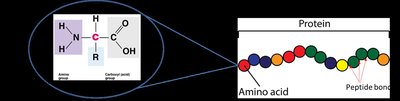
Proteins are polymers of amino acids, held together by peptide bonds. There are 20 different amino acids, and the sequence determines the protein’s structure and function. Proteins fold into complex 3D shapes, making them highly diverse.
Amino acid: Monomer of proteins.
Peptide bond: Covalent bond linking amino acids.
Oligopeptide: Short chain of amino acids.
Polypeptide: Long chain of amino acids.
Protein: One or more polypeptides folded into a functional shape.
Gene Expression
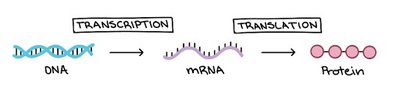
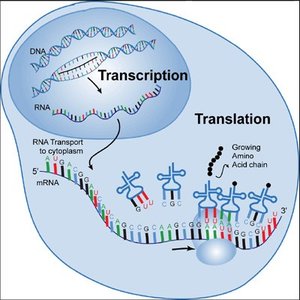
Gene expression is the process by which genetic information is used to synthesize a gene product, usually a protein. The central dogma describes the flow of information: DNA is transcribed into RNA, which is then translated into protein.
Transcription: Synthesis of RNA from DNA template.
Translation: Synthesis of protein from RNA template.
Transcription
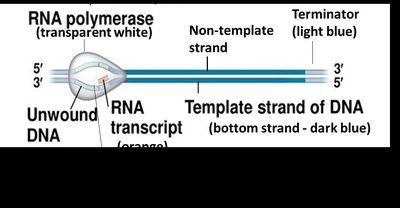
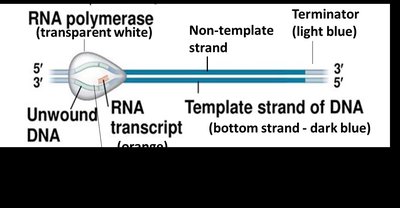
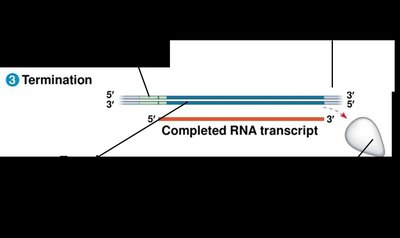
Transcription is the synthesis of RNA using DNA as a template. Only one strand of DNA is transcribed (template strand). Transcription begins at the promoter and ends at the terminator. The process has three phases: initiation, elongation, and termination.
Initiation: RNA polymerase binds to the promoter and unwinds DNA.
Elongation: RNA polymerase synthesizes RNA in the 5’ to 3’ direction, using complementary base pairing.
Termination: RNA polymerase stops at the terminator, releases RNA, and DNA rewinds.
Main Types of RNA Molecules
There are three main types of RNA involved in gene expression:
mRNA (messenger RNA): Blueprint for protein synthesis.
rRNA (ribosomal RNA): Structural component of ribosomes.
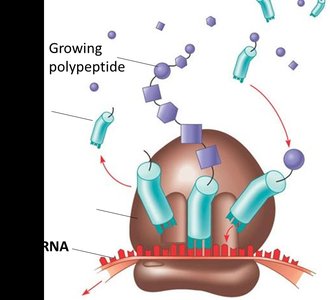
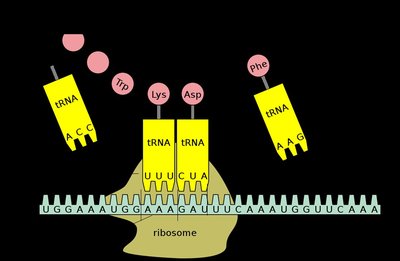
tRNA (transfer RNA): Decodes mRNA sequence into protein by bringing amino acids to the ribosome.
Translation
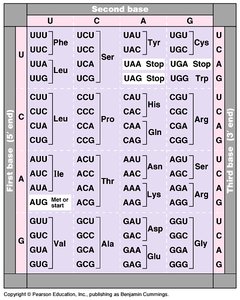
Translation is the process by which mRNA is used as a template to assemble amino acids into a protein. Occurs at ribosomes and uses a triplet code (codons). Each codon specifies an amino acid, and a codon table is used to determine which codon codes for which amino acid. The start codon is AUG (methionine), and there are three stop codons (UAA, UAG, UGA).
Codon: Three-nucleotide sequence on mRNA that codes for an amino acid.
Start codon: AUG (methionine).
Stop codons: UAA, UAG, UGA (do not code for amino acids).
Regulation of Bacterial Gene Expression
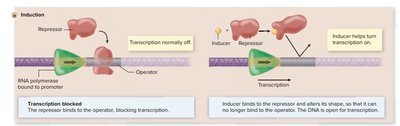
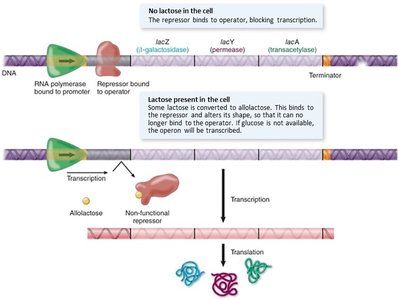
Bacteria regulate gene expression using operons, which are clusters of genes transcribed together. Operons allow rapid adjustment to environmental changes. Regulation involves repressors (block transcription) and inducers (inhibit repressors, allowing transcription).
Operon: Cluster of genes transcribed together.
Repressor: Protein that blocks transcription by binding to the operator.
Inducer: Protein that inhibits the repressor, enabling transcription.
The Lac Operon
The lac operon encodes proteins for lactose transport and breakdown in bacteria. It is regulated based on the presence of lactose and glucose in the environment. The operon is off when lactose is absent or glucose is present. It turns on when lactose is present and glucose is absent, as allolactose inhibits the repressor.
Lac operon: Encodes proteins for lactose metabolism.
Repressor: Binds operator when lactose is absent.
Inducer (allolactose): Inhibits repressor when lactose is present.
Quorum Sensing
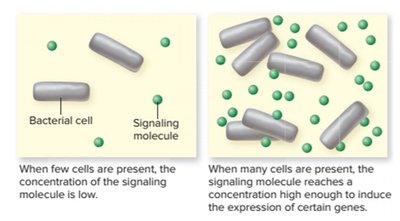
Quorum sensing is a process by which bacteria sense population density and activate certain genes only when a threshold is reached. This enables coordinated gene expression in response to environmental conditions.
Quorum sensing: Population-dependent gene activation.
Mutations
Mutations are changes in the DNA sequence that can alter protein function or phenotype. They may be spontaneous (random errors during replication) or induced (caused by mutagens).
Spontaneous mutation: Random, rare errors during DNA replication.
Induced mutation: Caused by mutagens (chemical, radiation, transposons).
Types of Mutations
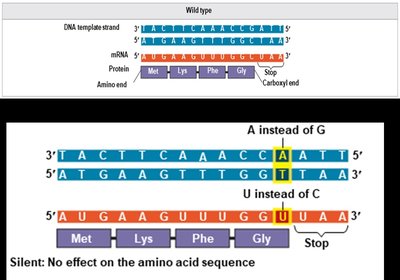
Silent mutation: Nucleotide change with no effect on amino acid sequence.
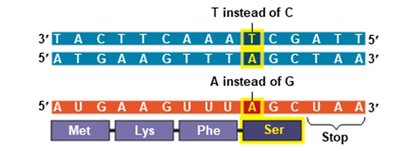
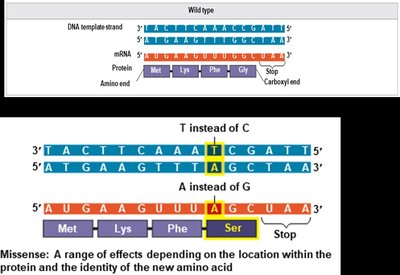
Missense mutation: Nucleotide change resulting in an amino acid change.
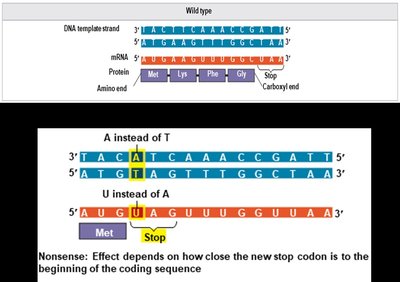
Nonsense mutation: Nucleotide change resulting in a premature stop codon.
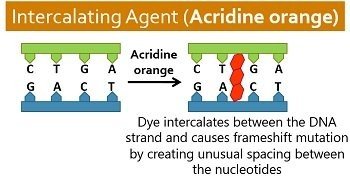
Frameshift mutation: Insertion or deletion of nucleotides, altering the reading frame.
Substances That Cause Mutations
Mutagens are agents that cause mutations in DNA. They include:
Chemical mutagens:
Intercalating agents: Insert between DNA bases, causing frameshift mutations.
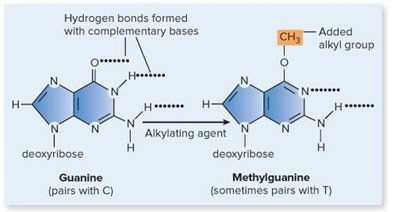
Alkylating agents: Add alkyl groups to nucleobases, disrupting base pairing.
Radiation:
UV light: Causes thymine dimers.
Gamma rays/X-rays: Cause DNA strand breaks.
Transposons: DNA elements that move within the genome, often causing mutations.
Some Mutations Are Favorable
Mutations can be beneficial, leading to natural selection. Favorable mutations increase an organism’s survival and reproduction, eventually becoming prevalent in the population. Overuse of antibiotics selects for resistant bacteria, and sickle cell anemia provides resistance to malaria.
Natural selection: Favorable traits increase in frequency over generations.
Evolution: Change in genes and traits over time.
DNA Repair
Cells have mechanisms to repair damaged DNA:
Mismatch repair (MMR) and base excision repair (BER): Enzymes detect and remove erroneous bases, DNA polymerase fills the gap, and DNA ligase seals the ends.
Photoreactivation: Light-activated enzyme (photolyase) repairs thymine dimers (not present in humans).
SOS repair: Emergency repair mechanism in prokaryotes, activated after severe DNA damage.
Transformation, Transduction, and Conjugation
Horizontal gene transfer allows bacteria to acquire new genetic material from other cells, not just from parent to offspring.
Transformation: Uptake of naked DNA from the environment.
Transduction: Transfer of DNA via bacteriophages.
Conjugation: Exchange of plasmid DNA via a sex pilus.
Transformation
Competent cells uptake DNA and incorporate it into their genome.
Used in genetic engineering to modify organisms.
Transduction
Bacteriophage infects a cell, sometimes packaging bacterial DNA into new phage particles.
Transducing particles transfer DNA to new cells.
Conjugation
Direct transfer of plasmid DNA between cells via a sex pilus.
Additional info: Codon redundancy protects against mutations by allowing multiple codons to code for the same amino acid, reducing the impact of single nucleotide changes.
