 Back
BackMicrobial Genetics: Structure, Function, and Genetic Variation
Study Guide - Smart Notes
 Tailored notes based on your materials, expanded with key definitions, examples, and context.
Microbial Genetics
Structure of DNA
Deoxyribonucleic acid (DNA) is the hereditary material in all living organisms, encoding the instructions necessary for life. In prokaryotes, DNA is typically organized into a single circular chromosome, while eukaryotes possess multiple linear chromosomes. DNA is composed of two antiparallel strands forming a double helix, with each strand consisting of nucleotides containing a deoxyribose sugar, a phosphate group, and a nitrogenous base (adenine, thymine, cytosine, or guanine).
Complementary Base Pairing: Adenine (A) pairs with Thymine (T) via two hydrogen bonds, and Cytosine (C) pairs with Guanine (G) via three hydrogen bonds.
5’ and 3’ Ends: The 5’ end has a phosphate group attached to the 5’ carbon of deoxyribose, while the 3’ end has a hydroxyl group on the 3’ carbon.
Phosphodiester Bonds: Covalent bonds between the phosphate group of one nucleotide and the 3’ hydroxyl of the next, forming the sugar-phosphate backbone.
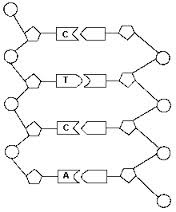
Example: If an organism has 18% thymine, it also has 18% adenine. The remaining 64% is divided equally between cytosine and guanine, so G+C content is 32%.
Plasmids
Plasmids are small, circular, double-stranded DNA molecules found in bacteria, independent of the chromosomal DNA. They often carry genes that confer advantageous traits but are not essential for basic survival.
F Plasmid (Fertility): Carries genes for conjugation (tra genes), enabling DNA transfer between bacteria.
R Plasmid (Resistance): Contains genes for antibiotic resistance.
Virulence Plasmids: Carry genes that enhance pathogenicity.
DNA Replication in Prokaryotes
DNA replication is semiconservative, meaning each new DNA molecule consists of one parental and one newly synthesized strand. The antiparallel orientation of DNA strands is crucial for replication.
Steps and Enzymes:
Unwinding: Helicase unwinds the double helix.
Stabilization: Single-strand binding proteins stabilize unwound DNA.
Leading Strand Synthesis: DNA polymerase III synthesizes continuously in the 5’ to 3’ direction.
Lagging Strand Synthesis: Synthesized discontinuously as Okazaki fragments, each initiated by an RNA primer (primase). DNA polymerase I replaces RNA primers with DNA, and ligase joins fragments.
Semiconservative Replication: Each daughter DNA molecule contains one original and one new strand.
Gene Expression: Transcription and Translation
Gene expression involves two main processes: transcription (DNA to RNA) and translation (RNA to protein).
Transcription: Synthesis of RNA from a DNA template by RNA polymerase. Steps include initiation, elongation, and termination (self-termination or Rho-dependent termination).
Translation: Ribosomes synthesize proteins using mRNA as a template. Involves initiation (ribosome assembly), elongation (amino acid addition), and termination (release of polypeptide).
Types of RNA:
mRNA (Messenger RNA): Carries genetic code from DNA to ribosomes.
tRNA (Transfer RNA): Brings amino acids to ribosomes during translation.
rRNA (Ribosomal RNA): Structural and catalytic component of ribosomes.
Regulation of Genetic Expression
Cells regulate gene expression to conserve energy and resources. In bacteria, operons are key regulatory units.
Operon Structure: Includes a promoter, operator, and structural genes.
Inducible Operons (e.g., Lac Operon): Usually off; turned on in the presence of an inducer (e.g., lactose).
Repressible Operons (e.g., Trp Operon): Usually on; turned off when a corepressor (e.g., tryptophan) is present.
Mutations and Genetic Variation
Mutations are changes in the DNA sequence, leading to genetic diversity.
Types of Mutations:
Point Mutations: Affect one or a few base pairs (substitution, addition, deletion).
Frameshift Mutations: Addition or deletion of nucleotides alters the reading frame.
Effects: Silent, missense, and nonsense mutations.
Mutagens: Physical (ionizing, non-ionizing radiation) and chemical agents (base analogs, nucleotide-altering chemicals, frameshift mutagens).
DNA Repair Mechanisms
Light Repair: Photolyase enzyme uses light energy to break pyrimidine dimers.
Dark Repair: Endonuclease removes damaged DNA, DNA polymerase fills the gap, and ligase seals it.
Isolation and Detection of Mutants
Direct Selection: Mutants grow on selective media (e.g., antibiotic resistance).
Indirect Selection: Replica plating to identify auxotrophs.
Ames Test: Screens chemicals for mutagenicity using Salmonella mutants. Increased colony growth near the test agent suggests mutagenic activity.
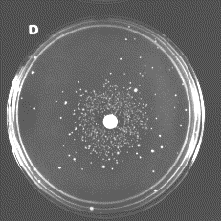
Note: Without a control plate, results are inconclusive. Positive Ames test indicates mutagenicity in bacteria, not necessarily in humans.
Horizontal Gene Transfer
Horizontal gene transfer increases genetic diversity in bacteria through three main mechanisms:
Transformation: Uptake of naked DNA from the environment by competent cells (e.g., Griffith’s experiment with Streptococcus pneumoniae).
Transduction: Transfer of DNA via bacteriophages. Generalized transduction transfers random DNA; specialized transduction transfers specific genes adjacent to prophage integration sites.
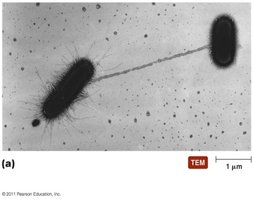
Conjugation: Direct transfer of DNA between bacteria via cell-to-cell contact, often mediated by F plasmids. Hfr cells can transfer chromosomal genes.
Mechanism | DNA Source | Requirement | Example |
|---|---|---|---|
Transformation | Naked DNA | Competent cells | Griffith’s experiment |
Transduction | Bacteriophage | Phage infection | Generalized/specialized transduction |
Conjugation | Plasmid/chromosomal DNA | Cell contact (pilus) | F plasmid transfer |
Key Definitions
Introns: Non-coding sequences in eukaryotic genes, removed during RNA processing.
Exons: Coding sequences that remain in mature mRNA.
Auxotroph: Mutant organism unable to synthesize a particular compound required for growth.
Prototroph: Wild-type organism capable of synthesizing all compounds needed for growth.
Formulas and Equations
Chargaff’s Rule:
G+C Content Calculation:
Additional info: This guide covers the core concepts of microbial genetics, including DNA structure, gene expression, mutation, and horizontal gene transfer, as outlined in Chapter 7 of a typical microbiology curriculum.
