 Back
Microbial Genetics: Structure, Function, and Genetic Change
Study Guide - Smart Notes
 Tailored notes based on your materials, expanded with key definitions, examples, and context.
Genetics: The Foundation of Microbial Life
Introduction to Genetics
Genetics is the study of genes, their functions, and the mechanisms by which genetic variation arises in genomes. In microbiology, understanding genetics is essential for exploring how microorganisms inherit traits, adapt, and evolve.
Genome: The complete set of genetic material in a cell or virus.
Gene: A segment of DNA that contains instructions for a functional product, such as a protein or RNA.
Genotype: The genetic makeup or combination of alleles an organism possesses (e.g., BB, Bb, or bb).
Phenotype: The observable traits produced by the genotype interacting with the environment (e.g., purple or white flowers).
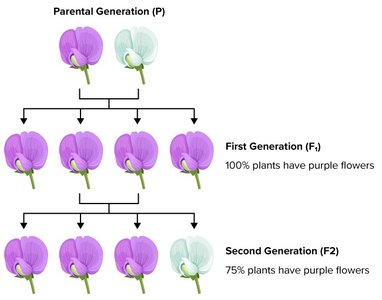
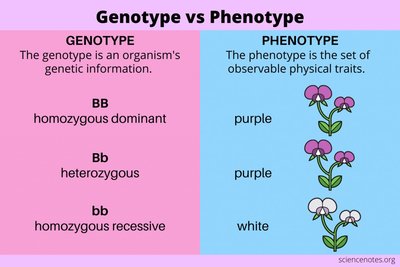
Additional info: Gregor Mendel, the father of modern genetics, demonstrated that traits are heritable and passed from one generation to the next using pea plants. The concept of the gene as a unit of inheritance originated from his work.
Organization and Structure of Genomes
Genome Organization in Prokaryotes and Eukaryotes
The genome serves as the master blueprint for all cellular features. Its organization varies between prokaryotes and eukaryotes, influencing complexity and function.
Prokaryotic genomes: Usually consist of a single circular chromosome located in the nucleoid region, sometimes accompanied by plasmids.
Eukaryotic genomes: Composed of multiple linear chromosomes housed in the nucleus, with additional DNA in mitochondria and (in plants/algae) chloroplasts.
Viruses: May have DNA or RNA genomes.
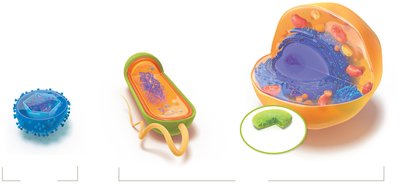
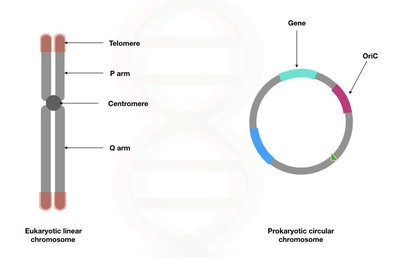
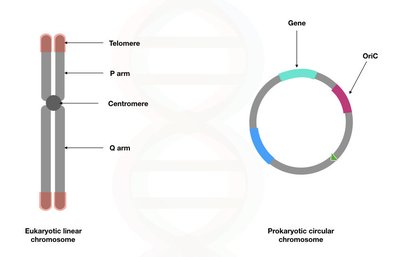
Plasmids are extra-chromosomal DNA elements that often confer survival advantages, such as antibiotic resistance.

Table: Comparison of Prokaryotic and Eukaryotic Genomes
Factor | Prokaryotic Genomes | Eukaryotic Genomes |
|---|---|---|
Complexity | Simple | More complex |
Genome can include | Chromosomal DNA, plasmids | Chromosomal DNA, plasmids, mitochondrial and chloroplast DNA |
Chromosomes | Few (usually one), circular | Many, linear |
Location | Nucleoid region | Nucleus |
DNA organized by | Histone-like proteins | Histones |
Nucleic Acids: DNA and RNA
Structure of DNA
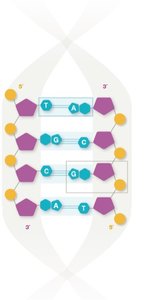
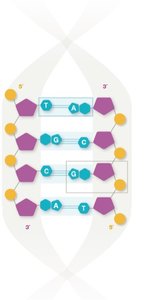
DNA is a double-stranded molecule that forms a double helix, resembling a twisted ladder. It is composed of nucleotides, each containing a phosphate group, a deoxyribose sugar, and a nitrogenous base.
Nitrogenous bases: Adenine (A), Guanine (G), Cytosine (C), Thymine (T)
Base pairing: A pairs with T, G pairs with C via hydrogen bonds
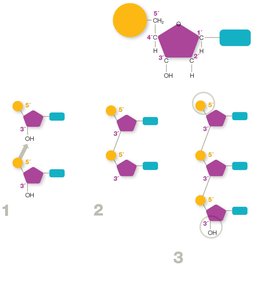
Sugar-phosphate backbone: Formed by phosphodiester bonds between the 5' phosphate and 3' hydroxyl groups of adjacent nucleotides
Antiparallel arrangement: One strand runs 5' to 3', the other 3' to 5'


Structure of RNA
RNA is typically single-stranded and contains ribose sugar instead of deoxyribose. Uracil (U) replaces thymine (T) as a base.
RNA nucleotides: Adenine (A), Guanine (G), Cytosine (C), Uracil (U)
Types of RNA: Messenger RNA (mRNA), Transfer RNA (tRNA), Ribosomal RNA (rRNA)


Central Dogma: Flow of Genetic Information
From DNA to Protein
The central dogma of molecular biology describes the flow of genetic information: DNA is transcribed into RNA, which is then translated into protein.
Transcription: Synthesis of RNA from a DNA template
Translation: Decoding of mRNA to build proteins at the ribosome
DNA Replication
Mechanism of DNA Replication
DNA replication is the process by which a cell copies its genome before division. It is semiconservative, meaning each new DNA molecule contains one original and one new strand.
Initiation: Begins at the origin of replication; enzymes unwind DNA and form replication forks
Elongation: DNA polymerase synthesizes new DNA in the 5' to 3' direction
Leading strand: Synthesized continuously toward the replication fork
Lagging strand: Synthesized discontinuously in Okazaki fragments, later joined by ligase
Key enzymes include helicase (unwinds DNA), primase (lays RNA primers), DNA polymerase (synthesizes DNA), and ligase (joins fragments).
Gene Expression: Transcription and Translation
Transcription
Transcription is the synthesis of RNA from a DNA template. It occurs in three main steps:
Initiation: RNA polymerase binds to the promoter region of DNA
Elongation: RNA polymerase synthesizes RNA in the 5' to 3' direction
Termination: RNA synthesis stops at the terminator sequence
In bacteria, sigma (σ) factors help RNA polymerase recognize promoters. In eukaryotes, transcription factors serve this role.
Translation
Translation is the process by which ribosomes decode mRNA to synthesize proteins. The genetic code is read in triplets (codons), each specifying an amino acid or stop signal.
Initiation: Ribosome assembles at the start codon (AUG) on mRNA
Elongation: tRNAs bring amino acids to the ribosome, matching codons with anticodons
Termination: Occurs when a stop codon is reached; the ribosome releases the completed polypeptide
Genetic Change in Bacteria
Mutations
Mutations are changes in the DNA sequence that can alter genotype and potentially phenotype. They may arise spontaneously or be induced by mutagens (chemical or physical agents).
Types of mutations:
Base substitution (point mutation): Silent, missense, or nonsense mutations
Insertion or deletion: May cause frameshift mutations
Transposons (jumping genes): Move within the genome, often inactivating genes
Examples: Sickle-cell disease (missense mutation), cystic fibrosis (various mutations), Huntington's disease (trinucleotide repeat expansion)
Horizontal Gene Transfer
Bacteria can acquire new genetic material through horizontal gene transfer, which includes:
Transformation: Uptake of naked DNA from the environment
Transduction: Transfer of DNA by bacteriophages (viruses)
Conjugation: Direct transfer of DNA between cells via physical contact (e.g., F plasmid in E. coli)
Summary Table: Types of Mutations and Their Effects
Mutation Type | Description | Effect |
|---|---|---|
Silent | Base change does not alter amino acid | No effect on protein function |
Missense | Base change alters amino acid | May affect protein function |
Nonsense | Base change creates stop codon | Truncated, nonfunctional protein |
Frameshift | Insertion/deletion not in multiples of 3 | Alters reading frame, usually nonfunctional protein |
Transposon | Mobile genetic element inserts into gene | Gene inactivation |
Applications and Clinical Relevance
Understanding microbial genetics is crucial for antibiotic development, tracking the spread of resistance, and genetic engineering.
Mutagenesis and gene transfer are foundational in biotechnology and medical research.
