 Back
BackMicrobial Genetics: Structure, Function, and Mechanisms
Study Guide - Smart Notes
 Tailored notes based on your materials, expanded with key definitions, examples, and context.
Microbial Genetics
Introduction to Genetics
Genetics is the study of inheritance and inheritable traits as expressed in an organism's genetic material. In microbiology, understanding genetics is crucial for exploring how microorganisms function, adapt, and evolve.
DNA (Deoxyribonucleic Acid): Encodes genetic instructions for development and functioning of all known living organisms and many viruses.
Genome: The entire genetic complement of an organism, including all genes and nucleotide sequences.
Structure of DNA
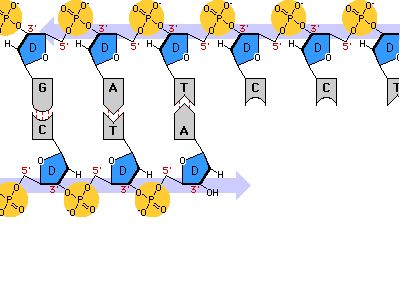
DNA is a double-stranded molecule resembling a twisted ladder. The sides are composed of covalently bonded pentose sugars and phosphate groups (phosphodiester bonds), while the rungs are pairs of nitrogenous bases.
Nitrogenous Bases: Adenine (A), Thymine (T), Guanine (G), Cytosine (C)
Base Pairing: A pairs with T (or U in RNA), G pairs with C
Antiparallel Strands: DNA strands run in opposite directions (5' to 3' and 3' to 5')
Prokaryotic and Eukaryotic Genomes
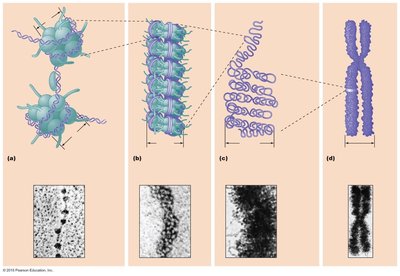
Microbial genomes vary between prokaryotes and eukaryotes in structure, organization, and packaging.
Prokaryotic Genomes: Typically a single, circular DNA molecule located in the nucleoid; may contain plasmids.
Eukaryotic Genomes: Linear chromosomes sequestered within a nucleus; often diploid and associated with histone proteins for packaging.
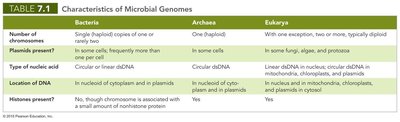
Feature | Bacteria | Archaea | Eukarya |
|---|---|---|---|
Number of chromosomes | Single (haploid) | One (haploid) | Two or more (diploid) |
Plasmids present? | Often | Sometimes | In some fungi, algae, protozoa |
Type of nucleic acid | Circular or linear dsDNA | Circular dsDNA | Linear dsDNA in nucleus; circular in organelles |
Location of DNA | Nucleoid and plasmids | Nucleoid and plasmids | Nucleus, mitochondria, chloroplasts, cytosol (plasmids) |
Histones present? | No (except small amount) | Yes | Yes |
DNA Replication
Mechanism of Replication
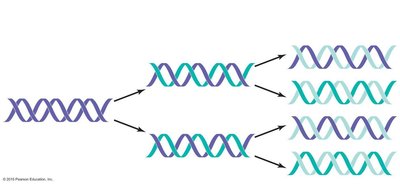
DNA replication is the process by which a cell duplicates its DNA, ensuring genetic information is passed to daughter cells. It is semiconservative, meaning each new DNA molecule consists of one original and one new strand.
Initiation: Begins at a specific origin of replication.
Elongation: DNA polymerase synthesizes new DNA in the 5' to 3' direction.
Leading Strand: Synthesized continuously.
Lagging Strand: Synthesized discontinuously as Okazaki fragments.
Energy Source: Triphosphate deoxyribonucleotides (e.g., dGTP) provide both monomers and energy.
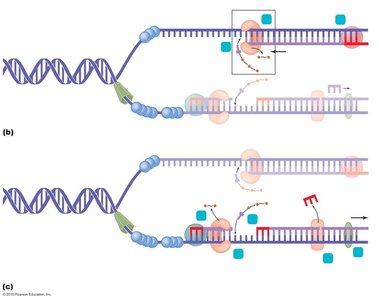
Differences in Eukaryotic DNA Replication
Multiple origins of replication per chromosome
Four types of DNA polymerases
Shorter Okazaki fragments
Gene Function: Transcription and Translation
Central Dogma of Genetics
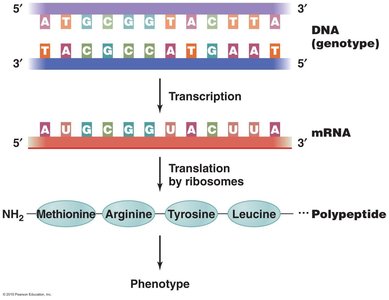
The central dogma describes the flow of genetic information: DNA is transcribed into RNA, which is then translated into protein.
Transcription: Synthesis of RNA from a DNA template.
Translation: Synthesis of polypeptides (proteins) from an RNA template.
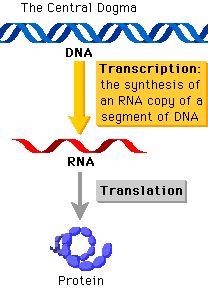
Transcription
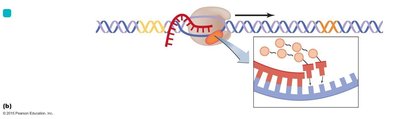
Transcription is the process by which information in DNA is copied into RNA. It involves three main steps: initiation, elongation, and termination.
Initiation: RNA polymerase binds to the promoter region of DNA.
Elongation: RNA polymerase synthesizes RNA by adding ribonucleotides complementary to the DNA template.
Termination: RNA synthesis ends when the polymerase reaches a terminator sequence.
Types of RNA: mRNA (messenger), rRNA (ribosomal), tRNA (transfer), RNA primers, regulatory RNA
Translation
Translation is the process by which ribosomes use the genetic information in mRNA to synthesize polypeptides. It occurs in three stages: initiation, elongation, and termination.
Initiation: Ribosome assembles around the start codon of mRNA.
Elongation: tRNAs bring amino acids to the ribosome, which are added to the growing polypeptide chain.
Termination: The process ends when a stop codon is reached.
Energy Requirement: GTP is required for initiation and elongation.
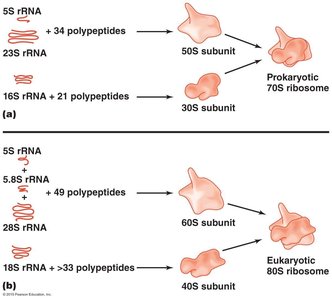
Genotype vs. Phenotype
The genotype is the set of genes in the genome, while the phenotype is the physical and functional expression of those genes. Not all genes are expressed at all times.
Regulation of Genetic Expression
Gene Regulation in Prokaryotes
Bacteria regulate gene expression to adapt to environmental changes and conserve energy. Operons are key regulatory units in prokaryotes.
Inducible Operons: Activated by inducers (e.g., lactose operon is turned on in the presence of lactose).
Repressible Operons: Transcribed continuously until deactivated by repressors (e.g., tryptophan operon is turned off in the presence of tryptophan).
Quorum Sensing: Regulates production of some proteins in response to cell density.

Genetic Mutation and DNA Repair
Types of Mutations
Mutations are changes in the nucleotide sequence of DNA. They are rare and usually deleterious, but can occasionally confer advantages.
Point Mutations: Affect a single base pair (substitutions, insertions, deletions).
Frameshift Mutations: Insertions or deletions that shift the reading frame, altering downstream codons.
Mutagens
Mutagens are agents that increase the mutation rate. They include radiation (ionizing, nonionizing), nucleotide analogs, nucleotide-altering chemicals, and frameshift mutagens.
DNA Repair Mechanisms
Cells possess repair pathways to correct DNA damage, including light repair and dark repair mechanisms. These are essential for maintaining genetic integrity.
Genetic Recombination and Horizontal Gene Transfer
Genetic Recombination
Genetic recombination involves the exchange of nucleotide sequences between DNA molecules, resulting in new genetic combinations.
Vertical Gene Transfer: Genes passed to the next generation.
Horizontal Gene Transfer: Genes transferred between cells of the same generation.
Mechanisms of Horizontal Gene Transfer
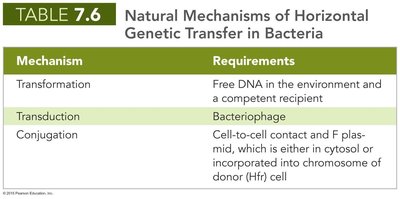
Transformation: Uptake of free DNA from the environment by competent cells.
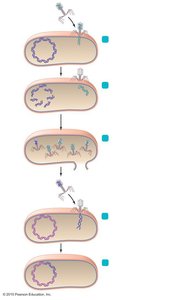
Transduction: Transfer of DNA via bacteriophages (viruses that infect bacteria).
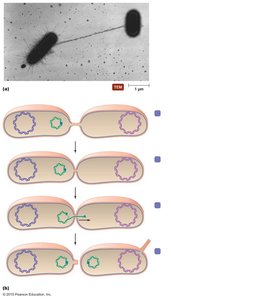
Conjugation: Direct transfer of DNA between cells via physical contact (sex pilus).
Mechanism | Requirements |
|---|---|
Transformation | Free DNA in the environment and a competent recipient |
Transduction | Bacteriophage |
Conjugation | Cell-to-cell contact and F plasmid |
Transposons and Transposition
Jumping Genes
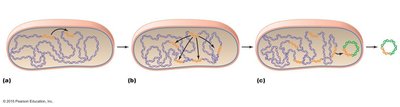
Transposons are segments of DNA that can move from one location to another within a genome, causing mutations and genetic variation.
Insertion Sequences: Simplest transposons, containing only the gene for transposase and inverted repeats.
Complex Transposons: Contain additional genes, such as antibiotic resistance genes.
Additional info: These notes provide a comprehensive overview of microbial genetics, including DNA structure, replication, gene expression, mutation, repair, recombination, and horizontal gene transfer, with relevant diagrams and tables to reinforce key concepts.
