 Back
Microbial Genetics: Structure, Function, and Mechanisms of Genetic Change
Study Guide - Smart Notes
 Tailored notes based on your materials, expanded with key definitions, examples, and context.
Microbial Genetics
Big Picture: Genetics
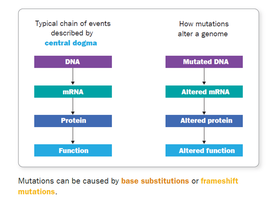
Genetics is the science of heredity, focusing on how genetic information is stored, expressed, and inherited in microorganisms. The central dogma of molecular biology describes the flow of genetic information from DNA to RNA to protein, and mutations can alter this flow, affecting gene expression and function. Gene expression in bacteria is tightly regulated, often by operons.
Central Dogma: DNA → RNA → Protein → Function
Mutations: Changes in DNA sequence can lead to altered mRNA, protein, and ultimately function.
Gene Regulation: Controlled by operons, which can be inducible or repressible.
Alteration of Bacterial Genes and Gene Expression
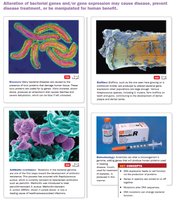
Changes in bacterial genes or their expression can cause disease, prevent disease treatment, or be manipulated for human benefit. Examples include antibiotic resistance, toxin production, and biotechnological applications.
Cause of Disease: Mutations or gene transfer can increase pathogenicity.
Prevent Disease Treatment: Resistance genes can hinder antibiotic effectiveness.
Manipulation for Human Benefit: Genetic engineering can produce useful products.
Structure and Function of Genetic Material
Key Definitions
Genetics: Study of genes, their expression, and replication.
Chromosome: Structure containing DNA and genes.
Gene: Segment of DNA encoding a functional product.
Genome: All genetic information in a cell.
Genetic Code: Rules for converting nucleotide sequences to amino acid sequences.
Genotype: Genetic makeup of an organism.
Phenotype: Expression of the genotype.

DNA and Chromosomes in Bacteria
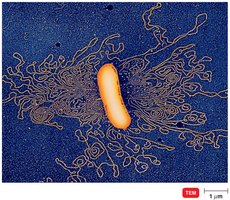
Bacteria typically possess a single, circular chromosome composed of DNA and associated proteins. The genome includes both protein-coding genes and noncoding regions, such as short tandem repeats (STRs).
Example: E. coli chromosome contains 4.6 million base pairs, highly supercoiled.
STRs: Repeating sequences of noncoding DNA (2-5 base pairs/repeat).
DNA Structure and Replication
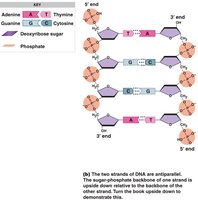
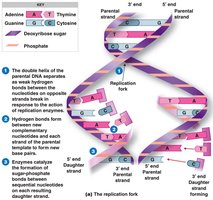
DNA is a double helix with antiparallel strands held together by hydrogen bonds between complementary bases (A-T, C-G). Replication is highly accurate and bidirectional, involving several enzymes.
Antiparallel Strands: One strand runs 5' to 3', the other 3' to 5'.
Replication Fork: Site where DNA is unwound and replicated.
Key Enzymes: Topoisomerase, gyrase, helicase, DNA polymerase, DNA ligase.
Leading Strand: Synthesized continuously.
Lagging Strand: Synthesized discontinuously (Okazaki fragments).
Energy Source: Hydrolysis of nucleotides (ATP).
RNA and Protein Synthesis
Types of RNA
mRNA: Carries genetic code from DNA to ribosomes.
rRNA: Integral part of ribosomes.
tRNA: Transports amino acids during protein synthesis.
Transcription in Prokaryotes
Transcription is the synthesis of a complementary mRNA strand from a DNA template. It involves initiation (RNA polymerase binds to promoter), elongation (mRNA synthesis), and termination (reaching terminator sequence).
Translation
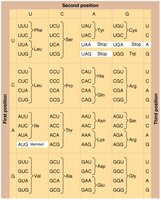
Translation converts mRNA into protein. Codons (three-nucleotide sequences) specify amino acids. The genetic code is degenerate, meaning multiple codons can code for the same amino acid. Translation begins at the start codon (AUG) and ends at stop codons (UAA, UAG, UGA).
tRNA: Carries amino acids and matches codons via anticodon.
Peptide Bonds: Join amino acids during protein synthesis.
Prokaryotes: Translation can begin before transcription is complete.
Regulation of Bacterial Gene Expression
Operons and Gene Regulation
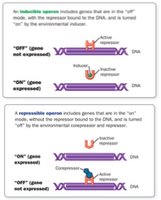
Bacterial gene expression is regulated at both pre-transcriptional and post-transcriptional levels. Operons consist of promoter, operator, and structural genes. Genes can be constitutive (always expressed), inducible (turned on by inducers), or repressible (turned off by repressors).
Inducible Operon: Default off, turned on by inducer.
Repressible Operon: Default on, turned off by repressor.
Catabolite Repression: Inhibits gene expression in presence of preferred nutrients.
Changes in Genetic Material
Mutations
Mutations are permanent changes in the DNA sequence. They can be neutral, beneficial, or harmful. Mutagens are agents that cause mutations, while spontaneous mutations occur without mutagen exposure.
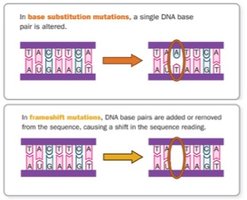
Base Substitution: Single DNA base pair is altered.
Missense Mutation: Results in a different amino acid.
Nonsense Mutation: Results in a stop codon.
Frameshift Mutation: Insertion or deletion shifts the reading frame.
Mutation Repair and Ames Test
Repair Mechanisms: Photolyases (separate thymine dimers), nucleotide excision repair (removes incorrect bases).
Ames Test: Uses bacteria to test mutagenicity of substances, measuring mutation reversion rates.
Genetic Transfer and Recombination
Plasmids and Transposons
Plasmids are self-replicating, circular DNA molecules found in bacteria, often carrying genes for antibiotic resistance or toxin production. Transposons (jumping genes) are mobile genetic elements that can move within and between chromosomes.
Conjugative Plasmid: Carries genes for sex pili and plasmid transfer.
Dissimilation Plasmid: Encodes enzymes for catabolism of unusual compounds.
Resistance (R) Factors: Encode antibiotic resistance, transferable horizontally.
Mechanisms of Genetic Recombination in Bacteria
Bacteria can exchange genetic material through three main mechanisms: transformation, transduction, and conjugation. These processes contribute to genetic diversity and adaptation.
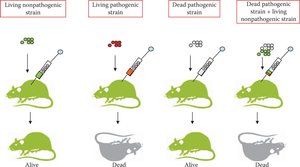
Transformation: Uptake of naked DNA from the environment.
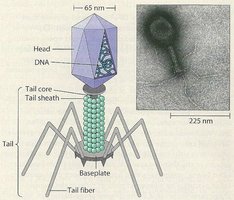
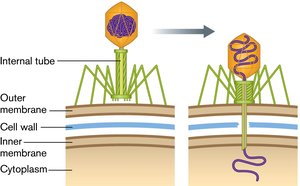
Transduction: Transfer of DNA via bacteriophages (viruses that infect bacteria).
Conjugation: Direct transfer of DNA between bacteria via sex pili.
Summary Table: Types of Mutations
Type | Description | Effect |
|---|---|---|
Base Substitution | Single base pair change | May cause missense or nonsense mutation |
Frameshift | Insertion/deletion of base pairs | Shifts reading frame, alters protein |
Missense | Change in amino acid | Protein function may change |
Nonsense | Creates stop codon | Protein synthesis stops prematurely |
Summary Table: Mechanisms of Genetic Transfer
Mechanism | Description | Key Features |
|---|---|---|
Transformation | Uptake of naked DNA | Requires competent cells |
Transduction | DNA transfer via bacteriophage | Can be generalized or specialized |
Conjugation | Direct cell-to-cell transfer | Requires sex pili and F factor |
Additional info: These notes expand on the original lecture content by providing definitions, examples, and tables for clarity. Images included are directly relevant to the described processes and mechanisms.
