 Back
BackMicrobial Genetics: Structure, Function, and Molecular Processes
Study Guide - Smart Notes
 Tailored notes based on your materials, expanded with key definitions, examples, and context.
Microbial Genetics: Structure, Function, and Molecular Processes
Terminology and Central Dogma
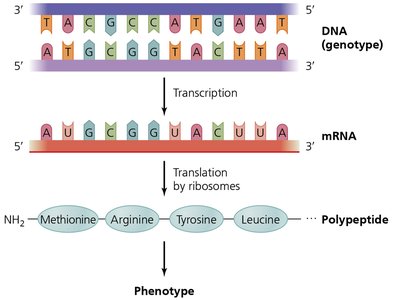
The study of microbial genetics involves understanding the molecular processes that govern the flow of genetic information in microorganisms. The central dogma of molecular biology describes how genetic information is transferred from DNA to RNA and then to proteins, which ultimately determine phenotype.
Central Dogma: DNA is transcribed into RNA, which is translated into proteins.
Key Terms: Transcription, Translation, Replication, Codon, Anticodon, Plasmid, Chromosome.
Importance: These processes are fundamental to all life and are especially relevant in prokaryotes and eukaryotes.
Flashcards: Reviewing key terms is essential for mastering microbial genetics.
Structure and Function of DNA
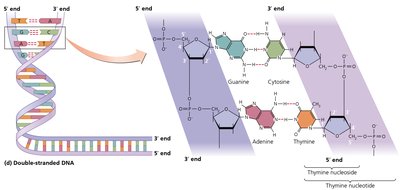
DNA is the hereditary material in all cellular life forms. Its structure and function are central to understanding microbial genetics. DNA consists of two strands forming a double helix, with complementary base pairing between adenine-thymine and guanine-cytosine.
Prokaryotes vs. Eukaryotes: Prokaryotic DNA is typically circular and found in the nucleoid, while eukaryotic DNA is linear and organized into chromosomes within the nucleus.
Base Pairing: Adenine (A) pairs with Thymine (T), Guanine (G) pairs with Cytosine (C).
Location: DNA is found in the nucleoid (prokaryotes) or nucleus (eukaryotes).
DNA Replication
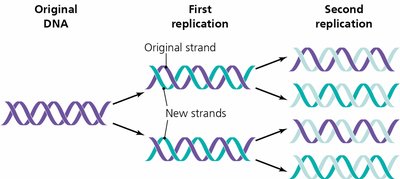
DNA replication is the process by which a cell duplicates its DNA before cell division. The process is semiconservative, meaning each new DNA molecule contains one original strand and one newly synthesized strand.
Semiconservative Replication: Each daughter DNA molecule consists of one parental and one new strand.
Requirements: Monomers (nucleotides) and energy (provided by triphosphate nucleotides).
Key Feature: Complementary structure of DNA strands enables accurate replication.
Chromosomal Organization: Prokaryotes vs. Eukaryotes
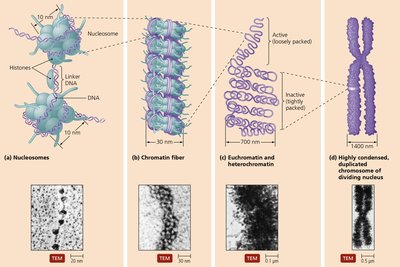
Chromosomal structure differs significantly between prokaryotes and eukaryotes. Eukaryotic chromosomes are highly organized and condensed, while prokaryotic chromosomes are less structured.
Eukaryotes: DNA is wrapped around histone proteins forming nucleosomes, further organized into chromatin fibers and chromosomes.
Prokaryotes: DNA is found in the nucleoid region and is not associated with histones.
Plasmids and Chromosomes in Bacteria
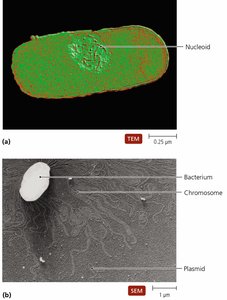
Bacterial cells contain both chromosomes and plasmids. Chromosomes carry essential genetic information, while plasmids are smaller, circular DNA molecules that often carry genes for antibiotic resistance or other specialized functions.
Chromosome: Main genetic material, usually a single circular DNA molecule.
Plasmid: Small, circular DNA, replicates independently, often carries non-essential but advantageous genes.
Key Differences: Size, function, replication, and inheritance.
Prokaryotic DNA Replication
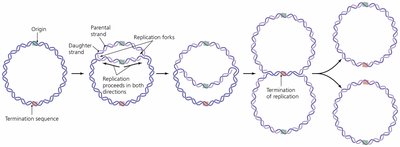
Replication in prokaryotes typically begins at a single origin and proceeds bidirectionally around the circular chromosome.
Origin of Replication: Specific site where replication begins.
Bidirectional Replication: Two replication forks move in opposite directions.
Termination: Replication ends at a termination sequence.
Transcription: DNA to RNA
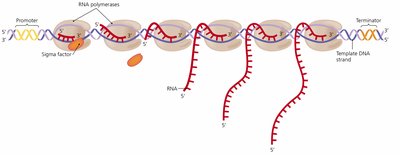
Transcription is the process by which RNA is synthesized from a DNA template. In prokaryotes, transcription occurs in the cytoplasm, while in eukaryotes, it occurs in the nucleus and organelles.
RNA Polymerase: Enzyme responsible for synthesizing RNA.
Promoter and Terminator: DNA sequences that signal the start and end of transcription.
Transcription Factors: Proteins that regulate transcription in eukaryotes.
RNA Processing in Eukaryotes
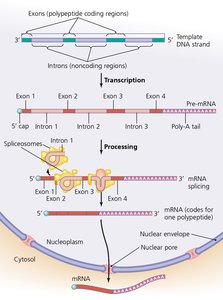
In eukaryotes, the primary RNA transcript (pre-mRNA) undergoes several modifications before becoming mature mRNA. These include capping, polyadenylation, and splicing.
Capping: Addition of a 5' cap for stability and translation initiation.
Polyadenylation: Addition of a poly-A tail at the 3' end for stability.
Splicing: Removal of introns and joining of exons.
Types and Functions of RNA Molecules
Several types of RNA are involved in gene expression, each with distinct functions.
mRNA (Messenger RNA): Carries genetic information from DNA to ribosomes for protein synthesis.
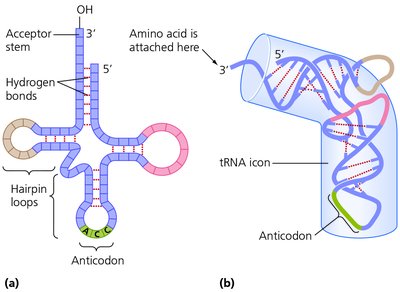
tRNA (Transfer RNA): Brings amino acids to the ribosome during translation; contains an anticodon that pairs with the mRNA codon.
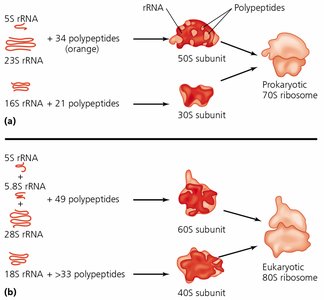
rRNA (Ribosomal RNA): Structural and catalytic component of ribosomes.
Ribosome Structure and Function
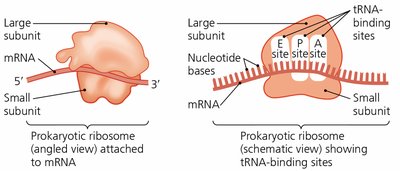
Ribosomes are the molecular machines responsible for translating mRNA into proteins. They consist of two subunits and contain three binding sites for tRNA: A (aminoacyl), P (peptidyl), and E (exit).
Prokaryotic Ribosome: 70S, composed of 50S and 30S subunits.
Eukaryotic Ribosome: 80S, composed of 60S and 40S subunits.
A, P, E Sites: Facilitate the sequential addition of amino acids to the growing polypeptide chain.
Genetic Code: Codons and Anticodons
The genetic code is composed of codons—three-nucleotide sequences in mRNA that specify amino acids. Anticodons are complementary sequences in tRNA that pair with codons during translation.
Codon: Sequence of three nucleotides in mRNA.
Anticodon: Sequence of three nucleotides in tRNA, complementary to the codon.
Example: The codon AUG codes for methionine and is the start signal for translation.
Mutations and Base Pair Substitutions
Mutations can alter the genetic code, affecting protein synthesis. Substituting bases, such as replacing thymine with bromouracil, can lead to changes in DNA replication and gene expression.
Base Pair Substitution: Replacement of one nucleotide with another.
Effect: Can result in altered proteins or no effect, depending on the mutation.
Example: Bromouracil can substitute for thymine and pair with adenine.
Quiz Questions and Applications
Understanding microbial genetics is essential for answering questions about plasmids, chromosomes, codons, anticodons, ribosome structure, and the effects of mutations.
Plasmid vs. Chromosome: Plasmids are smaller, replicate independently, and often carry non-essential genes; chromosomes are larger and carry essential genes.
Codons vs. Anticodons: Codons are found in mRNA; anticodons are found in tRNA.
A, P, E Sites: Sites on the ribosome where tRNA binds during translation.
Mutation Effects: Insertion of three bases changes one codon; insertion of one base causes a frameshift.
Base Composition: If an organism is high in G+C, the percentage of A+T is lower. For example, if G+C = 60%, then A+T = 40%.
Additional info: The notes have been expanded with academic context to ensure completeness and clarity for exam preparation.
