 Back
BackMicrobial Genetics: Structure, Function, and Regulation of Genetic Material
Study Guide - Smart Notes
 Tailored notes based on your materials, expanded with key definitions, examples, and context.
Microbial Genetics
Introduction to Genetics
Genetics is the study of genes, their functions, and how they are inherited and expressed in living organisms. In microbiology, understanding genetics is essential for comprehending microbial diversity, adaptation, and evolution.
Genetics: Study of genes, gene expression, and inheritance.
Genome: All genetic material in a cell.
Chromosome: Structure containing DNA and genes.
Gene: Segment of DNA encoding a functional product, usually a protein.
Genotype: Genetic makeup of an organism.
Phenotype: Observable traits resulting from gene expression.
Genomics: Study of genomes, including sequencing and analysis.
Central Dogma of Molecular Biology
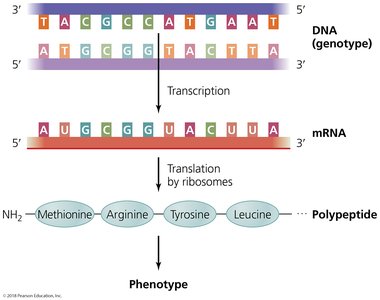
The central dogma describes the flow of genetic information: DNA is transcribed into RNA, which is then translated into protein. This process is fundamental to all living cells.
Transcription: DNA → RNA
Translation: RNA → Protein

Structure and Function of Genetic Material
DNA and Chromosomes in Prokaryotes
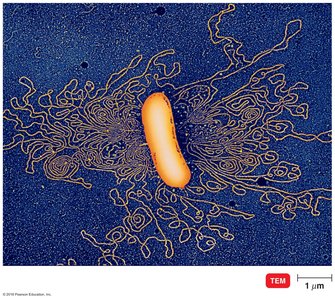
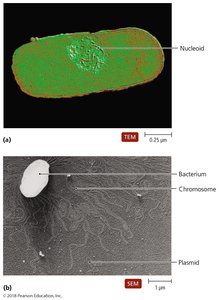
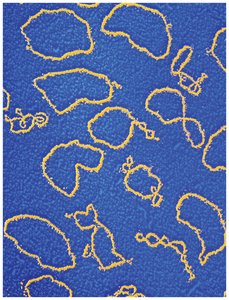
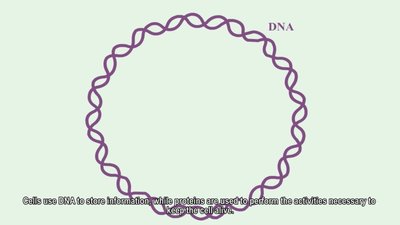
Bacteria typically possess a single, circular chromosome located in the nucleoid region. They may also contain plasmids, which are small, circular DNA molecules that replicate independently and often carry genes for antibiotic resistance or virulence.
Short Tandem Repeats (STRs): Repeating sequences of noncoding DNA.
Plasmids: Non-essential DNA molecules that confer survival advantages.
Characteristics of Microbial Genomes
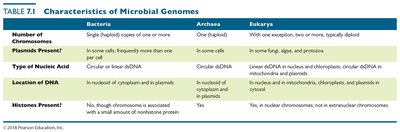
Microbial genomes vary among bacteria, archaea, and eukaryotes.
Feature | Bacteria | Archaea | Eukarya |
|---|---|---|---|
Number of Chromosomes | Single (haploid) or more | One (haploid) | One or more, typically diploid |
Plasmids Present? | Yes, often multiple | Yes, sometimes | Rare, in fungi, algae, protozoa |
Type of Nucleic Acid | Circular or linear dsDNA | Circular dsDNA | Linear dsDNA (nucleus), circular dsDNA (organelles) |
Location of DNA | Nucleoid/cytoplasm, plasmids | Nucleoid/cytoplasm, plasmids | Nucleus, mitochondria, chloroplasts, plasmids |
Histones Present? | No (except small amount) | Yes | Yes (nuclear chromosomes) |
Structure of Nucleic Acids
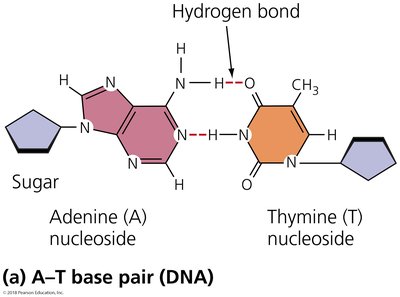
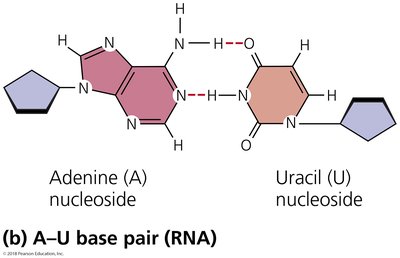
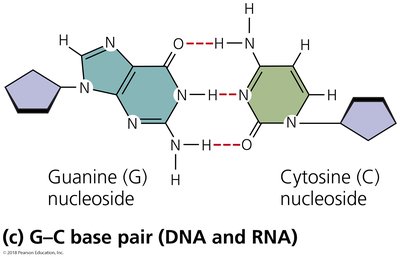
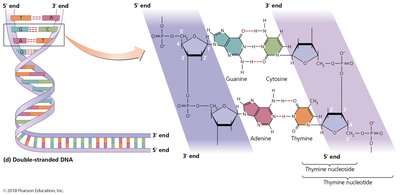
Nucleic acids are polymers of nucleotides, each consisting of a phosphate, pentose sugar, and nitrogenous base. DNA and RNA differ in their bases and structure.
Base pairs: Adenine (A) pairs with Thymine (T) in DNA, Uracil (U) in RNA; Guanine (G) pairs with Cytosine (C).
Double-stranded DNA: Antiparallel strands held together by hydrogen bonds.
Flow of Genetic Information
Vertical and Horizontal Gene Transfer
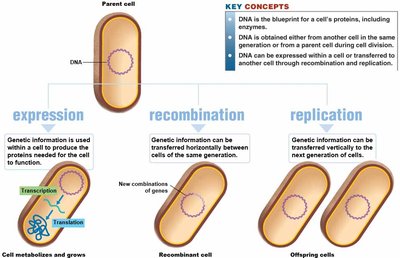
Vertical gene transfer: Transmission of genetic information from parent to offspring.
Horizontal gene transfer: Exchange of genetic material between cells of the same generation.
DNA Replication
Semiconservative Replication
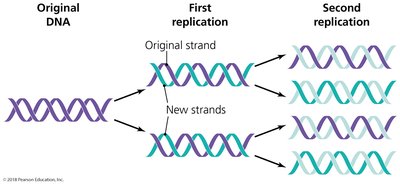
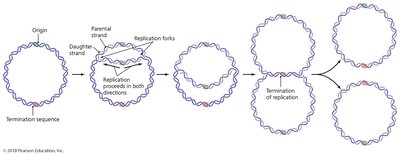
DNA replication is semiconservative: each new DNA molecule consists of one original strand and one new strand.
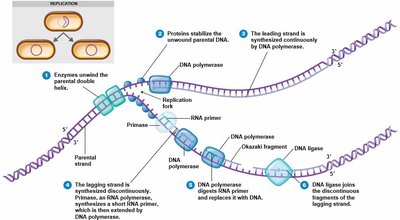
Replication fork: Site where DNA is unwound and new strands are synthesized.
Leading strand: Synthesized continuously.
Lagging strand: Synthesized discontinuously, forming Okazaki fragments.
Enzymes in DNA Replication
Several enzymes are involved in DNA replication:
DNA polymerase: Synthesizes DNA, proofreads, and repairs.
Helicase: Unwinds DNA.
Topoisomerase/Gyrase: Relaxes supercoiling.
Primase: Synthesizes RNA primers.
DNA ligase: Joins Okazaki fragments.
Energy for DNA Synthesis
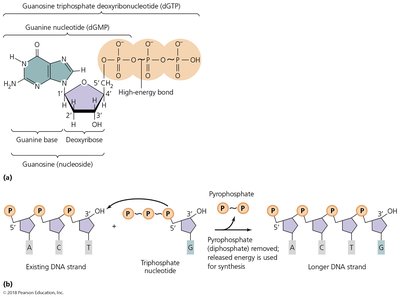
DNA synthesis uses energy from the hydrolysis of triphosphate nucleotides.
Triphosphate deoxyribonucleotides serve as both monomers and energy sources.
Gene Expression: Transcription and Translation
Transcription in Prokaryotes
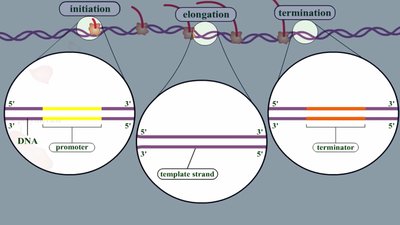
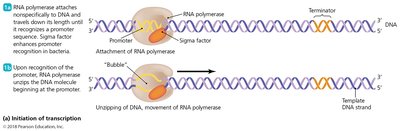
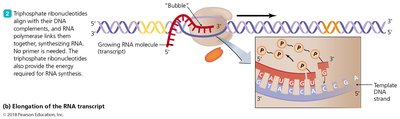
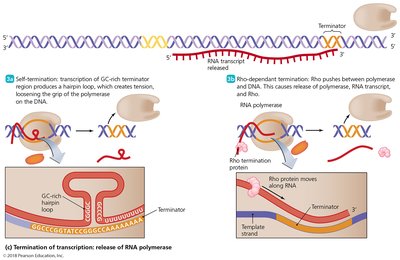
Transcription is the process by which information in DNA is copied into RNA.
Initiation: RNA polymerase binds to promoter.
Elongation: RNA polymerase synthesizes RNA.
Termination: RNA polymerase releases RNA at terminator sequence.
Types of RNA
mRNA: Messenger RNA, carries genetic code.
rRNA: Ribosomal RNA, forms ribosomes.
tRNA: Transfer RNA, brings amino acids to ribosome.
Regulatory RNA: Controls gene expression.
Ribozymes: RNA enzymes.
Translation
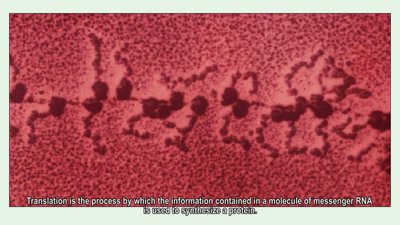
Translation is the process by which ribosomes synthesize polypeptides using the genetic information in mRNA.
Codons: Groups of three mRNA nucleotides coding for amino acids.
Start codon: AUG (methionine).
Stop codons: UAA, UAG, UGA.
Degeneracy: Multiple codons can code for the same amino acid.
Relationship Between Genotype and Phenotype
The genotype determines the sequence of DNA, which is transcribed and translated to produce proteins, resulting in the phenotype.
Regulation of Genetic Expression
Operons in Prokaryotes
Operons are clusters of genes controlled by a single promoter and operator.
Inducible operons: Activated by inducers (e.g., lac operon).
Repressible operons: Deactivated by repressors (e.g., trp operon).
Constitutive genes: Expressed at a fixed rate.
Positive Regulation and Catabolite Repression
Catabolite repression: Cells preferentially use glucose; cAMP levels rise when glucose is absent, activating the lac operon.
Epigenetic Control
Methylation of nucleotides can turn genes off; methylated genes can be inherited but are not permanent.
Mutations and DNA Repair
Types of Mutations
Point mutations: Affect a single base pair (substitutions, frameshifts).
Gross mutations: Involve larger changes (inversions, duplications, transpositions).
Mutagens
Radiation: Ionizing and nonionizing.
Chemical mutagens: Nucleotide analogs, nucleotide-altering chemicals, frameshift mutagens.
DNA Repair Mechanisms
Direct repair: Fixes specific damage.
Single-strand repair: Repairs one strand.
Error-prone repair: Last resort, e.g., SOS response in E. coli.
Genetic Recombination and Transfer
Horizontal Gene Transfer in Prokaryotes
Transformation: Uptake of DNA from environment.
Transduction: Transfer via bacteriophages.
Bacterial conjugation: Transfer via sex pili and plasmids.
Transposons and Transposition
Transposons: DNA segments that move within or between genomes.
Insertion sequences: Simplest transposons, contain only transposase gene.
Complex transposons: Carry additional genes, e.g., antibiotic resistance.
Genes and Evolution
Mutation and Recombination as Raw Material for Evolution
Mutations and recombination create genetic diversity.
Natural selection acts on this diversity to favor organisms best suited to their environment.
Summary Table: Important Enzymes in DNA Replication, Expression, and Repair
Enzyme | Function |
|---|---|
DNA Gyrase | Relaxes supercoiling ahead of replication fork |
DNA Ligase | Joins DNA strands, Okazaki fragments |
DNA Polymerase | Synthesizes, proofreads, repairs DNA |
Helicase | Unwinds double-stranded DNA |
Primase | Makes RNA primers |
Topoisomerase | Relaxes supercoiling, separates DNA circles |
RNA Polymerase | Copies RNA from DNA template |
Conclusion
Microbial genetics is fundamental to understanding how microorganisms inherit, express, and regulate their genetic information. This knowledge is essential for studying microbial physiology, adaptation, and evolution, as well as for applications in biotechnology and medicine.
