 Back
BackMicrobial Genetics: Structure, Function, and Regulation of Genetic Material
Study Guide - Smart Notes
 Tailored notes based on your materials, expanded with key definitions, examples, and context.
Microbial Genetics
Overview of Genetics
Microbial genetics is the study of how microorganisms inherit traits, how their genetic information is expressed, and how it can be altered. Understanding genetics is fundamental to microbiology, as it explains the mechanisms behind microbial diversity, adaptation, and pathogenicity.
Genetics: The science of heredity, including the study of genes, their expression, and replication.
Central Dogma: Describes the flow of genetic information from DNA to RNA to protein.
Mutations: Changes in genetic material that can affect microbial traits, disease, and treatment.
Structure and Function of Genetic Material
The genetic material of microorganisms is primarily DNA, organized into chromosomes and plasmids. Genes are segments of DNA encoding functional products, usually proteins.
Chromosomes: Structures containing DNA and proteins, carrying hereditary information.
Genes: DNA segments encoding proteins or functional RNA.
Genome: All genetic information in a cell.
Genomics: Sequencing and molecular characterization of genomes.
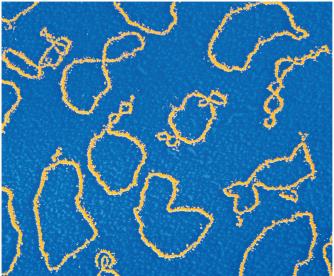
Genetic Code and Central Dogma
The genetic code is a set of rules for translating nucleotide sequences into amino acid sequences. The central dogma explains how genetic information is transcribed and translated.
Transcription: DNA is copied into mRNA.
Translation: mRNA directs protein synthesis.
Gene Expression: When a gene's product is produced.
Genotype and Phenotype
Genotype refers to the genetic makeup, while phenotype is the observable expression of genes.
Genotype: The set of genes in an organism.
Phenotype: The traits resulting from gene expression.
DNA and Chromosomes in Bacteria
Bacterial chromosomes are typically single, circular DNA molecules. The genome includes both coding and noncoding regions.
Supercoiling: DNA is highly twisted for compact storage.
Short Tandem Repeats (STRs): Noncoding, repeating DNA sequences.
The Flow of Genetic Information
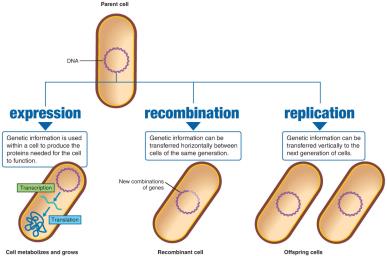
Genetic information can be transferred vertically (from parent to offspring) or horizontally (between cells of the same generation).
Vertical Gene Transfer: From parent to offspring.
Horizontal Gene Transfer: Between cells of the same generation.
DNA Replication
Structure of DNA
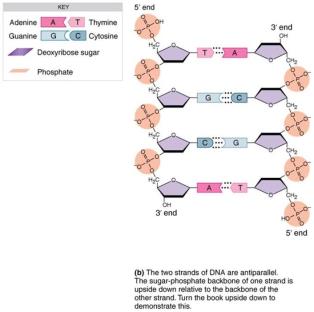
DNA is a double helix with antiparallel strands. The backbone consists of deoxyribose-phosphate, and bases pair via hydrogen bonds (A-T, C-G).
Antiparallel Strands: Oriented in opposite directions.
Complementary Base Pairing: Ensures accurate replication.
Mechanism of DNA Replication
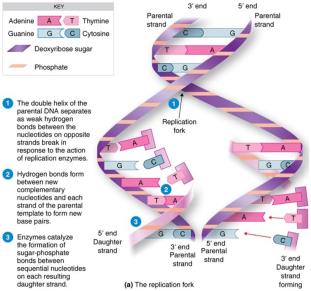
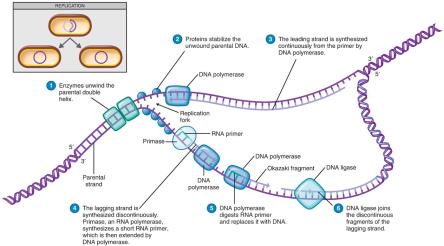
DNA replication is a highly regulated process involving several enzymes. Each strand serves as a template for a new strand.
Topoisomerase/Gyrase: Relaxes supercoiling.
Helicase: Unwinds DNA.
DNA Polymerase: Synthesizes new DNA, proofreads, and repairs.
Primase: Synthesizes RNA primers.
DNA Ligase: Joins Okazaki fragments on the lagging strand.
Replication Fork and Strand Synthesis
Replication occurs at the replication fork. The leading strand is synthesized continuously, while the lagging strand is synthesized discontinuously, forming Okazaki fragments.
Replication Fork: Site where DNA is unwound and replicated.
Okazaki Fragments: Short DNA segments on the lagging strand.
Energy Requirements for DNA Replication
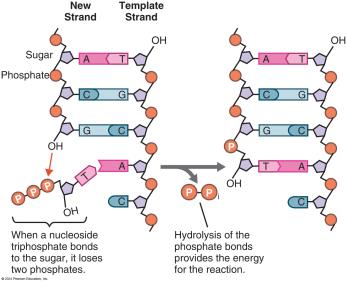
Replication requires energy, supplied by nucleotides. Hydrolysis of phosphate bonds provides the necessary energy.
Nucleoside Triphosphates: Provide energy for DNA synthesis.
Bidirectional Replication in Bacteria
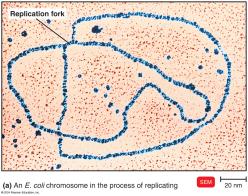
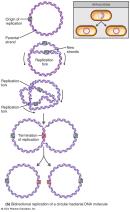
Bacterial DNA replication is typically bidirectional, ensuring each daughter cell receives a complete copy. Proofreading by DNA polymerase ensures high fidelity.
Bidirectional Replication: Replication proceeds in both directions from the origin.
Proofreading: DNA polymerase corrects errors.
RNA and Protein Synthesis
Types of RNA
RNA is a single-stranded molecule with ribose sugar and uracil instead of thymine. Three main types of RNA are involved in protein synthesis.
Ribosomal RNA (rRNA): Integral part of ribosomes.
Transfer RNA (tRNA): Transports amino acids.
Messenger RNA (mRNA): Carries genetic code from DNA to ribosomes.
Transcription in Prokaryotes
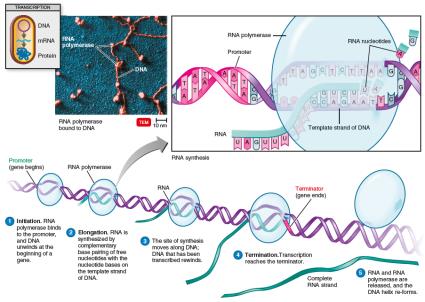
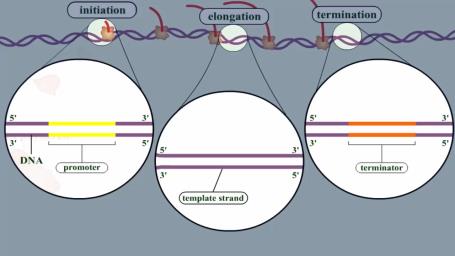
Transcription is the synthesis of mRNA from a DNA template. It involves initiation, elongation, and termination.
Initiation: RNA polymerase binds to the promoter.
Elongation: RNA is synthesized in the 5'→3' direction.
Termination: Transcription stops at the terminator sequence.
Translation
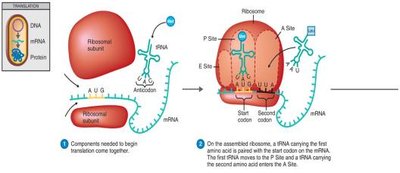
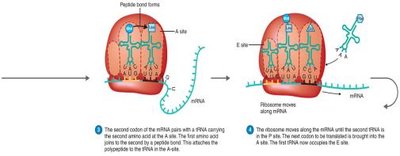
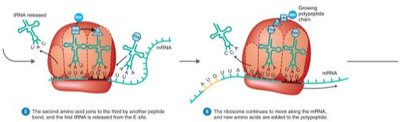
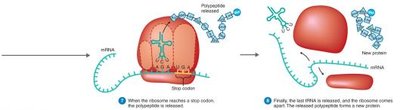
Translation converts mRNA into a protein. Codons (three-nucleotide sequences) specify amino acids. The process begins at the start codon (AUG) and ends at stop codons (UAA, UAG, UGA).
Codons: Groups of three mRNA nucleotides.
tRNA Anticodon: Base-pairs with mRNA codon.
Peptide Bonds: Join amino acids.
Simultaneous Transcription and Translation in Bacteria
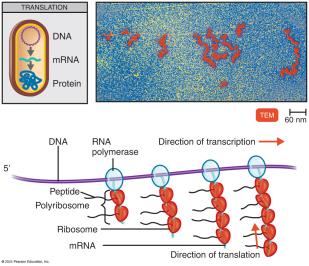
In prokaryotes, translation can begin before transcription is complete, as both processes occur in the cytoplasm.
Transcription in Eukaryotes
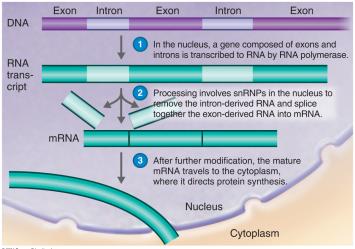
In eukaryotes, transcription occurs in the nucleus and translation in the cytoplasm. Genes contain exons (coding) and introns (noncoding), which are processed before translation.
snRNPs: Remove introns and splice exons together.
Regulation of Bacterial Gene Expression
Gene Regulation Mechanisms
Gene expression in bacteria is regulated at multiple levels. Constitutive genes are always expressed, while others are inducible or repressible.
Inducible Genes: Turned on as needed.
Repressible Genes: Turned off when not needed.
Catabolite Repression: Inhibits use of alternative carbon sources.
The Operon Model
The operon model explains coordinated regulation of gene clusters. Operons consist of promoter, operator, and structural genes.
Promoter: Initiates transcription.
Operator: Controls transcription.
Structural Genes: Encode proteins.
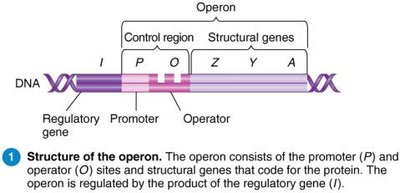
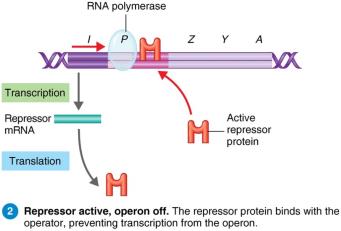
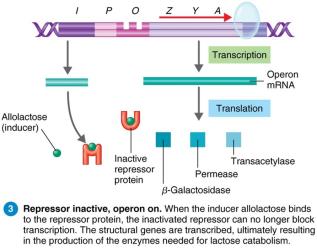
Inducible and Repressible Operons
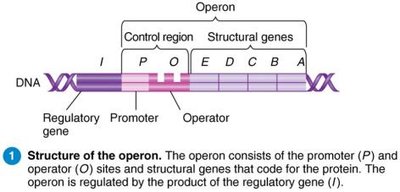
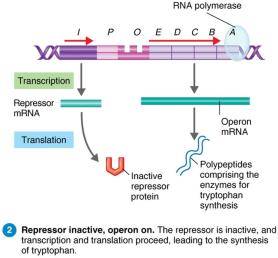
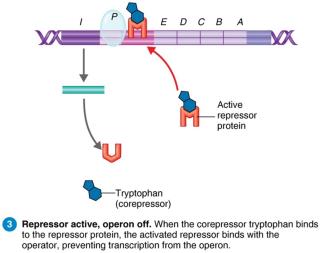
Inducible operons (e.g., lac operon) are activated by inducers, while repressible operons (e.g., trp operon) are turned off by corepressors.
Lac Operon: Induced by allolactose in the presence of lactose.
Trp Operon: Repressed by excess tryptophan.
Positive Regulation and Catabolite Repression
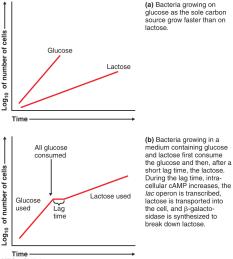
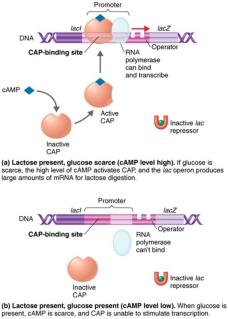
Catabolite repression ensures cells use glucose before other carbon sources. cAMP and CAP regulate the lac operon in response to glucose availability.
cAMP: Builds up when glucose is scarce.
CAP: Activates transcription when bound to cAMP.
Epigenetic and Post-Transcriptional Control
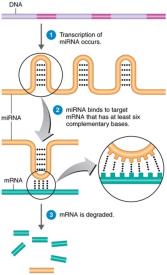
Epigenetic modifications (e.g., methylation) can turn genes off and be inherited. Post-transcriptional mechanisms, such as riboswitches and microRNAs, regulate protein synthesis after transcription.
Riboswitch: mRNA structure changes to regulate translation.
microRNAs (miRNAs): Bind mRNA and prevent translation.
Mutations and Their Effects
Types of Mutations
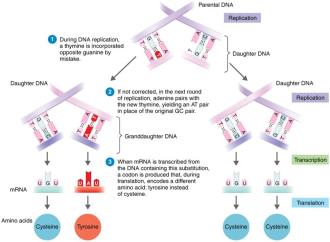
Mutations are permanent changes in DNA sequence. They can be neutral, beneficial, or harmful, and are caused by mutagens or occur spontaneously.
Silent Mutation: No effect on protein function.
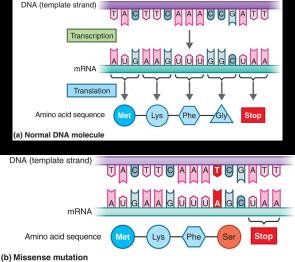
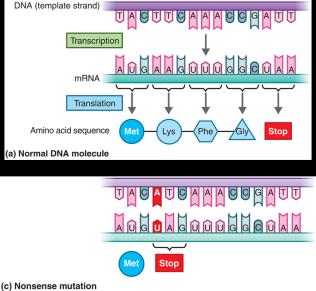
Base Substitution (Point Mutation): One base is changed.
Missense Mutation: Changes an amino acid.
Nonsense Mutation: Creates a stop codon.
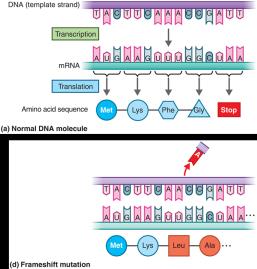
Frameshift Mutation: Insertion or deletion shifts reading frame.
Chemical and Radiation Mutagens
Chemical mutagens (e.g., nitrous acid, nucleoside analogs, aflatoxin) and radiation (ionizing and UV) can cause mutations. Organisms have repair mechanisms to correct DNA damage.
Photolyase: Repairs UV-induced thymine dimers.
Nucleotide Excision Repair: Removes incorrect bases.
Genetic Transfer and Recombination
Genetic Recombination
Genetic recombination is the exchange of genes between DNA molecules, increasing genetic diversity. Crossing over can insert foreign DNA into chromosomes.
Horizontal Gene Transfer Mechanisms
Horizontal gene transfer involves the movement of genetic material between cells of the same generation, resulting in recombinant cells.
Transformation: Uptake of naked DNA from the environment.
Conjugation: Transfer of plasmids via cell-to-cell contact.
Transduction: Transfer of DNA via bacteriophages.
Plasmids and Transposons
Plasmids are self-replicating DNA molecules, often carrying genes for antibiotic resistance or virulence. Transposons are DNA segments that move within and between DNA molecules.
Conjugative Plasmid: Carries genes for transfer.
R Factors: Encode antibiotic resistance.
Transposase: Enzyme for transposon movement.
Transformation in Bacteria
Transformation was first demonstrated by Griffith's experiment. It occurs naturally in some genera and involves the uptake and incorporation of DNA fragments.
Conjugation in Bacteria
Conjugation involves the transfer of plasmids through direct contact. F+ cells donate plasmids to F- cells, and Hfr cells can transfer chromosomal genes.
Transduction in Bacteria
Transduction is the transfer of DNA via bacteriophages. Generalized transduction transfers random DNA, while specialized transduction transfers specific genes.
Genes and Evolution
Role of Mutations and Recombination in Evolution
Mutations and recombination generate diversity, which is essential for evolution. Natural selection acts on populations, favoring organisms best suited to their environment.
Important Enzymes in DNA Replication, Expression, and Repair
The following table summarizes key enzymes involved in DNA replication, expression, and repair:
Enzyme | Function |
|---|---|
DNA Gyrase | Relaxes supercoiling ahead of the replication fork |
DNA Ligase | Joins DNA strands; Okazaki fragments; excision repair |
DNA Polymerases | Synthesize DNA; proofread; repair DNA |
Endonucleases | Cut DNA backbone; facilitate repair and insertions |
Exonucleases | Cut DNA from exposed end; facilitate repair |
Helicase | Unwinds double-stranded DNA |
Methylase | Adds methyl group to DNA bases |
Photolyase | Separates UV-induced pyrimidine dimers |
Primase | Makes RNA primers from DNA template |
Ribozyme | Removes introns, splices exons |
RNA Polymerase | Copies RNA from DNA template |
snRNP | Removes introns, splices exons |
Topoisomerase/Gyrase | Relaxes supercoiling; separates DNA circles |
Transposase | Cuts DNA backbone, leaves sticky ends |
