 Back
BackMicrobial Genetics: Structure, Function, and Regulation of Genetic Material
Study Guide - Smart Notes
 Tailored notes based on your materials, expanded with key definitions, examples, and context.
The Prokaryotic Chromosome and Genome Organization
Structure and Packaging of Prokaryotic DNA
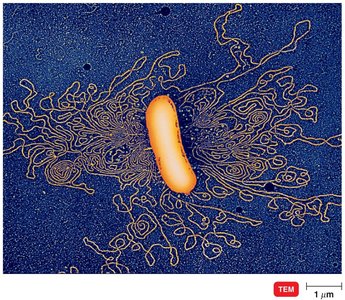
The prokaryotic genome is typically composed of a single, circular double-stranded DNA (dsDNA) molecule. The size of the genome varies among species, ranging from 1 to 9.5 million base pairs. For example, Escherichia coli has approximately 4.5 million base pairs, while Bacillus subtilis has about 4 million base pairs. DNA packaging and supercoiling are essential for fitting the large genome inside the small bacterial cell.
Chromosome: Structure containing DNA that physically carries hereditary information; contains genes.
Genome: All the genetic information in a cell.
Gene: A segment of DNA that encodes a functional product, usually a protein.
Genetic Information Flow and Storage
Central Dogma of Molecular Biology
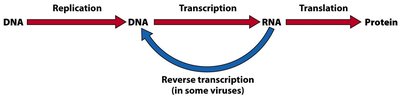
Genetic information flows from DNA to RNA to protein. This process involves three main steps: replication, transcription, and translation. In some viruses, reverse transcription (RNA to DNA) also occurs.
Replication: DNA is copied to produce identical DNA molecules.
Transcription: DNA is used as a template to synthesize RNA.
Translation: RNA is used as a template to synthesize proteins.
Reverse Transcription: Some viruses can synthesize DNA from an RNA template.
Vertical Gene Transfer
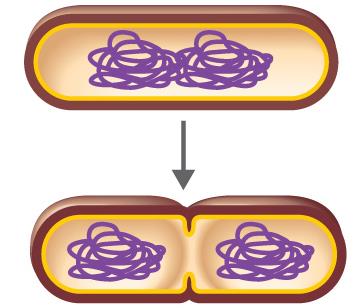
Vertical gene transfer refers to the transmission of genetic information from a parent cell to its daughter cells during cell division. This is the primary method of inheritance in prokaryotes.
Nucleic Acid Structure: DNA and RNA
DNA Structure and Properties
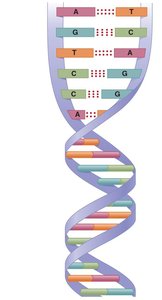
DNA (deoxyribonucleic acid) is a double helix composed of two antiparallel strands held together by complementary base pairing. The order of the bases encodes genetic information.
Base Pairing: Adenine (A) pairs with Thymine (T) via two hydrogen bonds; Guanine (G) pairs with Cytosine (C) via three hydrogen bonds.
Antiparallel Strands: One strand runs 5' to 3', the other 3' to 5'.
Phosphodiester Backbone: Alternating sugar and phosphate groups form the backbone of DNA.
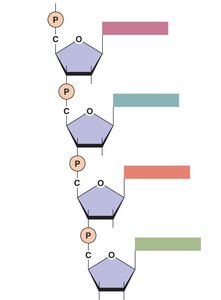
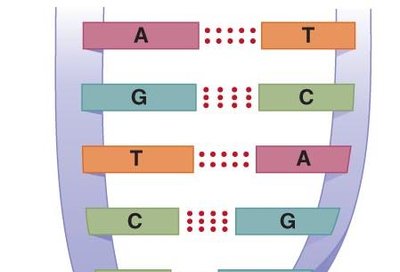
Nucleotides: Building Blocks of Nucleic Acids
Nucleotides consist of three components: a pentose sugar (deoxyribose in DNA, ribose in RNA), a phosphate group, and a nitrogenous base (A, T, G, C, or U). Purines (A, G) have two rings; pyrimidines (C, T, U) have one ring.
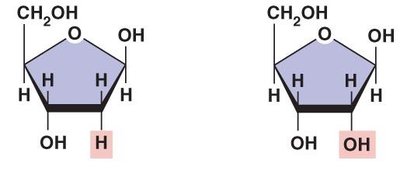
ATP: A Nucleotide with Energy Function
Adenosine triphosphate (ATP) is a nucleotide that serves as the primary energy currency in the cell. It consists of adenine, ribose, and three phosphate groups.
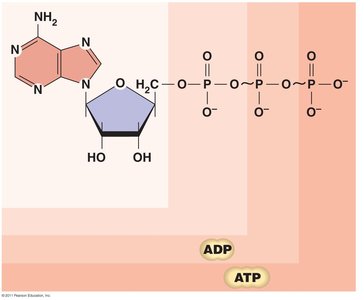
Comparison of DNA and RNA
DNA and RNA differ in structure, composition, and function. DNA is typically double-stranded and stores genetic information, while RNA is usually single-stranded and involved in protein synthesis.
Feature | DNA | RNA |
|---|---|---|
Strands | Double-stranded in cells | Single-stranded in cells |
Sugar | Deoxyribose | Ribose |
Bases | A, T, G, C | A, U, G, C |
Function | Genetic information storage | Protein synthesis, regulation |

DNA Replication
Mechanism of DNA Replication
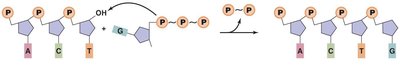
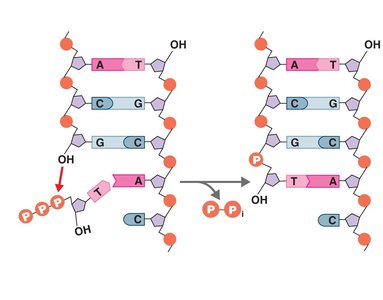
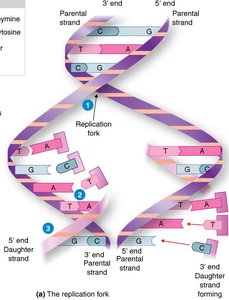
DNA replication is a semi-conservative process in which each strand serves as a template for the synthesis of a new complementary strand. The process requires several enzymes and occurs in the 5' to 3' direction.
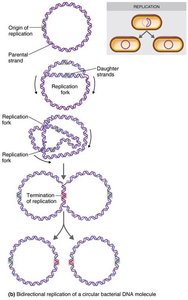
Initiation: Begins at the origin of replication; helicase unwinds the DNA, and single-strand binding proteins stabilize the unwound strands.
Elongation: DNA polymerase synthesizes new DNA by adding nucleotides to the 3' end of the primer.
Leading Strand: Synthesized continuously toward the replication fork.
Lagging Strand: Synthesized discontinuously as Okazaki fragments, which are later joined by DNA ligase.
Bidirectional Replication in Bacteria
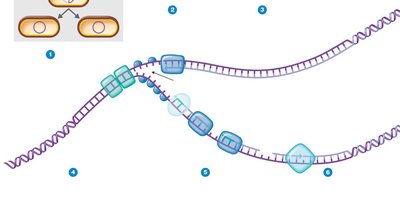
Most bacterial DNA replication is bidirectional, starting from a single origin and proceeding in both directions around the circular chromosome. Each daughter cell receives one complete copy of the genome.
Key Enzymes in DNA Replication
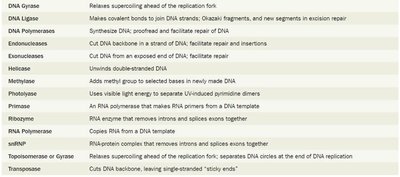
Enzyme | Function |
|---|---|
DNA Gyrase | Relieves supercoiling ahead of the replication fork |
DNA Ligase | Joins DNA strands; seals Okazaki fragments |
DNA Polymerase | Synthesizes DNA; proofreads and repairs |
Helicase | Unwinds double-stranded DNA |
Primase | Synthesizes RNA primers |
Topoisomerase | Cuts and rejoins DNA to relieve supercoiling |
Transcription: Synthesis of RNA
Process of Transcription
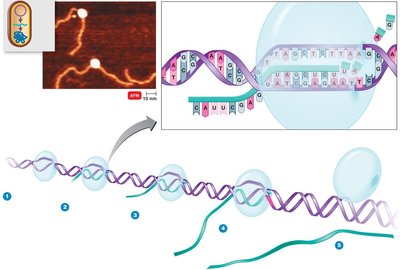
Transcription is the synthesis of RNA from a DNA template. RNA polymerase binds to the promoter region and synthesizes RNA in the 5' to 3' direction. In prokaryotes, transcripts can be polycistronic, encoding multiple proteins.
Initiation: RNA polymerase binds to the promoter.
Elongation: RNA is synthesized by complementary base pairing.
Termination: Transcription stops at the terminator sequence.
Translation: Protein Synthesis
The Genetic Code and Translation Mechanism
Translation is the process by which the nucleotide sequence of mRNA is converted into the amino acid sequence of a protein. This occurs at the ribosome and involves mRNA, tRNA, and rRNA.
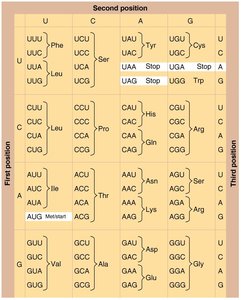
Codons: Groups of three mRNA nucleotides that specify amino acids.
Start Codon: AUG (methionine) signals the start of translation.
Stop Codons: UAA, UAG, UGA signal termination of translation.
Degeneracy: Most amino acids are encoded by more than one codon.
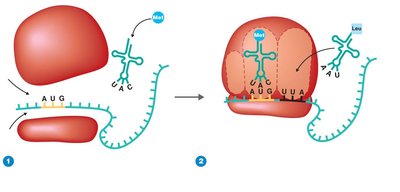
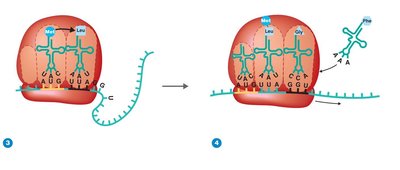
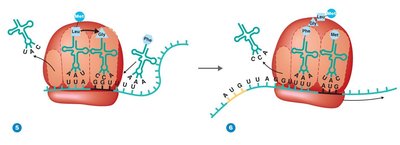
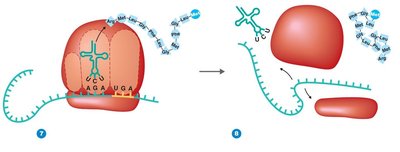
tRNA Structure and Function
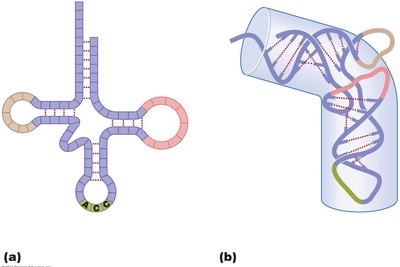
Transfer RNA (tRNA) molecules transport amino acids to the ribosome and match them to the correct codon on the mRNA via their anticodon. Each tRNA is specific for one amino acid.
Mutations and DNA Repair
Types of Mutations
Mutations are permanent changes in the DNA sequence. They can be neutral, beneficial, or harmful. Types include:
Base Substitution (Point Mutation): One base is replaced by another; can result in missense or nonsense mutations.
Missense Mutation: Results in a different amino acid.
Nonsense Mutation: Results in a stop codon and truncated protein.
Frameshift Mutation: Insertion or deletion of bases not in multiples of three, altering the reading frame.
Mutagens and DNA Repair Mechanisms
Mutagens such as chemicals and radiation increase mutation rates. Cells have repair mechanisms, including:
Photolyase: Uses visible light to repair thymine dimers.
Nucleotide Excision Repair: Removes incorrect bases and fills in correct ones.
Gene Regulation in Prokaryotes
Operons: Coordinated Gene Expression
Operons are clusters of genes under the control of a single promoter and operator. They allow coordinated regulation of gene expression.
Repressible Operon (e.g., trp operon): Default is ON; can be turned OFF by a repressor-corepressor complex.
Inducible Operon (e.g., lac operon): Default is OFF; can be turned ON by an inducer that inactivates the repressor.
Positive Regulation: Catabolite repression and cAMP-CAP system regulate operon activity based on nutrient availability.
Genetic Recombination and Horizontal Gene Transfer
Mechanisms of Genetic Exchange
Genetic recombination increases genetic diversity. In bacteria, horizontal gene transfer allows exchange of genetic material between cells of the same generation, while vertical gene transfer occurs from parent to offspring.
Crossing Over: Exchange of DNA segments between chromosomes.
Antigenic Variation: Some pathogens alter surface proteins to evade the immune system (e.g., Neisseria gonorrhoeae, Salmonella enterica).
Clinical Relevance: Pathogenic Bacteria and Genetic Variation
Neisseria gonorrhoeae
This Gram-negative diplococcus causes gonorrhea and evades the immune system through antigenic variation and recombination of surface proteins. Diagnosis involves Gram stain, culture, ELISA, and nucleic acid amplification tests. Treatment is complicated by antibiotic resistance.
Salmonella enterica
This bacterium causes salmonellosis and typhoid fever. It can switch between flagellar proteins via recombination, aiding immune evasion. Diagnosis is by stool culture or PCR; treatment for salmonellosis is oral rehydration, while typhoid fever requires antibiotics.
