 Back
BackMicrobial Genetics: Structure, Function, and Regulation of Genetic Material
Study Guide - Smart Notes
 Tailored notes based on your materials, expanded with key definitions, examples, and context.
The Prokaryotic Chromosome and Genome Organization
Structure and Packaging of Prokaryotic DNA
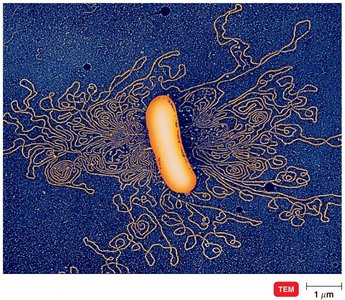
The prokaryotic genome is typically composed of a single, circular double-stranded DNA (dsDNA) molecule. This chromosome contains all the genetic information necessary for the cell's functions and reproduction. The size of prokaryotic genomes varies, ranging from 1 to 9.5 million base pairs. For example, Escherichia coli has approximately 4.5 million base pairs, while Bacillus subtilis has about 4 million base pairs. DNA packaging and supercoiling are essential for fitting the large genome into the small bacterial cell.
Key Genetic Terminology
Gene: A segment of DNA that encodes a functional product, usually a protein.
Genetics: The study of genes, how they carry information, how information is expressed, and how genes are replicated.
Chromosome: Structure containing DNA that physically carries hereditary information; chromosomes contain the genes.
Genome: All the genetic information in a cell.
Genetic Information Flow and Storage
Central Dogma of Molecular Biology
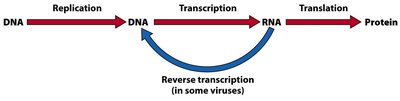
Genetic information flows from DNA to RNA to protein. This process involves three main steps: replication, transcription, and translation. In some viruses, reverse transcription (RNA to DNA) also occurs.
Vertical Gene Transfer
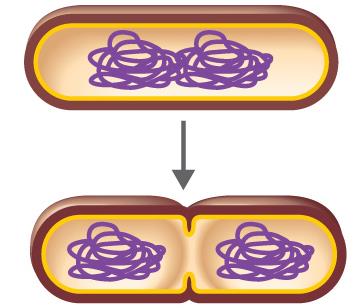
Vertical gene transfer refers to the transmission of genetic information from a parent cell to its daughter cells during cell division. This is the primary method of inheritance in prokaryotes.
Nucleic Acid Structure: DNA and RNA
DNA Structure and Properties
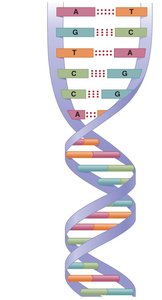
DNA (deoxyribonucleic acid) is a double helix composed of two antiparallel strands held together by complementary base pairing. Adenine (A) pairs with thymine (T) via two hydrogen bonds, and guanine (G) pairs with cytosine (C) via three hydrogen bonds. The order of the bases encodes genetic information, and both reading and synthesis occur in the 5' to 3' direction.
Phosphodiester Backbone
The backbone of nucleic acids (DNA and RNA) consists of alternating sugar and phosphate groups, connected by phosphodiester bonds. Each nucleotide is composed of a pentose sugar (deoxyribose in DNA, ribose in RNA), a phosphate group, and a nitrogenous base.
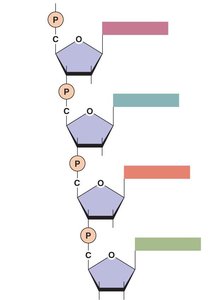
Nucleotide Structure and Base Pairing
Nucleotides are the building blocks of nucleic acids. They consist of a pentose sugar, a phosphate group, and a nitrogen-containing base. Purines (adenine and guanine) have two rings, while pyrimidines (cytosine, thymine, and uracil) have one ring. In DNA, A pairs with T and G pairs with C; in RNA, A pairs with U.
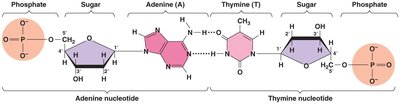
Comparison of DNA and RNA
DNA and RNA differ in structure, composition, and function. DNA is typically double-stranded and contains deoxyribose, while RNA is usually single-stranded and contains ribose. RNA has uracil instead of thymine.
Feature | DNA | RNA |
|---|---|---|
Strands | Double-stranded in cells | Single-stranded in cells |
Sugar | Deoxyribose | Ribose |
Bases | A, T, G, C | A, U, G, C |
Function | Genetic information storage | Protein synthesis, regulation |

DNA Replication
Mechanism of DNA Replication
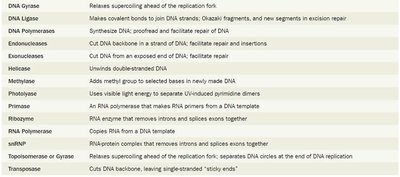
DNA replication is a semi-conservative process in which each strand serves as a template for the synthesis of a new complementary strand. The process requires several enzymes, including DNA polymerase, helicase, primase, and ligase. Replication proceeds in the 5' to 3' direction, and the leading strand is synthesized continuously while the lagging strand is synthesized discontinuously, forming Okazaki fragments.
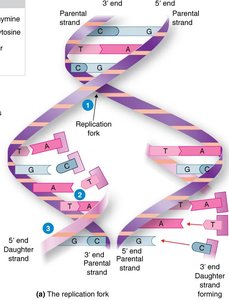
Bidirectional Replication in Bacteria
Most bacterial DNA replication is bidirectional, starting from a single origin of replication and proceeding in both directions around the circular chromosome. This ensures that each daughter cell receives an identical copy of the genome.
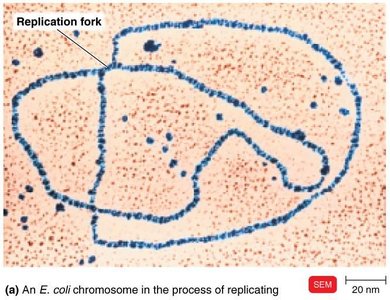
Key Enzymes in DNA Replication
Enzyme | Function |
|---|---|
DNA Gyrase | Relieves supercoiling ahead of the replication fork |
DNA Ligase | Joins DNA strands; seals Okazaki fragments |
DNA Polymerase | Synthesizes DNA; proofreads and repairs |
Helicase | Unwinds double-stranded DNA |
Primase | Synthesizes RNA primers |
Topoisomerase | Cuts and rejoins DNA to relieve tension |
Transcription: Synthesis of RNA
Transcription in Prokaryotes
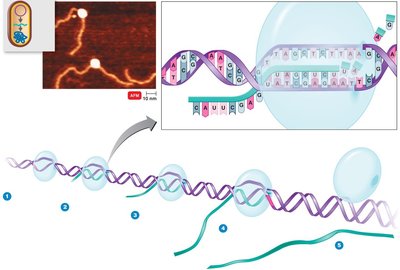
Transcription is the process by which a segment of DNA is used as a template to synthesize RNA. RNA polymerase binds to the promoter region and synthesizes RNA in the 5' to 3' direction. In prokaryotes, transcripts can be polycistronic, meaning one mRNA can encode multiple proteins. Transcription stops at a terminator sequence.
Translation: Protein Synthesis
The Genetic Code and Translation
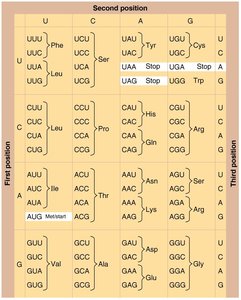
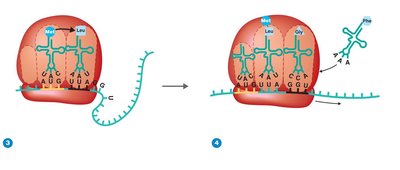
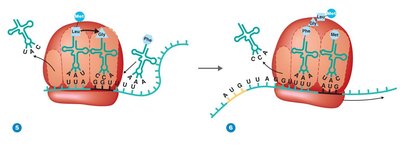
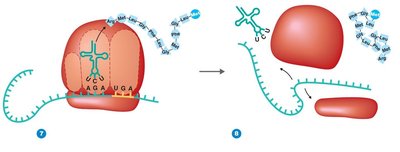
Translation is the process by which the nucleotide sequence of mRNA is converted into the amino acid sequence of a protein. This occurs at the ribosome, with the help of tRNA molecules that match codons in the mRNA to the correct amino acids. The genetic code is degenerate, meaning multiple codons can code for the same amino acid. Translation begins at the start codon (AUG) and ends at a stop codon (UAA, UAG, UGA).
Steps of Translation
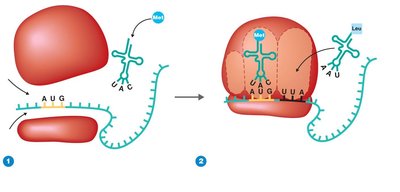
Initiation: The ribosome assembles around the start codon on the mRNA, and the first tRNA brings methionine.
Elongation: tRNAs bring amino acids to the ribosome, where peptide bonds are formed between amino acids.
Termination: When a stop codon is reached, the newly synthesized polypeptide is released.
tRNA Structure and Function
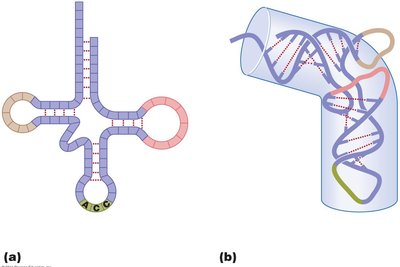
tRNA molecules transport amino acids to the ribosome and match them to the correct codon in the mRNA via their anticodon. Each tRNA is specific for one amino acid and has a unique three-dimensional structure.
Mutations and DNA Repair
Types of Mutations
Base Substitution (Point Mutation): A single base is replaced, which may result in a missense mutation (different amino acid) or a nonsense mutation (stop codon).
Frameshift Mutation: Insertion or deletion of bases not in multiples of three, altering the reading frame and usually resulting in a nonfunctional protein.
Mutagens and DNA Repair Mechanisms
Mutagens are agents that increase the mutation rate, such as chemicals and radiation. Cells have repair mechanisms, including photolyases (which use light to repair thymine dimers) and nucleotide excision repair (which removes and replaces damaged DNA segments).
Gene Regulation in Prokaryotes
Operons: Coordinated Gene Expression
Operons are clusters of genes under the control of a single promoter and operator. They allow bacteria to regulate groups of genes in response to environmental changes.
Repressible Operon (e.g., trp operon): Default state is ON; can be turned OFF by a repressor when the end product is abundant.
Inducible Operon (e.g., lac operon): Default state is OFF; can be turned ON by an inducer when the substrate is present.
Positive Regulation and Catabolite Repression
Catabolite repression ensures that bacteria preferentially use glucose over other sugars. When glucose is scarce, cyclic AMP (cAMP) accumulates and activates the catabolite activator protein (CAP), which enhances transcription of operons like the lac operon.
Genetic Recombination and Horizontal Gene Transfer
Mechanisms of Genetic Exchange
Genetic recombination increases genetic diversity in bacteria. Horizontal gene transfer allows genes to move between cells of the same generation, while vertical gene transfer passes genes to offspring. Recombination can occur via transformation, transduction, or conjugation.
Antigenic Variation in Pathogens
Certain bacteria, such as Neisseria gonorrhoeae and Salmonella enterica, use genetic recombination and gene regulation to alter their surface antigens, helping them evade the host immune system.
Clinical Relevance: Gonorrhea and Salmonellosis
Gonorrhea
Caused by Neisseria gonorrhoeae, a Gram-negative diplococcus. The pathogen uses antigenic variation to evade immunity and is diagnosed by Gram stain, culture, or nucleic acid amplification tests. Treatment involves antibiotics, but resistance is increasing.
Salmonellosis
Caused by Salmonella enterica (non-typhoidal serovars), which invades the intestinal mucosa and can switch flagellar proteins by recombination. Symptoms include diarrhea, fever, and cramps. Treatment is usually oral rehydration.
Typhoid Fever
Caused by Salmonella enterica serotype Typhi, spread only by human feces. It can become systemic and lead to chronic carriage. Treatment involves antibiotics.
